October 30, 2026 4 min read

Closed-Loop Safety: How to Turn Incidents Into Prevention
Industry:
Solution:
A forklift clips a storage rack on second shift. The supervisor files a report, the team writes up a corrective action, and someone schedules a refresher course. Three months later, a forklift hits the same rack. When you pull the file, the corrective action still shows as open, and nobody can say whether the refresher happened.
That’s an open loop. Your team did the paperwork, but no one checked that the fix took hold. Closed-loop safety closes that gap. It connects every incident to an investigation, a corrective action, targeted training, and a final check that the fix worked. Then what you learn feeds back into how you prevent the next incident.
This guide explains how closed-loop safety management works, the five stages of the loop, and how to build an incident-to-training workflow you can track and prove.
Main Takeaways
- Closed-loop safety treats an incident as closed only after the fix is in place, the right people are trained, and you’ve confirmed the fix works.
- The loop has five stages: report, investigate, act, train, and verify.
- Most programs break at the hand-offs between stages, especially between corrective action and training.
- Closed-loop communication (call-out, check-back, confirmation, and completion) applies the same idea to single exchanges on the job.
- Keeping incidents, corrective actions, and training records in one system makes the loop visible and ready for audit.
What Is Closed-Loop Safety?
Closed-loop safety is a way to run your safety program so that every incident leads to a verified change. A loop counts as closed only when four things are true: you found the root cause, you fixed it, you trained the people it affects, and you confirmed the fix holds.
The term comes from control systems. An open-loop system sends an input and assumes the result. A closed-loop system measures the result and adjusts. Your safety program works the same way. Without feedback, you’re assuming your corrective actions work. With feedback, you know they do. This approach reflects systems thinking in safety, where you look at how each part of your program affects the others instead of fixing problems one at a time.
OSHA makes a similar point. Its incident investigation guidance notes that the factors behind an incident nearly always involve equipment, procedures, training, or other program gaps. If your follow-up stops at the immediate cause, you miss the changes that would prevent the next incident.
Open-Loop vs. Closed-Loop Safety Programs
The table below shows how each stage of a safety program changes when you close the loop.
| Program Stage | Open-Loop Program | Closed-Loop Program |
| Reporting | Workers report incidents when they remember to | Workers report incidents and near misses on a standard form |
| Investigation | Focuses on what happened and who was involved | Focuses on root causes and program gaps |
| Corrective Action | Assigned, then left to the owner | Assigned with an owner, a due date, and status tracking |
| Training | Generic refreshers, if any | Targeted training tied to the root cause |
| Verification | Case closes when the paperwork is done | Case closes only after you confirm the fix works |
Each row is a hand-off from one stage to the next. Those hand-offs are where loops tend to stay open.
Why Open Loops Cost You
Repeat incidents are the clearest sign of an open loop. When the same hazard injures a second worker, your program found the problem once and didn’t fix it.
Those repeats add up. The National Safety Council estimates that work injuries cost $181.4 billion in 2024, and that each medically consulted injury cost $48,000. These figures measure the cost to society, not a single employer’s bill. Still, they show what’s at stake when a known hazard hurts someone twice.
Open loops also create audit risk. If an inspector or insurer asks how you fixed a past incident, “we assigned a refresher” isn’t proof. Records that show the corrective action, the training completion, and the follow-up check are.
Build a Stronger Investigation Process
Closed-loop safety starts with an investigation that finds real root causes. Our step-by-step guide shows you how to plan investigations that lead to fixes, not just reports.
Read the Incident Investigation Plan Guide
The Five Stages of a Closed Safety Loop
A closed loop moves every incident through five stages in order. Skip one, and the loop stays open.
1. Report Every Incident and Near Miss
Reporting starts the loop, so it needs to be fast and consistent. Give workers one standard form they can fill out from a phone on the floor. Include near misses, not just injuries. A near miss shows you the hazard before anyone gets hurt, which makes it the cheapest loop you’ll ever close. Learn more about why near miss reporting matters.
2. Investigate for Root Causes, Not Blame
An incident investigation that ends at “operator error” leaves the loop open. Ask why the error was possible. Was the procedure unclear? Was the guard missing? Did the worker get trained on this task? Tools like the 5 whys help teams dig past the first answer. Root cause analysis training gives investigators a consistent method across sites.
Keep the focus on learning. Workers share more when they trust that the investigation is looking for system gaps, not someone to blame.
3. Assign Corrective Actions With Owners and Due Dates
Every root cause needs a corrective action with one named owner, a due date, and a status you can track. Start with the strongest fix you can make, following the hierarchy of controls. Removing a hazard or adding a physical guard works better than a new rule or another training session. Training belongs in the plan when the root cause is a skill or knowledge gap, but it shouldn’t be the default answer.
4. Retrain the Right People on the Right Topic
When training is part of the fix, make it targeted. Assign the specific course or skill tied to the root cause, and assign it to the people who do that task. That’s more effective than sending everyone a general refresher. Track completion in a learning management system so you can show who finished the training and when.
5. Verify the Fix and Feed Lessons Back
This is the stage most programs skip. Before you close the case, confirm the fix works. Run a follow-up inspection, safety audit, or observation. Check whether similar incidents drop over the next 30, 60, and 90 days. Then share what you learned across sites, and update procedures and job safety analyses to match. Each closed loop makes your next investigation sharper.
Closed-Loop Communication: The Same Loop on the Job
The same principle that closes a safety program also closes a single conversation. Closed-loop communication confirms that a critical message was heard, understood, and carried out. Military radio operators used it first, aviation made it standard, and healthcare teams adopted it through team training programs.
It has four parts:
- Call-out: The sender gives a clear instruction to one named person.
- Check-back: The receiver repeats the critical details.
- Confirmation: The sender says “That’s correct” or fixes the error.
- Completion: The receiver reports when the task is done.
Here’s how it sounds during a lockout/tagout on a production line. The lead says, “Jordan, isolate breaker 4 on line 2 and lock it out.” Jordan checks back: “Isolate breaker 4, line 2, lock it out.” The lead confirms: “That’s correct.” A few minutes later, Jordan reports, “Breaker 4 is locked and tagged.”
Aviation shows how strict the loop can get. FAA rules require controllers to make sure pilots read back hold-short instructions, so a wrong runway gets caught before the aircraft moves. Healthcare’s team training pocket guide now includes the fourth step, completion, because hearing an order isn’t the same as carrying it out.
Each step builds what human performance experts call a shared mental model, where everyone holds the same picture of the task. When you train crews on closed-loop communication, you close small loops on the job before they turn into incidents.
Common Ways the Loop Breaks
- No single owner: A corrective action or call-out goes to “the team,” so everyone assumes someone else has it. Name one person every time.
- Investigations stop early: “Worker error” becomes the root cause, so the system gap stays in place. Keep asking why.
- Training becomes the default fix: A refresher goes out when the real problem is a missing guard or an unclear procedure. Match the fix to the root cause.
- No verification step: Cases close when the paperwork is done, not when the hazard is gone. Make a follow-up check a required step.
- Disconnected systems: Incidents live in one tool, corrective actions in a spreadsheet, and training records in another system. No one can see the full loop.
See How Vector Connects Incidents to Training
Link incident reports, corrective actions, and workforce training in one place. See how your team can spot open loops and close them faster.
Explore the Incident-to-Training Workflow
How to Build an Incident-to-Training Workflow
An incident-to-training workflow turns the five stages into a repeatable process. These three steps make it work across every site and shift.
Put Incidents, Actions, and Training in One System
The loop is easiest to manage when you can see every stage in one place. With Vector EHS Management, your team can report incidents, run investigations, and assign and track corrective actions. Vector LMS lets you assign targeted training and track completion. Together, they connect each incident to the actions and training that followed it.
Vector customers have seen real results from connecting these steps. One multi-location organization cut investigation time from 18 days to 4 days. A large transportation hub completed 87% of its corrective action plans on schedule.
“Vector was the most versatile system. It had everything we needed, from training management to incident tracking, all in the platform,” said Daniel Mitchell, EHS manager at Woodgrain.
Define What “Closed” Means
Write down your closure rules so every site uses the same standard. For example, a case might close only after the corrective action is complete, any assigned training is complete, and a follow-up check shows the hazard is controlled. Clear rules keep cases from closing early under pressure.
Track Leading and Lagging Indicators
Measure the loop itself, not just injury counts. Useful leading indicators include the percentage of corrective actions closed on time, the average time to complete an investigation, and training completion for incident-related assignments. Your main lagging indicator is the repeat incident rate. Track both types together, since results take time to show up in injury data. These metrics also fit naturally into your broader safety management system.
Put Closed-Loop Safety Into Action
Closed-loop safety turns each incident into a lesson your whole organization can use. When you report consistently, investigate for root causes, assign clear fixes, retrain the right people, and verify results, repeat incidents become easier to spot and prevent.
Start with one change this month: add a verification step before any case can close. Then build out the rest of the loop from there.
Vector Solutions helps safety teams run that loop in one place. Vector EHS Management tracks incidents, investigations, and corrective actions, while Vector LMS assigns targeted training and tracks completion. Together, they give you the records to prove each loop is closed.
Close Every Safety Loop With Vector
See how Vector EHS Management and Vector LMS work together to connect incidents, corrective actions, and training across every site. Request a demo to walk through the workflow with our team.
Request a Demo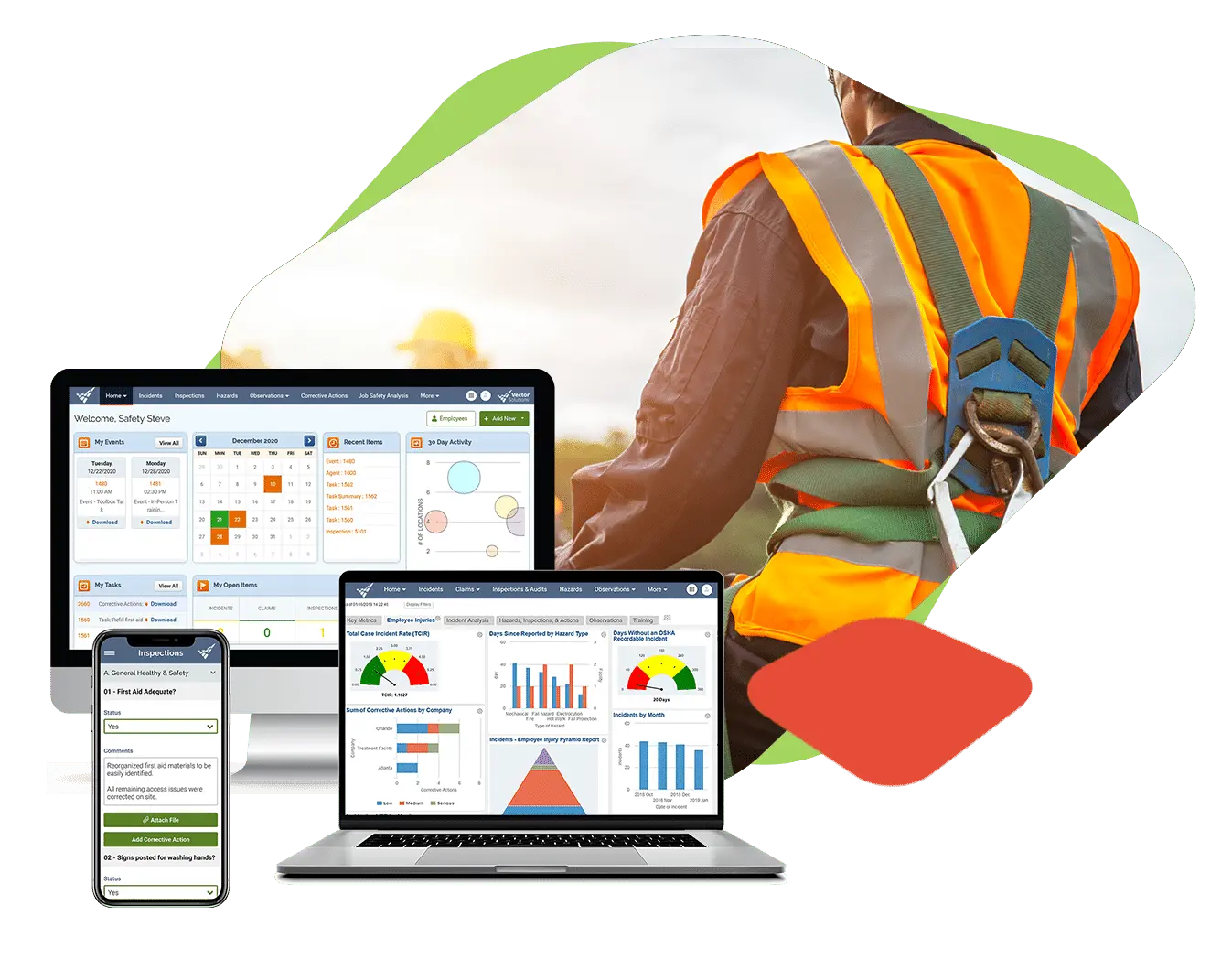
FAQs About Closed-Loop Safety
What’s the Difference Between Closed-Loop Safety and Closed-Loop Communication?
Closed-loop safety applies to your whole safety program. It makes sure every incident leads to a root cause, a fix, targeted training, and a check that the fix worked. Closed-loop communication applies to single exchanges on the job. It uses a call-out, check-back, confirmation, and completion report to make sure critical messages are understood and carried out. Both work on the same idea: don’t assume, confirm.
When Should an Incident Be Considered Closed?
An incident should close only after the corrective action is complete, any assigned training is complete, and a follow-up check confirms the hazard is controlled. Closing a case when the report is filed leaves the loop open. Write your closure rules down so every site applies the same standard.
Is Retraining Always the Right Corrective Action?
No. Retraining works when the root cause is a gap in skills or knowledge. If the root cause is a missing guard, a broken tool, or an unclear procedure, training alone won’t prevent the next incident. Start with the strongest fix you can make, and add targeted training when it addresses the actual cause.
How Do I Know My Closed-Loop Safety Program Is Working?
Track leading and lagging indicators together. Leading indicators include the percentage of corrective actions closed on time, average investigation time, and completion rates for incident-related training. The main lagging indicator is the repeat incident rate. Since injury data takes time to change, rely on the leading indicators for early proof.
Can I Run Closed-Loop Safety Management in Spreadsheets?
You can at a single small site, but it gets harder as you grow. Spreadsheets make it hard to link an incident to its corrective actions and training records, and harder still to prove that link during an audit. A system that connects incidents, corrective actions, and training in one place makes each loop visible and easier to close.