September 9, 2025 5 min read
What Is a Hydraulic System? Definition, Design, and Components
Industry:
Solution:
An Overview of Hydraulic Systems
Hydraulics power much of the modern industrial world, but at its core, a hydraulic system is simply a way to transfer energy using pressurized fluid. If you’ve ever wondered what is hydraulic system technology, it’s essentially the science of using incompressible fluids to create motion and force.
With a variety of applications, hydraulic systems are used in all kinds of large and small industrial settings, as well as buildings, construction equipment, and vehicles. Paper mills, logging, manufacturing, robotics, and steel processing are leading users of hydraulic equipment.
As an efficient and cost-effective way to create movement or repetition, hydraulic system-based equipment is hard to top. It’s likely your company has hydraulics in use in one or more applications for these reasons.
We’ll provide more information about hydraulic systems in this article, including covering the definition and basic designs and components.
Hydraulic System Working Principle
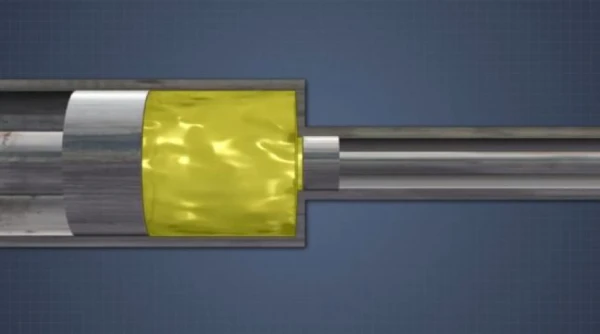
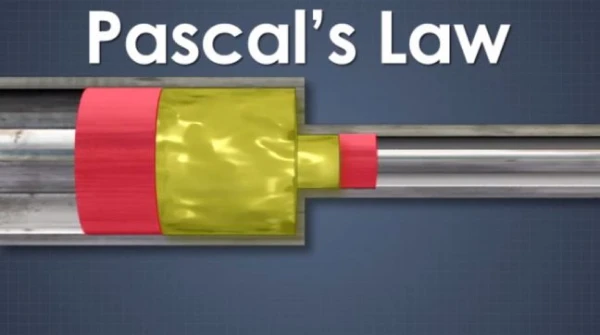
The hydraulic system working principle is based on Pascal’s Law, which states that pressure applied to a confined fluid is transmitted equally in all directions. This principle allows hydraulic systems to convert energy into linear or rotary motion through components such as actuators and cylinders. By managing fluid dynamics and controlling pressure with valves, a hydraulic system can achieve high levels of force with precise control.
Hydraulic Circuits
Transporting liquid through a set of interconnected discrete components, a hydraulic circuit is a system that can control where fluid flows (such as thermodynamic systems), as well as control fluid pressure (such as hydraulic amplifiers).
The system of a hydraulic circuit works similar to electric circuit theory, using linear and discrete elements. Hydraulic circuits are often applied in chemical processing (flow systems).
Hydraulic Pumps
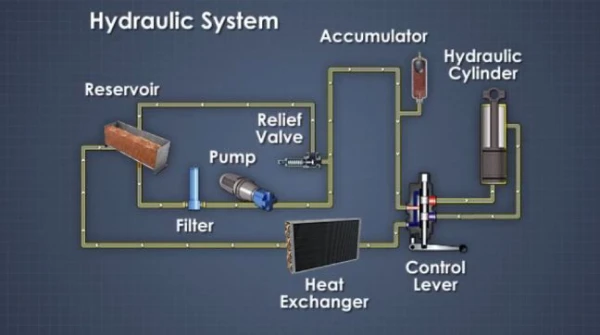
Mechanical power is converted into hydraulic energy using the flow and pressure of a hydraulic pump. Hydraulic pumps operate by creating a vacuum at a pump inlet, forcing liquid from a reservoir into an inlet line, and to the pump. Mechanical action sends the liquid to the pump outlet, and as it does, forces it into the hydraulic system.
Operators can improve skills and reliability by completing maintenance training for hydraulic systems.
Hydraulic Motors
The conversion of hydraulic pressure and flow into torque (or a twisting force) and then rotation is the function of a hydraulic motor, which is a mechanical actuator.
The use of these is quite adaptable. Along with hydraulic cylinders and hydraulic pumps, hydraulic motors can be united in a hydraulic drive system. Combined with hydraulic pumps, the hydraulic motors can create hydraulic transmissions. While some hydraulic motors run on water, the majority in today’s business operations are powered by hydraulic fluid, as the ones in your business likely are.
Hydraulic Cylinders
A hydraulic cylinder is a mechanism that converts energy stored in the hydraulic fluid into a force used to move the cylinder in a linear direction. It too has many applications and can be either single-acting or double-acting. As part of the complete hydraulic system, the cylinders initiate the pressure of the fluid, the flow of which is regulated by a hydraulic motor. For professionals looking to strengthen troubleshooting and testing skills, gamified electrical maintenance training offers a practical way to apply these concepts.
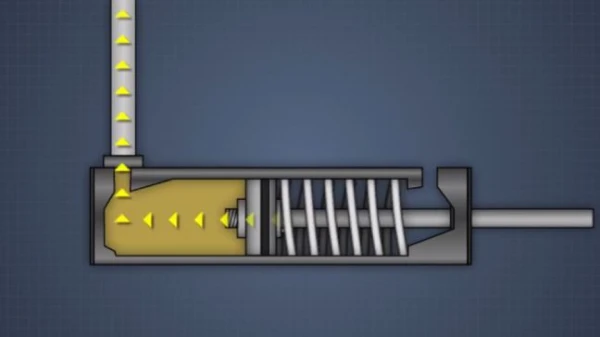
Hydraulic Energy and Safety
Hydraulics present a set of hazards to be aware of, and for that reason safety training is required.
For example, this short sample from our online hydraulic safety training course explains some of the ways the fluids in a hydraulic system can be hazardous.
Remember, the purpose of hydraulic systems is to create motion or force. It’s a power source, generating energy.
Don’t underestimate hydraulic energy in your safety program. It is small but mighty in force. And like any force, it can do great good or great harm.
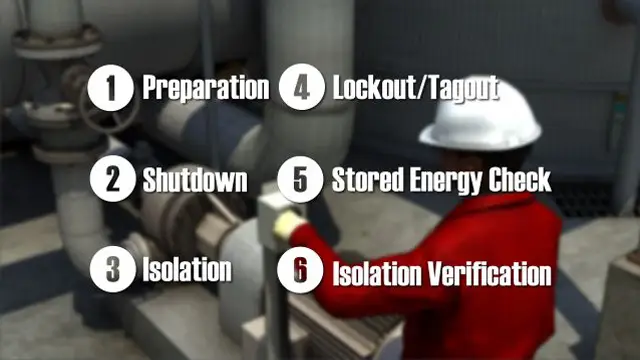
In the workplace, that translates to a potential hazard source, especially if uncontrolled. Hydraulic energy is subject to OSHA’s Lockout/Tagout rules, along with electrical energy and other similar hazard sources. Be sure to train workers about the hazards of uncontrolled hydraulic energy, especially during maintenance, and the need for lockout/tagout, as illustrated by this still image from one of our online lockout/tagout training courses.
If neglected in procedures or forgotten when servicing equipment, uncontrolled hydraulic energy can have devastating results. Failure to control hydraulic energy frequently causes crushing events, amputations, and lacerations to exposed workers.
Therefore, like other energy sources, hydraulic energy must be controlled, using an appropriate energy isolating device that prevents a physical release of energy. There are also systems that require the release of stored hydraulic energy to relieve pressure. And also, those engaged in lockout/tagout, must also verify the release of stored hydraulic energy/pressure (usually indicated by zero pressure on gauges) prior to working on equipment.
Also, workers need training which must explain the hazard potential and clearly detail methods to prevent injury. According to OSHA:
“All employees who are authorized to lockout machines or equipment and perform the service and maintenance operations need to be trained in recognition of applicable hazardous energy sources in the workplace, the type and magnitude of energy found in the workplace, and the means and methods of isolating and/or controlling the energy.”
You should be very familiar with any equipment in your business that creates hydraulic energy to ensure your workers are adequately protected through well-detailed procedures and training. And of course, your LOTO program should echo your procedures, and list sources of workplace hydraulic energy devices. (Don’t forget to perform at least annual reviews of the program and procedures to ensure you catch any changes or deficiencies.)
Again, it’s critical anyone involved with hydraulic systems is properly trained. Don’t neglect that aspect.
If you’d like to dig deeper into this topic, we have several courses on hydraulic systems, including Hydraulic System Basics, which outlines the essentials of hydraulic theory, common components, what mechanical advantage is, and how hydraulic fluid is contaminated. In addition, we have two others which provide vital in-depth information, Hydraulic System Valves and Components and Hydraulic System Equipment.
It’s important to understand the principles of these systems, not only for servicing and maintenance, but also to understand the ways the hydraulic systems function to avoid injuries and accidents.
Hydraulic System Design Best Practices
When it comes to hydraulic system design, engineers must account for component sizing, material strength, efficiency, and redundancy to ensure safe operation. Factors such as hydraulic fluid selection, filtration, and pressure limits directly affect system reliability. Safety protocols, compliance with standards like ISO 4413, and routine maintenance are also essential parts of effective hydraulic design.
Practical Applications in Different Industries
Hydraulic systems are important in work environments where high force and reliable control are essential. In construction, they power heavy equipment such as excavators, loaders, and cranes that move large materials safely and efficiently. In manufacturing, hydraulic presses, stamping machines, and automated systems use fluid power to improve production speed and consistency. Transportation and logistics also rely on hydraulics for braking systems, lifts, and material-handling equipment that keep supply chains moving.
These applications highlight how hydraulic systems improve productivity, reduce manual labor, and support safety across some of the most demanding industries.
Conclusion: Hydraulics Are Common in the Modern Workplace
Having a working understanding of hydraulics of the type we’ve covered in this article will help you better understand a modern workplace and will make you or your company more efficient, productive, and safe.