











Health Emergencies: Life-Threatening Allergies
Life-threatening allergies are an increasingly important topic in K-12 school safety, as allergic reactions can occur quickly and without warning. In a school setting, even a small exposure to an allergen can lead to a serious and potentially life-threatening reaction. Staff awareness and prompt response are critical to keeping students and colleagues safe. This course highlights the importance of school-wide preparedness, clear emergency protocols, and quick action to reduce the risk of severe allergic reactions and help ensure a safe and responsive learning environment.
Demos + Pricing
Learn more about our courses, get pricing, and see our platform.
Course Details
Learning Objectives
- Define anaphylaxis and explain how it impacts the body
- Recognize the common signs and symptoms of a severe allergic reaction
- Identify common allergens that may trigger life-threatening reactions in school settings
- Describe how to respond to a suspected anaphylactic emergency, including proper use of an epinephrine auto-injector (EpiPen)
- Discuss strategies to help prevent allergy-related emergencies in schools, including environmental awareness and communication protocols
Specs
- English (US)
- Spanish (US)
- Spanish (European)
- Spanish (Mexican)
- French (Canada)
- French (European)
- Arabic
- Chinese (Simplified Mandarin)
- Chinese (Traditional Mandarin)
- Filipino Tagalog
- German
- Hindi
- Italian
- Japanese
- Korean
- Portuguese (Brazilian)
- Portuguese (European
- Russian
- Thai
- Vietnamese
Frequently Asked Questions
What are life-threatening allergies, and how common are they in schools?
Life-threatening allergies, also known as severe allergic reactions or anaphylaxis, occur when the immune system reacts intensely to a substance that is typically harmless, such as certain foods, insect stings, or medications. These types of allergies are increasingly common among school-aged children. In fact, food allergies affect about 1 in 13 children in the US—roughly two students per classroom. Because allergic reactions can occur suddenly and progress rapidly, awareness and readiness among school staff are essential.
What are common triggers for life-threatening allergic reactions?
The most common triggers in school settings include typical foods (such as peanuts, tree nuts, milk, eggs, soy, wheat, fish, and shellfish), insect stings, latex, and certain medications. Exposure can happen in the cafeteria, during classroom activities, on field trips, or even through contact with shared surfaces. It’s important for schools to identify students with known allergies and take steps to minimize exposure.
How should school staff respond to an allergic emergency?
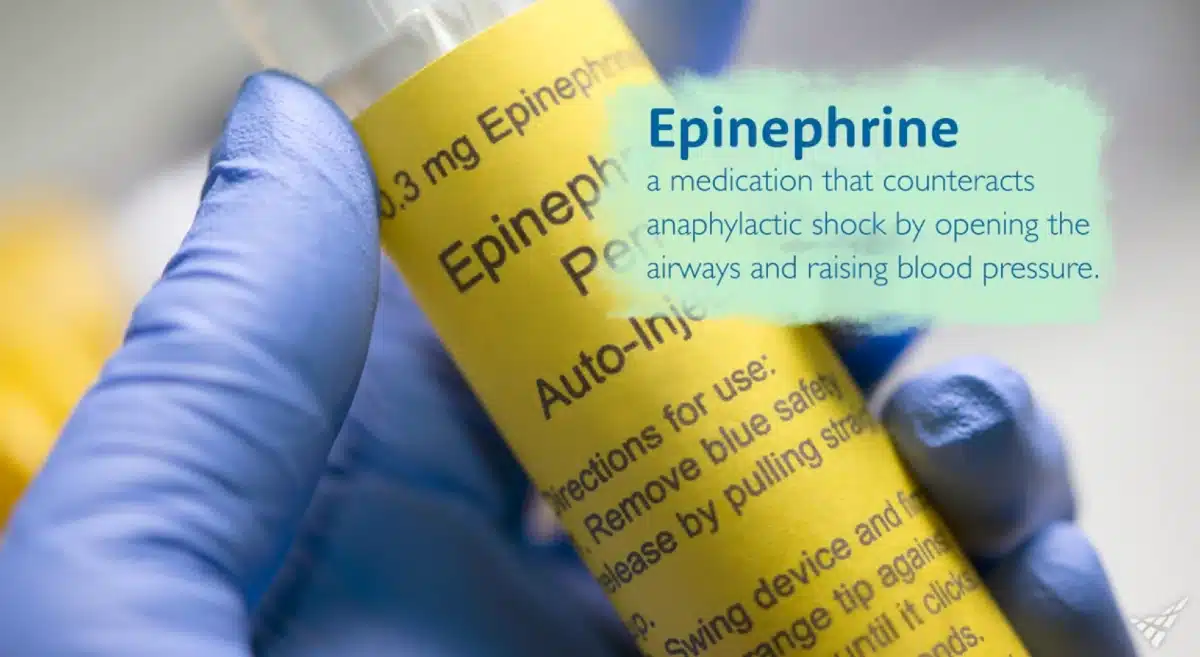
Suppose a student is showing signs of a life-threatening allergic reaction. In that case, staff should act quickly by administering an epinephrine auto-injector (such as an EpiPen) if available and calling emergency services (911). Time is critical, and epinephrine is the first line of defense. Even if symptoms improve after administration, the student must still be evaluated by medical professionals. All staff should know their school’s emergency protocols and where epinephrine is stored.
What should schools do to help prevent allergic reactions?
Prevention starts with awareness and planning. Schools should maintain up-to-date health records for students with allergies, ensure clear communication between staff and families, and create allergy-safe zones when needed (such as nut-free tables). Staff should be trained to read food labels, recognize symptoms, and respond appropriately in emergencies. Promoting a culture of awareness and inclusion also helps prevent accidental exposures and supports students’ physical and emotional well-being.
Sample Video Transcript
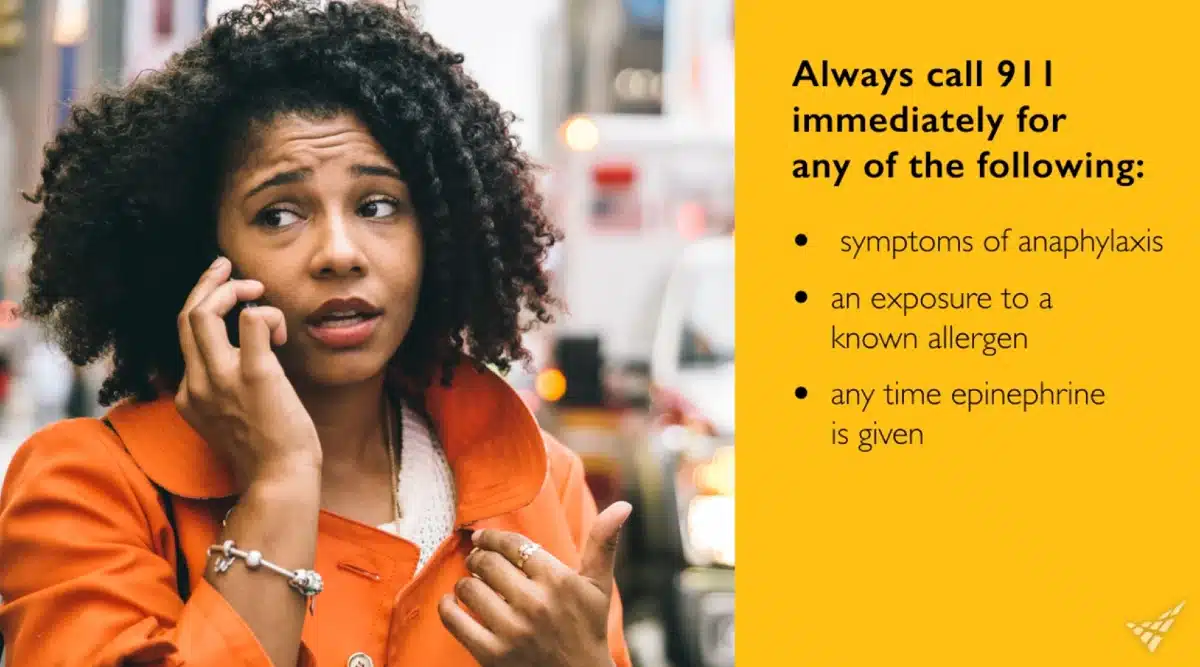
If you suspect anaphylaxis, never leave a student unattended. Call for assistance according to your campus emergency response plan and/or accompany the student to the health room. If you aren’t sure that the student is experiencing anaphylaxis, always play it safe and proceed as if anaphylaxis is occurring. Always call 911 immediately for any of the following symptoms of anaphylaxis – exposure to a known allergen and/or any time epinephrine is given.
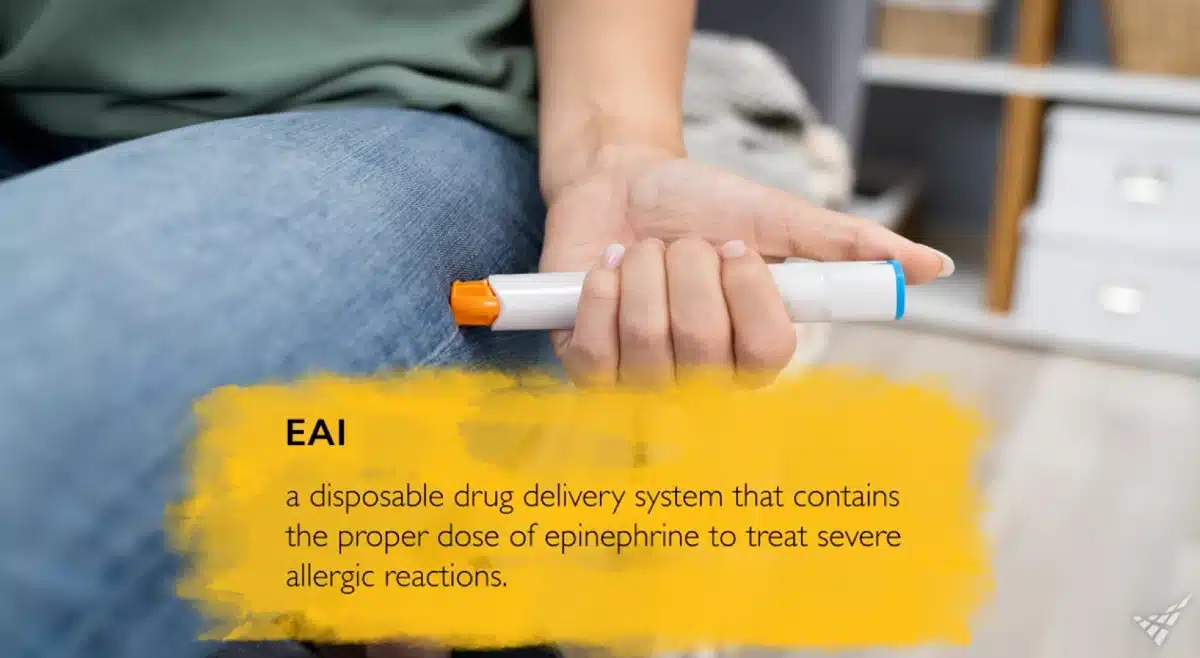
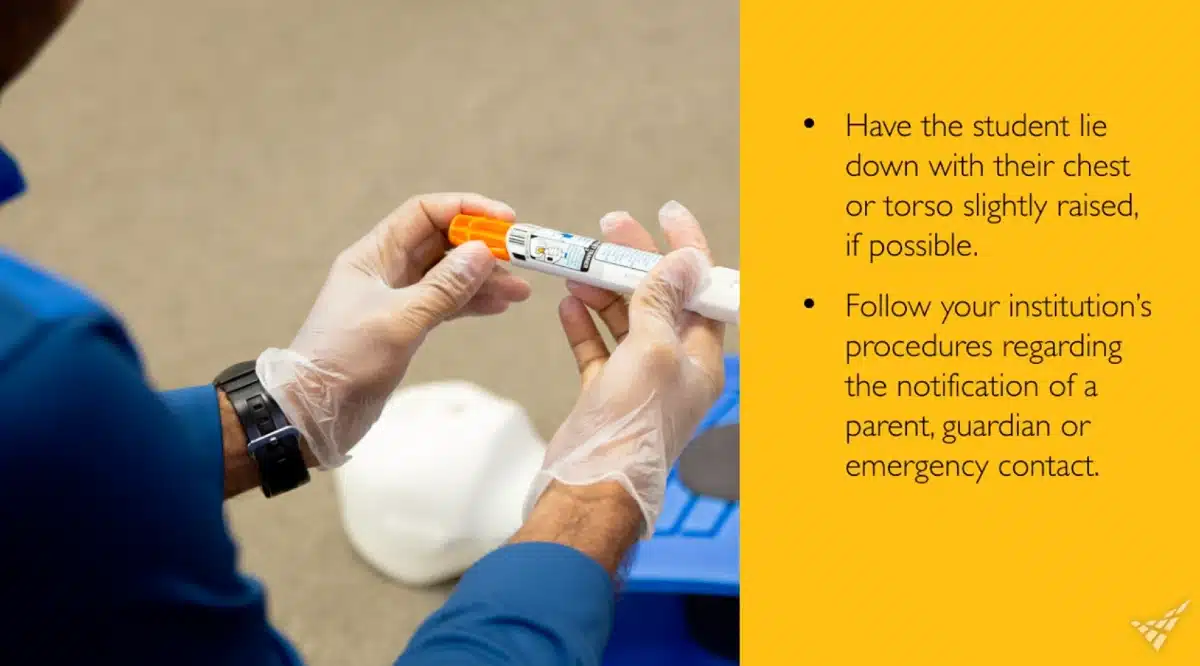
If you suspect anaphylaxis, you should also follow your institution’s policies regarding the use of epinephrine auto-injector, or EAI, or it may be stored in the health room or other designated location. Remove the potential allergens. Have the student lie down with their chest or torso slightly raised if possible, and follow your institution’s procedures regarding the notification of a parent, guardian, or emergency contact. Be prepared to start CPR if the student stops breathing.


