











Health Emergencies: Seizures
This course is a concise tutorial designed for all staff members. All employees must know the basics of epilepsy and seizures to be ready to respond to ensure the safety of students. This course covers statistics on epilepsy and seizures in general, definitions of types of seizures and their various symptoms, first aid suggestions for seizures, and suggestions to minimize injury.

Demos + Pricing
Learn more about our courses, get pricing, and see our platform.
Course Details
Learning Objectives
- Recognize common types of seizures and their associated symptoms
- Apply appropriate first aid steps when a student experiences a seizure
- Understand common treatments, medications, and classroom accommodations for students with seizure disorders
Specs
- English (US)
- Spanish (US)
- Spanish (European)
- Spanish (Mexican)
- French (Canada)
- French (European)
- Arabic
- Chinese (Simplified Mandarin)
- Chinese (Traditional Mandarin)
- Filipino Tagalog
- German
- Hindi
- Italian
- Japanese
- Korean
- Portuguese (Brazilian)
- Portuguese (European
- Russian
- Thai
- Vietnamese
Frequently Asked Questions
What should K-12 staff do if a student has a seizure during class?
When a student experiences a seizure in the classroom, staff should stay calm and focus on keeping the student safe. The student should be gently guided to the floor, and nearby objects should be cleared to prevent injury. Something soft should be placed under the student’s head and the student should be turned onto their side, if possible, to help maintain a clear airway. Staff should avoid restraining the student or placing anything in their mouth. The seizure should be timed, and symptoms observed. After the seizure ends, staff should stay with the student, offer reassurance, and notify the school nurse while following the school’s emergency procedures or the student’s seizure action plan.
How can school staff recognize when a student is having a seizure?
Seizures can look different depending on their type. Some students may have convulsions or full-body shaking, while others may appear to stare blankly, seem confused, or show repetitive movements. Other signs may include sudden muscle stiffness, collapse, or brief lapses in awareness. Some seizures are so subtle they may be mistaken for daydreaming. It’s important for school staff to be familiar with these signs so they can respond appropriately and quickly.
Are all seizures considered medical emergencies in a school setting?
Not all seizures require emergency medical attention. Many are short and resolve without intervention. However, any seizure should be taken seriously and documented according to school policy. Staff should follow the student’s seizure action plan and closely monitor the student during and after the event. Understanding the difference between typical and emergency situations helps staff respond appropriately and avoid unnecessary panic.
When should school staff call 911 during a seizure?
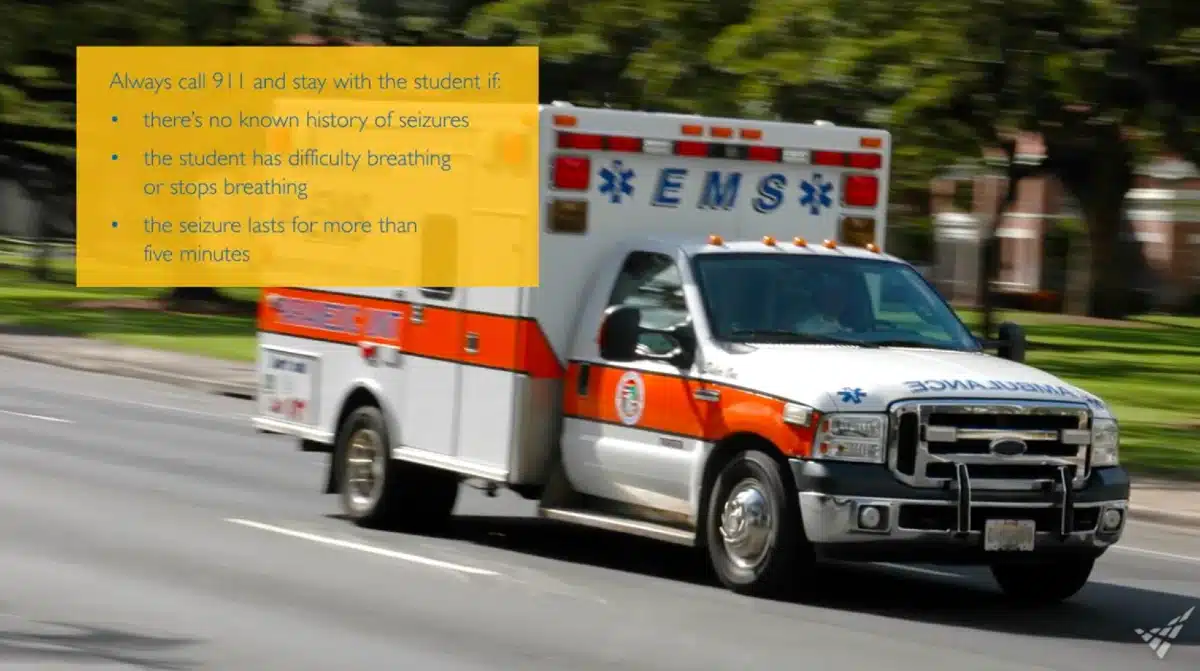
Emergency services should be called if a seizure lasts more than five minutes, if the student has multiple seizures without regaining consciousness, or if it is the student’s first known seizure. Staff should also call 911 if the student is injured during the seizure, has trouble breathing afterward, or does not return to their usual state. Regardless of the severity, staff should notify the school nurse and follow district protocols for contacting parents or guardians.
Sample Video Transcript
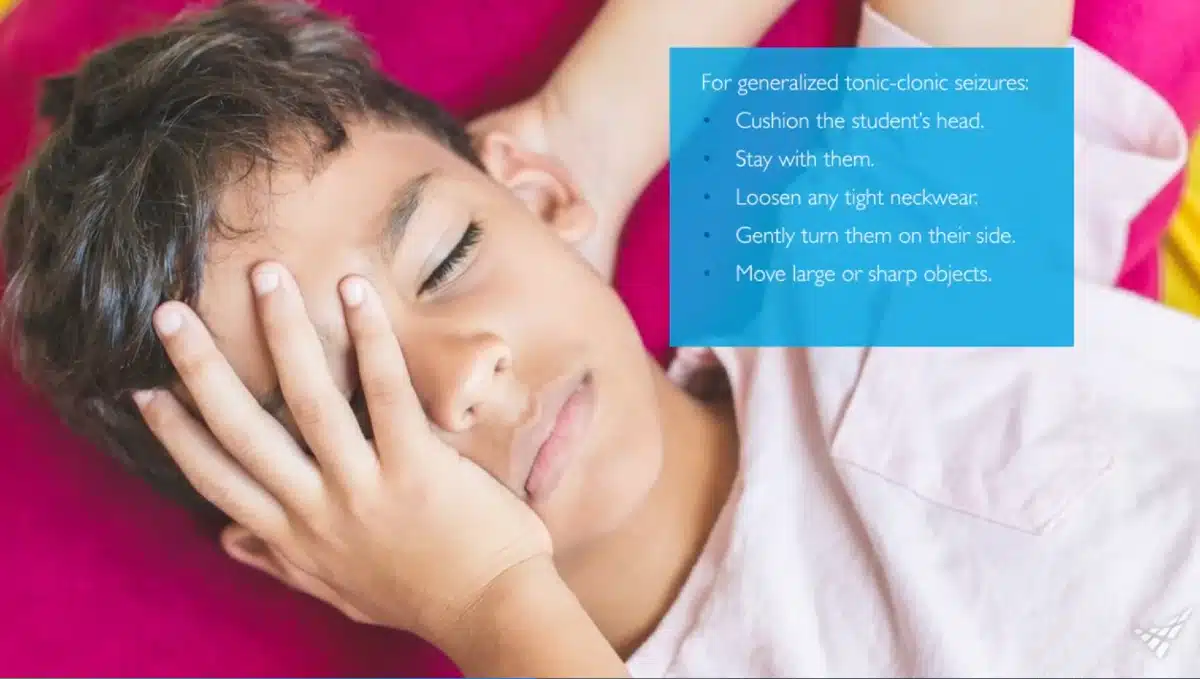
For generalized tonic-clonic seizures, where a person usually loses consciousness, falls, stiffens, and jerks uncontrollably, take these steps. Cushion the student’s head. Stay with them. Loosen any tight neckwear. Gently turn them on their side. This will help to keep the airway clear. Move large or sharp objects to protect the student from harm. Look for medical identification such as an ID bracelet or necklace. Note and record when seizure activity starts and ends. Offer help and assurance as the seizure ends. Notify parents or guardians and reassure and assist other students in understanding the seizure activity they may have just observed.
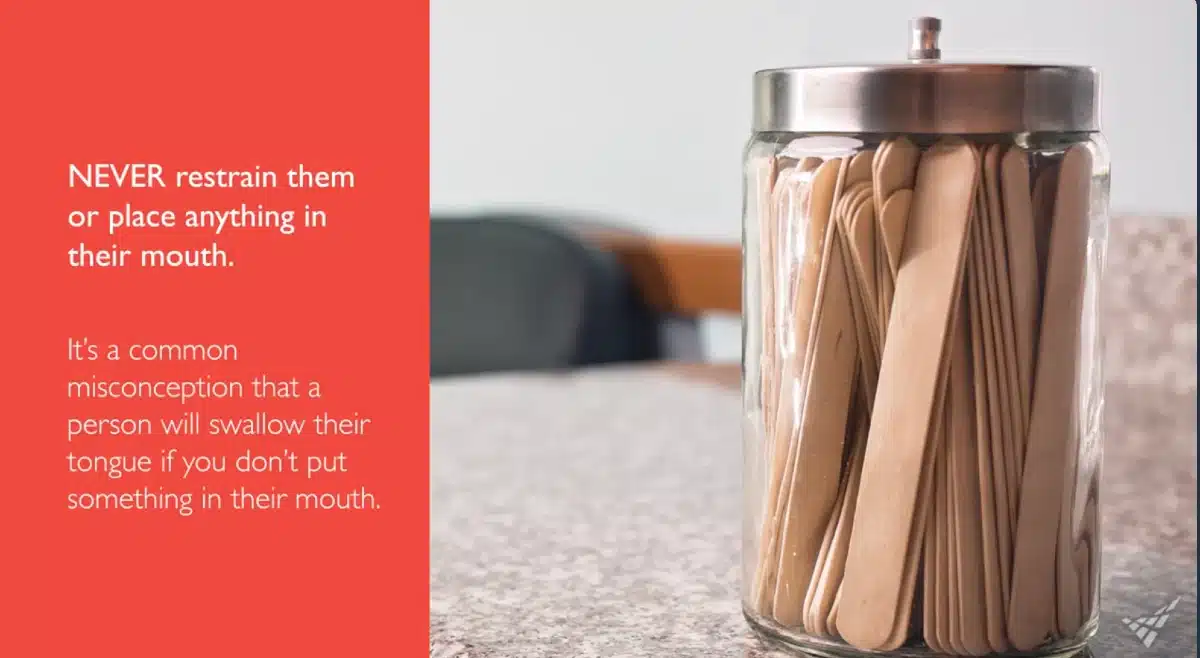
Remember, if you’re assisting a student during a seizure, never restrain them or place anything in their mouth. It’s a common misconception that a person will swallow their tongue if you don’t put something in their mouth. Rest assured that this won’t happen. A person is more likely to break or swallow the object instead.


