March 22, 2022 1 min read
Addressing Cannabis on Campus: Recent Science and Opportunities for Prevention
Industry:
Solution:
As more states change the legal status of cannabis for non-medical or medical purposes, it is important to consider what this evolving legal climate means for college campuses. This webinar reviews the science related to cannabis and increasing THC concentration/potency, as well as the associations between cannabis use and mental health, academic outcomes, and risk for addiction.

Presenter Jason Kilmer
Dr. Jason Kilmer is an associate professor in Psychiatry & Behavioral Sciences at the University of Washington School of Medicine. He has been a part of several studies evaluating prevention and intervention efforts for alcohol, cannabis/marijuana, or other drug use among adolescents and young adults. Jason has provided expertise to several national initiatives focused on college health and has presented to students or professional staff supporting students on 120 campuses nationwide. Jason was the 2014 recipient of the National Prevention Network’s Award of Excellence for outstanding contributions to the field of prevention, and was also the 2017 recipient of the Washington State Prevention Professional Award of Excellence.
CannabisEDU Course
The ongoing legalization of medicinal and recreational cannabis has allowed for more research into the effect of cannabis on the brain and how it can impact attention, concentration, and memory. While the majority of students don’t use cannabis, those who do may have questions about its use. This course offers information to help students make informed decisions about cannabis, how to know when someone’s use has become problematic, and how to help a friend who may have a problem with their cannabis use.
CannabisEDU
Cannabis on Campus Webinar Learning Objectives
You’ll learn the following:
- Cannabis on Campus | Recent Science Highlights (02:30.40): Dr. Jason Kilmer discusses how cannabis use among college students is often misunderstood and shares that most students actually don’t use cannabis. He covers the myths and misperceptions fueling risky behavior and breaks down how language, new forms of consumption, and shifting social norms shape student attitudes.
- THC Potency | What Campus Leaders Need to Know (14:57.95): Dr. Jason Kilmer explains how cannabis potency has dramatically increased over the decades and why that matters for young people, specifically college students. And explores how today’s high potency products are linked to greater risks, including addiction, anxiety, and even psychotic disorders, underscoring the need for awareness and prevention.
- Cannabis Use Disorder | Campus Tools & Indicators (21:22.06): Dr. Jason Kilmer covers how cannabis use can undermine students’ attention, memory, sleep, and academic performance, while also elevating risks for mental health problems, addiction, and even suicide. He emphasizes the need for clear prevention strategies, careful screening for cannabis use disorder, and adherence to federal regulations, reminding campuses that effective policies must combine education, enforcement, intervention, and recovery support.
- Cannabis Prevention on Campus | Effective Strategies (38:52.33): Dr. Jason Kilmer highlights that evidence-based prevention requires consistent delivery, thoughtful messaging, and strong campus partnerships. He stresses the value of harm reduction, targeted education, and correcting false norms, while also showing how parental influence continues to shape student behavior.
- Q&A Marijuana Prevention in Higher Education | Programs & Policy Notes (47:10.11): Dr. Jason Kilmer highlights the difficulties colleges face in educating students about cannabis use, especially around potency, dosing, and misconceptions about safety. He acknowledges that while science is still catching up, the real challenge is helping students connect their use to academic struggles and health risks and providing tools like motivational interviewing and harm reduction strategies that resonate.
Additional Resources
- Considerations for using the terminology Cannabis or Marijuana
- Mapping cannabis potency in medical and recreational programs in the United States
- High-THC Concentration Cannabis
- The Cannabis Use Disorder Identification Test – Revised (CUDIT-R)
- Complying with the Drug-Free Schools and Campuses Regulations [EDGAR Part 86] A Guide for University and College Administrators
High-Impact Prevention and Safety Training for College Students
Increase safety, well-being, inclusion, and student success on campus with proven-effective college student training on critical prevention topics.
Explore student training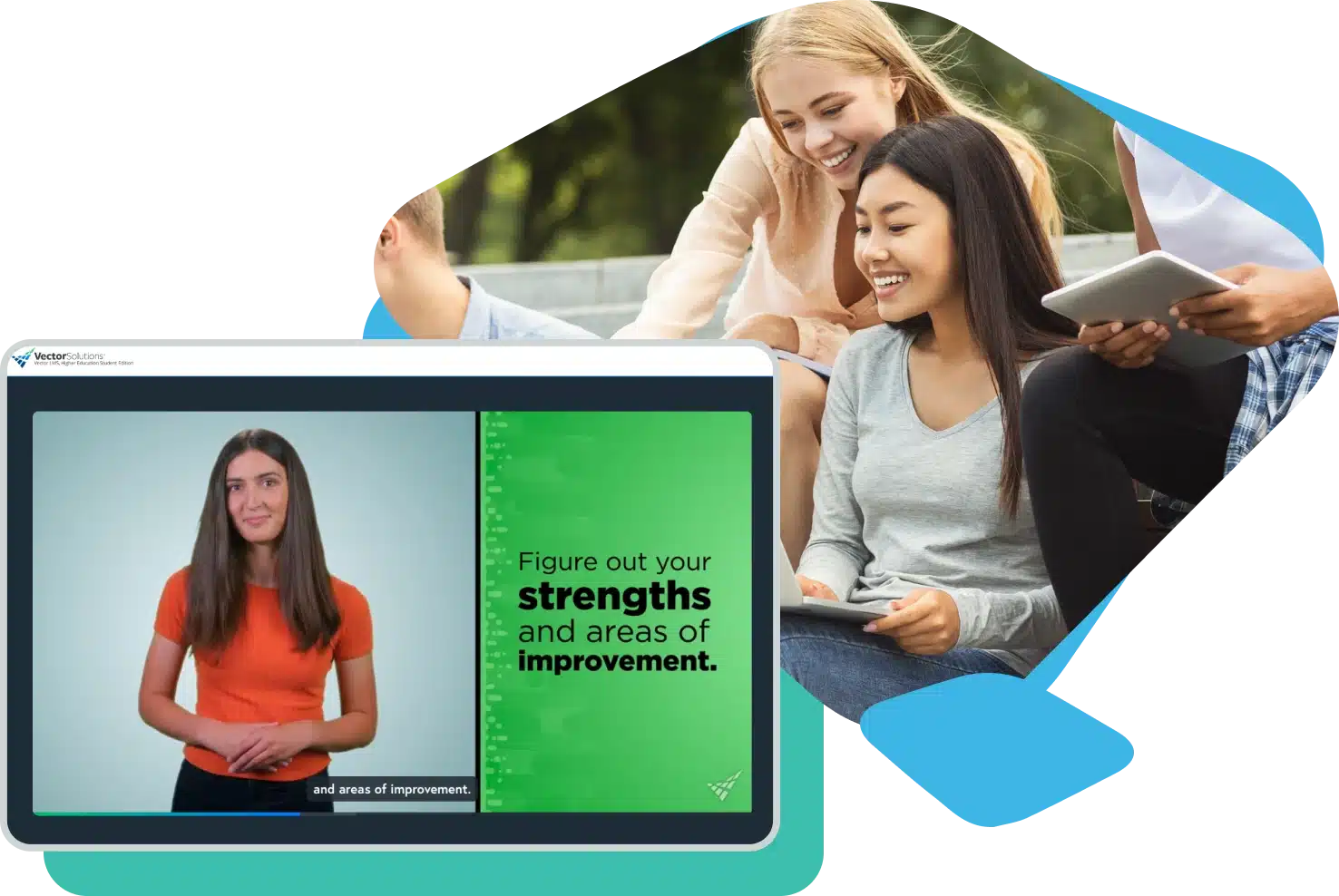
Video Transcript
Good afternoon, everyone, thank you so much for spending some time out of taking some time out of your schedule, which I know is a lot. And joining us for today’s webinar for addressing cannabis on campus, recent science and opportunities for prevention. Few housekeeping items before we jump in and you see on the screen.
And as you’ve heard, we are all attendees are in listen only mode. If you run into any audio issues, please try another method of listening in. If you’re on computer and that’s not working, try calling in or vice versa. All residents, registrants and attendees are going to receive a link to the recording of this webinar in a follow up email, so make sure that you keep an eye out for that.
And if you have questions during the presentation, you can let us know by typing those into the panel on the right of your screen or the chat session, and we’ll do what we can to address these at the end of the presentation. Hopefully, we’ll have enough time to cover it, and if not, we will respond again in that follow up email. So I am very excited and honored to introduce today’s speaker Dr. Jason Kilmer.
Dr. Kilmer is an associate professor in psychiatry and Behavioral Sciences at the University of Washington School of Medicine. He’s been part of several studies evaluating prevention and intervention efforts in alcohol, cannabis, marijuana or other drug use in both adolescents and young adults. He’s landed his expertise to several national initiatives focused on College Health and has presented to students or professional staff supporting students on over 120 campuses nationwide.
Jason was the 2014 recipient of National Prevention network’s award of excellence for Outstanding contributions to the field of prevention, and was also the 2017 recipient of the Washington State prevention professional award of excellence. And you know, Jason, I’ve heard you speak many times and always learned something new. So excited to once again welcome you and say thank you on behalf of those particularly who have been doing this work for many years. Thank you for the work that you have done that has contributed to the research base in this field, especially on the topic that we are going to explore today.
So without further ado, I’ll turn it over Jason Kilmer.
Cannabis on Campus — Recent Science Highlights
Kimberly, that’s so nice of you. Good to see you. Thank you for the kind introduction and thank you as well for all you do.
What I said I’d cover is people will be able to identify a screening measure for cannabis use disorder, identify at least two risks or outcomes associated with cannabis use, and identify at least one prevention opportunity for use on campus.
I’m primarily work with college students, and that’s not only the age group I’m most comfortable working with, but the setting I’m most comfortable working with. I got asked to present to a group of ninth graders. Here’s a fun tip never present to ninth graders. I think that’s just good words to leave everyone with, but I know what college students ask.
I didn’t know what ninth graders asked, so I asked the teacher, can you get a list of questions anonymously and send them to me? And the person passed on a lot of questions that we get from the students. We work with lots of the common things. But as I was going through the list, I was struck by one you’ll see right about in the middle.
That said, is it true that smoking marijuana turns your lungs into orange slices? And I’m like, what? What? I forwarded it to a colleague and I said, what’s going on here?
And she said, I think the kids are messing with you. And I’m like, I don’t want to believe that. I don’t want to believe some ninth graders like sin. So I looked on reddit, which is the hotbed of all things science based, and someone is a joke said, please forward the following picture and save a life.
Here are the lungs of a teenager who died from smoking marijuana, and it was just this picture of an orange. The first person who responded said, dude, that’s an orange. And the initial poster said, don’t be disrespectful. That’s a dead teenager’s lungs.
We can look at that and go, that’s clearly an orange. The ninth graders I worked with were like, no, look, you can see the trachea. I’m like, literally, what’s happening right now? So may all of the questions you get from your students not trend toward that direction.
Our language around cannabis has changed a lot. Even 10 years ago, we talked primarily about people smoking, maybe talking about edibles. Now we use has gotten a lot more sophisticated. And as retail markets and even medical markets have progressed, the ways in which people use change.
People can smoke. It’s smokable bud or flower in joints, bongs pipes. It can be vaped brewed as a tea infused drinks, gummies, cookies, brownies and quotes edibles. They’re also concentrates, which are extracted cannabinoids.
Dabbing has become a verb. There are dab pens for hitting dabs. Hash oil, butter shatter if smoked or vaped. People will feel it essentially immediately if consumed in food or drink.
There’s more of a lag 30 to 60 minutes, but retail stores in Washington even warn about the potential for a two hour lag in the handouts I make available. This link will be here. If you can see my mouse scrolling right there, you’ll notice that there’s not a typo in my slide. Due to budget cuts, the letters were cut from the word terminology in Washington state, but our liquor and cannabis board and our Department of Health ran as many focused groups as they could with people as young as 12 to much, much, much, much older people.
In part, our legalization initiative. The word cannabis appeared, what, three times the word marijuana over 100 times and people started saying, well, honestly, if you look historically, the word marijuana has been used for some not so great reasons with fairly racist intentions. We should, we should say cannabis. Plus that’s much more inclusive of the range of products.
What they started to learn is people didn’t know necessarily what that was. I worked in a student life office where we would ask people how to use cannabis in any form in the past six months, and college students would say no. But when they met with one of us would say they use weed every day and we’re like, hold up. You said you didn’t use cannabis and they’re like, I don’t know what that is.
At the end of the day, use the word that the human being across from you uses. So if someone says I use weed, we’re not going to correct them and say, could you please call it this? But if useful, you can look at the lessons learned from our state’s focus groups on what age group and what terminology tends to be the best fit. I on my slides will talk about cannabis marijuana interchangeably when we look at norms.
A lot of people say, you know, why do we need to make sure we’re aware of college students? College students tend to be the age group where we see the most prevalent cannabis use. These are data from SAMSA, the Substance Abuse, Mental Health Services Administration’s national survey of drug use and health from 2020: 12 to 17 year olds, 10% past year youth 26 and older 16% 18 to 25 year olds, whether they’re in college or not. 34.5%
What are we often hear in quotes? Everyone uses marijuana. That’s just not true. Sandra Wolfson is one of the first researchers to show the most significant misperceptions of cannabis use come from those that use most heavily.
If you’re working with a student who uses daily, they’re convinced your data are wrong and everyone uses daily. And the truth is, survey after survey tells a consistent story. So obviously, you can see most people don’t use. Quick side note.
I’d like to thank SAMHSA for putting me in an age group with 26-year-olds to thank SAMHSA. When we look at the Monitoring the Future study. Yes, I’m so sorry to interrupt you. People are we’re having trouble seeing your entire screen.
So it looks like it zoomed into a lot of information that I am going to yet again stop sharing my screen. I’m so I’m going to know. I’m glad you said something earlier. And, Uh, man.
So I’m just going to share my whole screen instead of the application. See if that makes a difference. And I will again try sharing my little screen, did that work? Yep all right.
Thanks you know, I’ve been on Zoom for 25 months. And I can probably run a class on Zoom. This is my third time. I’d go to webinars site for the challenges there in the future study for those that couldn’t see the slides.
This is what I showed. Sorry, he didn’t see the whole thing in the future. Again, the big takeaway. Most people aren’t using.
You might hear differently. Most people aren’t using. Typically, when we look at current use, we look at past 30 day use. It’s about a quarter, the report past month use.
Obviously, there are a handful, though, that are using pretty frequently 7.9% report use on 20 or more days in the past month. This article by Scott Groupon’s Berger and colleagues. I think it’s fantastic, and unfortunately, the entire episode of My screen is blocked by the goto logo, so I probably can’t read a lot of it.
But when you look at cannabis use in January 20, this is a study that was naturally collecting data from people in January, and they all knew we were going to be following up with you in the spring. Obviously, our world changed in early 2020. The narrative often is in quotes, everyone using more. That was not the case.
When you look at cannabis use in January 2020, you can see, I can’t see, but typical hours per week, typical days of use per week perceive cannabis use higher people misperceive these. These rates when you look at May. Typical hours per week in typical days of use per week did not change over time significantly. Perceptions did over time, what was the narrative everyone’s using more?
Not true. And if you do a deeper dive into Scott’s data, you can see that when we look at among those who do use typical hours high per week the overwhelming majority, it stayed the same some of them and went down. I do worry about the 21% for whom it increased perceived. Again, gross misperceptions when we look at typical days of use.
76% stayed the same. 9% went down. 14.93 did increase again. We want to make sure that anyone whose use has increased and therefore has clinical needs, those needs are being met.
The perceptions again didn’t match the accurate story there. Why does all this matter? We I learned that my most cited article came out now quite a while ago, but in a survey of almost 6,000 students, we asked how often have you used cannabis in the past year? A third said at least once.
So what do most people do? Not use. When we ask people, what does the typical student do? What’s the right answer? The typical student doesn’t use. Only 2% of people got that right.
98% thought the typical student use at least once per year. Why does that matter? In our study, the more mispronounced the misperception, the more it was related to people’s own use and even their experience of consequences. I was showing the slide to a group of peer health educators, and one of them raised their hand and said, hey, no offense, but your study is getting old.
And I was like, you’re getting old and I’m like, all right, let’s look at some more recent data. I’m the principal investigator of our state’s young adult health survey, where we have collected data from thousands of 18 to 25-year-olds since before retail stores open in 2014 and each year since then, compared to before stores opened. We have seen a significant increase in later cohorts. We’ve even seen a significant linear trend post legalization in this age group past.
Your use is going up. Yet my friends joining this webinar do the math and flip each of these. What are most people do not use when we ask what is the typical person your age do? There’s the same 2% that get it right.
So while our study was certainly getting old, cannabis is this interesting substance where the perceptions. One person in a residence hall, smoking, if people smell it, they’re like, wow, everyone uses weed on this campus. Noteworthy is that by the time we hit that six cohort one in five young adults inaccurately perceive that the typical person was using daily. The problem is, perceived risk is going down for marijuana, whether that’s physical or psychological, emotional, whether that’s occasionally regular with alcohol, perceived risk is going up.
“98% thought the typical student use at least once per year. Why does that matter? In our study, the more mispronounced the misperception, the more it was related to people’s own use and even their experience of consequences.”
Dr. Jason Kilmer
Associate Professor in Psychiatry & Behavioral Sciences at the University of Washington School of Medicine
THC Potency — What Campus Leaders Need to Know
The science clearly shows there are risks out there. One of the main things we need to do is make sure people understand how much this substance has changed. If you orient the brains, it’s the front of the brain is on the left to the side, back of the brains on the right. The most well-studied cannabinoid in cannabis is THC.
Where does THC bind in the brain all over the place? We’re working with very driven people on college campuses, and a lot of times they ask, can marijuana affect motivation? Well, what regulates motivation, the anterior cingulate cortex, the dorsolateral prefrontal cortex? Don’t worry about the fancy words.
Where’s that part of the brain right here? So what this means is we want to be very, very aware of THC concentration or THC potency. What does scientists consider the strong stuff? Anything over 10% THC?
Keep that number in mind. Our civilian colleagues looking at cannabis seized in the illicit market by the Dea. We’re able to document changes over a 20 year period, and when packaged with Dr. Nora Volkow of 2014 article, it lets us estimate cannabis potency going back to the 1970s.
When you hear people who are older today reflecting on their time in the 70s and they say that they in quotes smoked grass because it was practically grass, it was one 1 and 1/2 THC in the 1980s, 2% to 3% THC by 95. 4% by 2001, 6% by 2006, 8% We’ve been in the illicit market double digits since 2010, but look, we run out well. They updated their article at the end of 2021. Again, we’ve been a we’ve seen cannabis in the United States be above that high potency threshold for the past decade.
But what about states that have legalized my state second ever marijuana impact report when it was released show that the average potency of smokable Bud or flower in the United States was a never before seen 13.18 never before seen to come to Seattle, the average available for their purposes they used. One store in Seattle was 21.62. Hash oils and concentrates nationwide, 55.85 percent, the average in Seattle. 72%
Just to show you that this story continues to evolve, smart and colleagues looked at over two years of cannabis sales and this is flower products. This excludes the concentrates that little baby blue sliver. Uh, that’s cannabis under 10% It’s been virtually eliminated from the retail market after the last 12 months, sorry for saying the word virtually brick.
Read 10 to 15 green, 15 to 20 purple over 20% cash and colleagues looked at recreational in quotes and medical programs in the United states, 95.91 of Colorado’s market high potency cannabis. California is only 0.01% off.
The only difference? Larger portion of the pie is 10 to 15, but is nevertheless still high potency in my state. 97% high potency cannabis. When you look at New England and the states that had data available for this report, again, it’s a very, very consistent and very similar story.
The majority of the market, our high potency cannabis. Why does this matter, especially to us on college campuses to 40 and colleagues showed across 11 cities in Europe and brazil? That high potency cannabis was associated with the onset of psychotic disorder. If someone uses cannabis over 10% THC daily, their odds of developing a psychotic disorder go up 5 to six times over people who don’t use it all.
Think of all, we’re doing on college campuses to address mental health. People need to be mindful of what you’re doing about cannabis prevention if you’re also trying to address mental health. Haynes and colleagues showed that people following followed from adolescence to the age of 20 for use of cannabis over 10% THC, more cannabis use disorder addiction, more generalized anxiety disorder. It’s so ironic if people say, I use because I’m anxious.
It can cause and worsen anxiety out of Canada. Problematic cannabis use increase in cannabis use disorder. More mental health disorders with high potency products. Finally, in my state, this link will be in your handout.
I’m a state employee. You know, we’re reminded during election season you can’t come out for or against a candidate or initiative that’s a state ethics violation. So we speak when spoken to the state, came to a committee of researchers and said something’s changed in Washington. We don’t want any one researcher having to evaluate that because they can be accused of bias.
We don’t want anyone school having to evaluate that. I was honored to be one of nine researchers that they invited from Washington, University of Washington and Washington State University. They jokingly said, your rivals, you don’t agree on anything. If all nine of you can agree on a consensus statement, this will see the light of day.
This got published. There is a 20 page research review. There’s a two page CliffsNotes version. Cliff was one of my favorite authors when I was younger, so.
And there’s even slides you can use. What did we conclude, especially before the age of 25? Young people are particularly vulnerable. This high potency cannabis, no joke and the risk of getting addicted, particularly young adolescents and young adults, goes up with high potency cannabis products.
What are we often hear in quotes? It’s just read my friends. It stopped being just weed years ago when people say, but it’s natural. Those concentrates do not occur in nature.
Smokable butter, flour that’s pushing 30% THC that doesn’t occur in nature, that takes intentional breeding of created high potency strains.
“If someone uses cannabis over 10% THC daily, their odds of developing a psychotic disorder go up 5 to 6 times over people who don’t use it all.”
Dr. Jason Kilmer
Associate Professor in Psychiatry & Behavioral Sciences at the University of Washington School of Medicine
Cannabis Use Disorder — Campus Tools & Indicators
So when we look at what does this mean on college campuses in no order at all? I think what it’s really important to put a spotlight on are the cognitive impacts, the part of the brain that, among other things, affects attention, concentration and memory. The hippocampus after cannabis use, the neurons in this part of the brain get suppressed.
They fire, but they fired a rate that’s lower and slower than they could or should be firing. Harrison Pope is a researcher who in the 90s said I want to test this with college students, but I don’t want to get people really high and make them take a test. I want to test people. 24 hours after their use.
24 hours later, measurable decreases in attention, concentration and memory and the more frequently people typically used, the more pronounced these decreases are. Scientists said that is a solid finding, critics said. Is it it’s not causal? What if people who struggle with attention happen to be attracted to cannabis use?
Doctor Pope said we can test that ethically. We can’t take people who don’t use and make them start because that’s unethical. So what if we take people who use every day and have them quit and we follow them over time? If everything stays the same?
Yeah, maybe it was there to start with. But as their substance use goes away, if their cognitive abilities improve, that’s causal. It takes four weeks, but 28 days after stopping daily cannabis use. None of these impacts on attention, concentration and memory are measurable.
Susan tapered lab in San Diego in a sample of 15 and 18-year-olds who averaged use 14 days of the past 30, essentially every other day, two weeks of abstinence for verbal learning. To go back to normal. Three weeks of abstinence for verbal working memory to match that of people who don’t use attention takes the full four weeks. If you are working with a student with ADHD who says I’m treated for it, we can look them in the eye and say cannabis is a terrible fit.
We know of no substance more associated with causing attention decreases, let alone worsening existing ones. Imagine when people say, hey, I wonder if I have adhd? Can I have a prescription? How can we pretend to diagnose if they do or don’t?
If they’re using something that can cause attention decreases? And we know is the more frequently this translates to classroom impacts. The more frequently students use cannabis, the lower the grade point average tends to be. The more they skip class, the less likely to still be enrolled in, the less likely they are to graduate on time.
Impact on sleep quality. You know, these are data from fall of 2019. Remember fall 2019? These are data from the National College Health assessment out of the American College Health Association.
58 schools, 30,000 undergrads of 51 possible barriers to academic success. Cannabis use is in 40th place. I’ll go back inside and note Amelia urrea, my friend and colleague from the University of Maryland, has said. If we did a better job putting a spotlight on these very clear links between academic outcomes and substance use, we might actually boost health seeking when students are struggling academically, but they may not be connecting those dots.
What do they say gets in the way? Procrastination, stress, anxiety and sleep difficulties. There is a back doorway, if not front doorway, to address this for students. A perfect night’s sleep should look like what’s on your screen.
Rem or rapid eye movement sleep where we do our dreaming non-rem, the other four stages, probably most well known. Stage four or deep sleep. Sleep experts have made clear REM is overrated. It’s not that more REM is better.
Instead, as the night progresses, time and REM should get longer, longer, longer time and deep should get less and less and less. If people use cannabis at night, they’ll say, I fall asleep faster. That makes sense. It’s classified as a sedative.
Hypnotic sedative means sedating, hypnotic, mean sleep inducing. But ask the student you’re working with. What do you notice about your sleep? Tell me about your dreaming.
They say two things I don’t dream at all, and I sleep hard. I sleep and I mean it. Here’s why Angus Reid and colleagues showed after cannabis use stage 4 or deep sleep gets extended, REM gets deprived. That’s why people report not dreaming.
The extended time in deep sleep accounts for that sense of, in quotes, sleeping hard. What do we see the next day increases in sleepiness, anxiety, irritability and grumpiness. If people use multiple nights in a row, this is cumulative additive. If someone takes on and off, they go through REM rebound.
I can’t graphically show you insomnia any better than right there. A person slams so fast in the deep immediately into REM that leads to difficulty falling and staying asleep when they get to sleep too much time in rem, not enough time. The other stages of sleep increase in fatigue the next day. What were three of the top four barriers to academic success, stress, sleep problems and anxiety?
You can see that all three of those can be made worse by night time cannabis use. They can be flat out caused by nighttime cannabis use. We do so much in motivational interviewing about developing discrepancies between values and goals of importance to a student and ways in which the status quo might be in conflict with that if their value is I want to do well in school. And I would be doing better.
I’m just so anxious and tired. If we bring in information only approaches don’t change behavior, information in a motivational framework can help to prompt consideration of change. This highlights that the very things that person sees as a barrier to doing well in school could in fact be lessened if they make a change in their cannabis use. Number two factors associated with health and mental health not already addressed earlier.
I believe planet Earth single biggest expert on cannabis is Dr. Wayne Hall at the University of Queensland. Doctor hall, in his famous article with his colleague Louise gesundheit, showed that those that use cannabis 10 or more times by the age of 18 were two to three times more likely to be diagnosed with schizophrenia. They said this finding is so well-established we can make 13% of schizophrenia go away.
If cannabis use was prevented again, think about what this means for mental health on college campuses. I moderated a webinar with Doctor Hall where I asked him, what’s one thing we could do post legalization in schools in our state? He didn’t even hesitate. He said, you’ve got to screen for cannabis use disorder.
Not expecting that answer. I said, why? Why would you say that? And he said, we don’t know what comes first, but we see a scary three way interaction between depression, cannabis use disorder and suicide.
We do not know what comes first, but if a student willing to seek help for depression flags of cannabis dependent that person poses a suicide risk. I asked him, what do you recommend for screening? Cannabis use disorder identification test revised the length this is in the public domain as long as the source is acknowledged. Washington’s recovery helpline has put it out there.
Start to the simple yes, no. There are eight questions. How to score. It is not only at that link, but it will be in your handout.
When we got done, I was like, wow, you blew my mind with that. He’s like, well, look at your own country’s data. So I did, because I always try to be a compliant student. And these are not causal.
But Samsung’s I cited earlier showed that with any past year marijuana use rates of serious thoughts of suicide 2 and 1/2 times greater than adults in general, making a suicide plan more than 2 and 1/2 times greater, attempting suicide a three-fold increase. But Doctor Alden said use, he said, use it the level of a substance use disorder. You can see dramatic differences as a function of past your substance use disorder versus not having one. I always quote Laurie Davidson, who said I want to be a campus that does good suicide prevention, do good alcohol prevention because alcohol prevention is suicide prevention.
I think the data are compelling enough. We can make the same claim about what we do to address cannabis use. People often say, well, at least you can’t overdose on cannabis, and that’s not true. It looks different with high doses people can experience and acute toxic psychotic reaction.
See, hear or feel things on them that aren’t there delusions, especially paranoid, complete out-of-body stuff, depersonalization. And it seems more likely when people use too much or in potencies too high. I’m going to end talking about addiction, largely because it also makes a really important case about getting students connected to health and mental health care when they’re having a tough time. People say, wait, you can get addicted to marijuana.
Yes, you can. And that’s not new. In the DSM four, we talked about cannabis dependence. Cannabis abuse.
When the DSM 5 came out, the language changed to cannabis use disorder and based on the number of symptoms people endorse, they get a rating of mild, moderate or severe. I hope none of you mishear me. If you have a friend, a family member, a loved one with a Gravely disabling or potentially lethal condition. The bless that person, and that’s not who I’m talking about.
I genuinely worry about the very depressed 18-year-old who is declining referrals to counseling, who says, well, I’m not going to take my medication because I don’t want to put chemicals in my body. I want to use medical marijuana instead. Here’s why I have the honor of presenting in Canada the week that they legalized cannabis for non-medical purposes nationwide and despite getting ready to open the floodgates on non-medical use, their medical providers are saying we have got to slow down on medical cannabis. This article by Allen and colleagues I genuinely think is a must read and if you don’t have time to read the whole article.
Read figure 1. What’s the key to any medication? Well, there are four you want the benefits to outweigh the side effects or consequences. You want to know how has it been tested against a placebo in a randomized controlled trial?
What’s the addiction potential and are there effective treatments out there? They said if someone’s saying, hey, can I get a medical cannabis card if yes, that’s what they’re asking. Is it for neuropathic pain, palliative and end of life pain, chemotherapy induced nausea and vomiting or spasticity due to multiple sclerosis or spinal cord injury? If no, we’re done, we’re not giving it for sleep, anxiety, depression, headaches, back pain.
How come? The science is not there. The consequences completely outnumber any possible benefit. It’s a very addictive substance and therapy works, counseling works.
There are treatments that work if yes, if people tried traditional therapies or treatments, if now go back to the drawing board, only if yes, do they recommend a medical cannabinoid as an adjunct. But they say, please note, no one should be smoking their medicine. A double blind placebo study by Intuit people signed consent forms, saying, if you give me something that contains CBD, I give permission for that. People were given either a sugar pill or 300 600 or 900 milligrams of CBD orally.
They randomly assigned them to get those in different orders, counterbalance the conditions, and then they went through tasks that introduced negative emotional stimuli. They induced unwanted affect. They induced anxiety. When you eliminated expectancies, what did CBD do?
Nothing I hope none of you mishear me. I’m not saying CBD does nothing. Period Alan and colleagues highlighted instances where medical cannabinoids would make sense, but oral CBD does not alter responses to emotional stimuli or produce anxiolytic. What does that word mean?
Anxiety reducing effects in healthy human subjects? It’s been a stressful last 25 months if you have students struggling with anxiety. We want them getting connected with services that work rather than products making the claim of effectiveness. Finally, this came out a month ago and it has been.
It sounds too nerdy to say it’s been all the rage here in Washington, but this is what we’re talking about. Incredible study by Gilman and colleagues in Massachusetts. They looked at people saying, I want to get a medical marijuana card. They randomly assign people either get it or be in a 12 week control group where they had to delay access anyone already using daily.
Anyone already meeting criteria for cannabis use disorder was withheld from the study. You can see it. The group that got the card immediately increased their use. Here’s what’s sustaining as they followed them over time.
The group that got the card immediately, you started seeing an increase in cannabis use disorder, particularly for people who reported they were using for depression or anxiety. What’s so noteworthy? They were quoting verbatim from page 11. There were no observed benefits of obtaining a medical marijuana card for pain, anxiety or depressive symptoms.
What got worse? Cannabis use disorder symptoms. What improved based on self-reported improvement was insomnia, and we talked about that in number three. Onset of sleep may be faster.
Quality of sleep gets messed up. Where were there no differences, no impact on pain, depression or anxiety? They pointed out that those with affective disorders have an almost four times higher odds of meeting criteria for cannabis use disorder. And they said this means a medical marijuana card may pose a high risk or may even be contraindicated for people with affective disorders.
Why is that important? The third most common reason people seek a medical card. Depression finally, I worry about how many people on campuses report medical use that might just be managing addiction. Dr.
Christine Lee, my friend and colleague at the University of Washington, asked incoming first year students, tell us why you use. And they said, I like getting high. Give me something to do with my friends. Helps when I’m bored.
Make things more fun. Music sounds better. Is cool. Helps me celebrate. But they also said it helps me relax.
Helps me sleep. Coping I’m depressed, relieve stress. Helps with my appetite. Sucks, reduces anxiety. Alleviates physical pain.
Helps when I have a headache. What are the criteria for cannabis withdrawal? It’s essentially this list anxiety, sleep problems, appetite problems, depressed mood and headaches. If you have a student says it helps my anxiety, ask them, how do if they say, well, I use weed every day.
And last week I ran out for three days. My anxiety was brutal. I couldn’t sleep. It’s a horrible.
Got my hands on weed again. Everything got better. That’s not marijuana helping underlying anxiety. That’s resuming substance use, making withdrawal symptoms stop.
And that’s an instance of managing addiction. Not underlying issues, I’d like to draw your attention number five. A lot of students with ADHD say, I feel like it helps my ADHD. How come?
Well, every time I don’t use, I can’t sit still. That’s what’s draw. So what does this mean as I look at wrapping up? No one, no matter what state you’re in and what your state does or hasn’t done.
Keep in mind that per the drug free schools and campus regulations of the drug free schools and communities act, nothing changes. My state, along with Colorado, legalized cannabis 9 and 1/2 years ago for non medical purposes and use possession. Public use remains illegal. I was in Boston in fall of 2018 and I saw this in the actual newspaper in The Boston Globe.
And this is pinned to their front page for a week. They said any parents wondering like, why is my student getting in trouble needs to know that schools could lose federal funding if they’re not taking this seriously, this link will be in your handouts. We are coming up on a biannual review year, so you’re going to want to document what’s being done to make sure you are working to quote prevent the unlawful possession, use or distribution of illicit drugs and alcohol by students and employees because these guidelines are federal because cannabis is illegal federally. That beats out anything a state has done for alcohol in the college alcohol intervention matrix from the National Institute on Alcohol Abuse and Alcoholism.
Over 60 individually and environmentally focused strategies reviewed, they say a mix of strategies is best. I think that’s true with cannabis. We don’t have college age for cannabis, but that mix includes policies, enforcement of those policies, education, prevention, intervention, treatment and supporting students in recovery. This quote by fixing and colleagues.
“I moderated a webinar with Doctor Hall where I asked him, what’s one thing we could do post legalization in schools in our state? He didn’t even hesitate. He said, ‘you’ve got to screen for cannabis use disorder…we don’t know what comes first, but we see a scary three way interaction between depression, cannabis use disorder, and suicide.'”
Dr. Jason Kilmer
Associate Professor in Psychiatry & Behavioral Sciences at the University of Washington School of Medicine
Cannabis Prevention on Campus — Effective Strategies
I’ve been fighting for years to talk about how we bring evidence based strategies to scale. It feels different. Given where we are in this pandemic, but they say the use of effective interventions on a scale sufficient to benefit society requires careful attention to implementation strategies as well. One without the other is like serum without a syringe.
The cure is available, but the delivery system is not. You could have a great program for mandated students, but what if you don’t have consistent enforcement of policy? The cure is available, the delivery system is not. I think that our mix of strategies has to consider the delivery system screening and brief intervention shows promise.
Universal screening, typically motivational or awareness-raising interventions to prompt consideration of or commitment to change referral to treatment where needed. Even if you’re screening verbally, word choice matters. If you have to smoke marijuana, a person using edibles every day can say nope, and they’re not lying. You could ask, do you use or have you used cannabis marijuana?
If no, you’re done, if Yes. What is your use look like? Lee and colleagues showed in person personalized feedback interventions worked in reducing use, time spent Hi and consequences. I work in a lab that has done harm reduction since day one.
If considering harm reduction, be mindful of the language. We don’t talk about low risk use. The first article that talked about this made clear they could only talk about lower risk guidelines. This article was updated in January.
Why does it say lower risk use? They made very clear. There is no safe level of cannabis use. The only way to avoid any risk of harm is to abstain.
For those that make the choice to use, we use low potency where possible, realize that there is no one safe out of use. That said, smoking’s really dangerous, keeping his occasional no more than a day or two a weekend only. We are blown away out of this cognitive part. If people know, notice the impact on cognitive abilities, stop or make a change.
And as someone that comes from a state where drug driving deaths outnumber drunk driving deaths, which is a painful thing to say out loud, avoid driving six to eight hours after inhaling 8 to 12 hours after use of edibles. I normally don’t have two minutes left, and I think I’ll be on pace to do that. I would like to point out that they added as a recommendation, there are some people that may need to abstain completely or make a change. Who are those people with a first degree family history of or an active psychosis, mood disorder or substance use disorder?
Yesterday, with 420, science has shown this is a high risk event. More people use on 420 and sadly the risk of a fatal crash is higher on 420 than on controlled days. What’s the not so good news? That can be a rough day?
What’s the better news? We literally know what it is. So the chance to do event specific prevention is there. I think you can correct misperceived norms.
Most people aren’t using. Most aren’t driving under the influence. The more people use, the more they think others are using. Mike Graham Squire in my state has used our young adult health survey data to do a most steer clear campaign that has had such promise showing that most people aren’t using.
Most people aren’t driving and adding education to that normative message. Get the risks out there. I mean, this was a tight 40 minute presentation that got slurred by my clunkiness with go to at the beginning, but get those risks out there. And finally, I think utilizing parents as partners in prevention, any fairly showed that for alcohol when trying to predict in quotes binge drinking as a function of social influences and parental permissiveness.
Parents mattered so much heavy episodic or binge drinking on the y axis, time on the x-axis. What’s the top line, high social modeling, high parental permissiveness, the next line down, high social modeling, low parental. Princeton’s parents altered the college experience. Of students that went to a high risk friend group, high risk setting, even a high risk campus.
You can see that pattern progresses for low social modeling. Parents still matter. This came out a month ago in my state, sophomore in high school, who said my parents think it’s wrong for me to use. 5% have used in the past 30 days ago my students to say my parents don’t think it’s wrong.
32% have used living with someone that uses. We see a massive increase in quotes, regular use, the healthy use survey to find this six or more days in the past 30 and in our state, we’ve learned that in the young adult health survey for 18, 19 and 20 year Olds, getting it from friends or medical sources has gone down over time, giving money to someone to get it for them, getting it from family or getting it from parents with their permission has gone up. I don’t know if parents are operating off of an old script, if they say, well, I used when I was younger and I turned out fine. They use different stuff.
Parents need to realize the impact on mental health and on academic outcomes. I think cause parents matter is a great website. If you click on topics, you can click on cannabis and even gives you stage specific guidelines based on what if the person’s you’re not sure if they’re using their use, you’re not sure how much and if the person uses regularly. I will end by saying this parents are so influential and we’re going to show you something.
This is either the coolest, coolest parent ever or they broke their child, which is possible. I’m married to a sixth grade teacher. This is not taken off the internet. I took this picture downstairs.
What was the assignment? Blank map label. The continent’s label, the oceans. This kid labeled Africa Africa by toto, which either means that’s the coolest 80s based parents ever.
Or there’s a slight chance they broke their child. Finally, keep collaborating. The campuses and communities that talk about this are the ones I see having success. My goal is to hit 40 minutes even.
I’m sorry that my screen sharing mess up kept that from happening, but a big thank you again to Ben, holly, Kimberley and Mackenzie. That’s my email address. If I reference an article, you’re having a difficult time finding. Feel free to email me.
And with that, I’m going to stop talking, stop sharing my screen and tag over to Kimberly for any questions came through.
“As someone that comes from a state where drug driving deaths outnumber drunk driving deaths…[students should] avoid driving 6 to 8 hours after inhaling and 8 to 12 hours after use of edibles.”
Dr. Jason Kilmer
Associate Professor in Psychiatry & Behavioral Sciences at the University of Washington School of Medicine
How Vector Solutions Can Help
Thank you so much, Jason. Amazing, as usual, I do want to jump do really quickly before we had, we have some really great questions, so I want to make sure that we get to those, but also to just note that. That we do have a number of opportunities for campuses with some of our prevention education programs.
It incorporates a lot of what Jason has already spoken about, particularly in our alcohol and prescription drug abuse prevention and cannabis misuse courses. So I just wanted to make sure to put that out there again, get that information and the follow up to the email. Also, many of you are familiar, of course, with calling attention to the alcohol course, which has now just hit over 11 million learners, which is and I’ve been there, I’ve been here in some capacity since one of the first versions of alcohol, edu, was created. And I think that again, a lot of the work that Jason is talking about, a lot of the research that has informed, you know, our approach over the years is really important, not just for if you’re going to choose an online course, but of course with how you’re going to incorporate that as part of a broader prevention strategy, not as the only prevention strategy.
Alcohol and Drug Misuse Prevention Training for College Students
Help college students make safe choices with proven alcohol and drug misuse prevention training—trusted by 10M+ learners nationwide.
Explore misuse prevention courses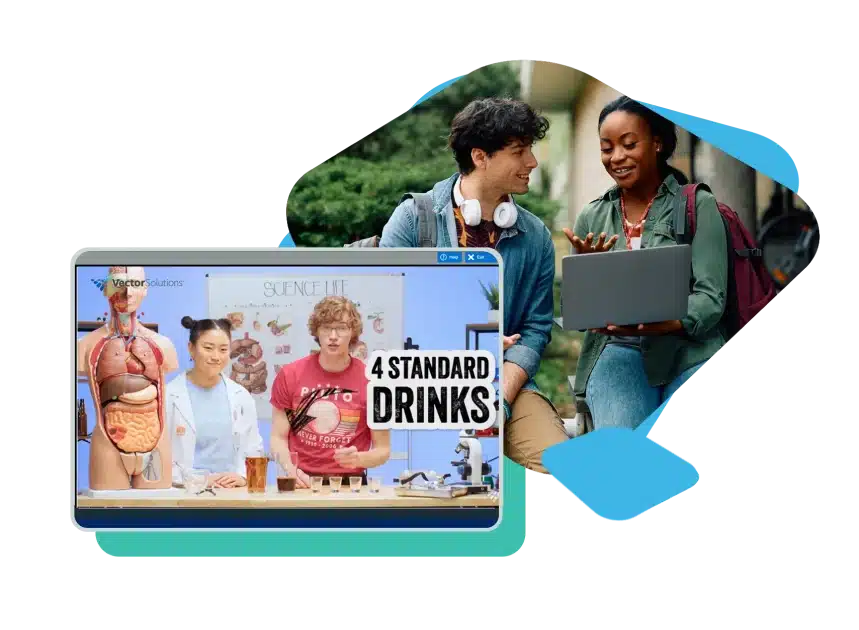
Q&A Marijuana Prevention in Higher Education — Programs & Policy Notes
So the two questions that I think these are great questions for Jason that came through and they were long. So I will read them in their entirety. Thank you so much, Dr. Kilmer.
Brilliant, as always. I live in a non-legal it’s always nice to get those. I’ll make a copy and that person is free to go. Thank you very much for joining us today.
So I live in a non-legal state where delta 8 and delta 10 are being sold via loophole. Is there any reason to assume anything other than all of this research applies to Delta and delta 10 as much as it does to delta 9 THC cannabis products? I hear that’s a brilliant question, and the truth is that’s exactly what we’re trying to figure out to our state generated a statement about delta eight. The loopholes are ridiculous, and our state legislature focused a lot on that.
If you realize how long cannabis has been around and how long it’s taken us to play, catch up on what people are actually using in 2022. The good news is science has responded and quickly. You know, one of the longest standing things we have is the cognitive impacts. But you’ll note most of what I cited 2018, 2019, 20 and 21 that Fisher and colleagues article 2022.
So the good news is researchers are trying to figure out exactly that question what do we need to know about Delta eight, delta 10? The less good news, as has been the case with Delta nine, we’re playing catch up, so I would say stay tuned, but do know people are trying to answer that very question. Great, thank you. Next question.
Hello I work at a private Catholic liberal arts college in Indiana. This is a smoke free, alcohol free, drug free campus. There are students that I have conduct meetings with regarding CBD and THC. Since 2018, CBD has been legalized in Indiana.
I think this is heading to a question I also had. So thank you. My question is what is a way to know or investigate if the student is using CBD or THC follow up smoking off campus? I’m not sure, I mean, I don’t, either, but I kind of like that this mysterious.
I think I mean, the best way to know is to ask them for the most part. One of the things that has happened is people are if they’re getting them. Even if you’re in a state where it’s not legal, if they’re getting it from someone else, if they’re going and getting them in surrounding states. Theoretically, there are people who do know a little bit more about the strain.
They’re getting the type they’re getting what the THC, CBD is. It may be not necessary for your conversation. I mean, when I presented to students and let them know that 10% is considered high THC content, there’s an audible reaction because it’s like, Yikes. The stuff we’re using is so much higher than that.
CBD research. A lot of catch-up needs to take place. And again, especially the research that’s been done using placebos shows that a lot of the claims being made about CBD just aren’t backed up in the science. So I think when in doubt about what a student’s doing, always the appropriate thing to do is to ask if it’s relevant to what you need to know and if it would change what you would do with them.
Great, thank you. Next question. There’s two questions here. I’ve heard that the University of Washington has the most reliable, evidence based expert program that serves as something similar to basics.
But for cannabis, applying motivational interviewing to sessions self-assessment all those components of basics. Is this true? And if so, is there a manual for implementing this program at other universities? You know, I we would never make the claim of quote most reliable anything.
I think that we’re always hoping people replicate and improve what we do in our field. I can say that it was the article I cited from Dr. Lee. Christine Lee published a brief intervention using basics as the model, having facilitators trained in and demonstrating fidelity to motivational interviewing and going through personalized graphic feedback with them in a one on one session that showed significant reductions in the amount used, time spent high even consequences that also led to the development of a cannabis consequence measure that also just got published.
What we found was so many cannabis consequence measures were just alcohol consequence measures where they swapped out the word alcohol for marijuana. It’s a different substance, so if you’re giving people feedback, you want to be capturing their experience. The basics was first studied in that study, launched in 1990, but the book by DMF and colleagues manual it didn’t come out for an additional nine years after that. So this is not yet manual in the sense that, look, here’s where you can get the guide.
It’s called I champ, which is individualized cause health for alcohol and marijuana program. I hear sometimes people ask me about sex and I’m like, well, I mean, that’s I know one person that when they try and use that word, I know that person has not been a part of that research developing these brief interventions. And the downside to a word that rhymes with basics is it implies a level of. Uh, kind of scientific credibility that may not be there with a program that’s made to run like that.
So I would say people curious about that could always reach out to Dr. Lee or since that link will be in your handouts, you can check out that link the article yourself. Great so I want to I will add the second question that was asked by this individual when we’re following, you know, get you to answer because there’s a lot of questions coming in. I want to make sure we get I can do a lightning round.
If we have time, you can limit me 10 seconds and answer lightning round. Come on, Kimberly. For clarity, those looks like can we clarify what delta eight, 9 and 10 are? All variations of different cannabinoids there?
I mean, CBD is a cannabinoid THC proper, which people usually reference cannabinoid. All of these are different cannabinoids. There are other cannabinoids that are literally unstudied with human beings. Awesome and number of questions about dosage in conjunction with educating about potency, what resources exist to educate on dosage or how would you recommend?
It’s really tough. I mean, the biggest thing to educate people on is about edibles. Someone eats a gummy and they’re like, I don’t feel a thing. Need a second one there.
Like what? We paid for this. They need a third one. They could weigh overshoot. How impaired they meant to get a candy bar is a great example.
If you give me a chocolate bar, I will probably eat it. A candy bar that is from a cannabis retailer typically is 10 servings. Each square is a serving, so if people are unfamiliar with that dosing, that can really, really, really sneak up on them. We have breathalyzer for alcohol.
We can estimate blood alcohol level for alcohol. We do not have that for cannabis. So when we talk about dosing the most, we typically will say from a harm reduction standpoint, any steps are toward less frequent use is a step in the right direction. Any step toward a lesser quantity is a step in the right direction.
Any step could. Lower potency is a step in the right direction. OK, thank you. So I will do this last question, are there good articles about the use of alcohol and cannabis at the same time using at the same time?
Yeah so that’s a large growing field. Researchers call this but also interesting. The other part of this question that a couple of people noted and I started to see, as well as students are now buying and drinking of beverages that have high THC content and consuming alcohol at the same time. So right?
Yeah, that causes a drug interaction called potentiation, where it’s a case where one plus 1 is greater than 2. You take the effects of alcohol, the effects of cannabis and then some. In research, it’s called Sam simultaneous alcohol and marijuana. Everyone in psychology loves acronyms.
That’s the acronym that’s kind of surfaced there. There is research that not only looks at the risks associated with that. I mean, again, the biggest challenge is that it does cause other than being able to predict the direction the power of the interaction gets hard to predict. But you could do an entire webinar on simultaneous use.
Truthfully, it’s one of the faster growing areas under the umbrella of college student substance use research. Yeah, well, that will do it for today, Jason. Again, thank you so much, not only for today, but for all the work that you have done and continue to do in this. I know that there are folks who are leaving with a lot of information that they’re going to be able to take back and implement and address or be able to use to address this challenge on their campus.
High-Impact Prevention and Safety Training for College Students
Increase safety, well-being, inclusion, and student success on campus with proven-effective college student training on critical prevention topics.
Explore student training