











Bloodborne Pathogens Training for Teachers & School Staff
Working in any environment with a high concentration of people can increase the risk of exposure to germs and infectious agents on a daily basis. Specifically, bodily fluids can put you in danger of infection. Bloodborne pathogens are infectious microorganisms in human blood that can cause disease. This course is OSHA-aligned and designed to provide teachers and school staff with an overview of the dangers posed by bloodborne pathogens, safety procedures for handling bloodborne pathogens, and information about protecting staff and students from infection. Topics covered include understanding risks associated with bloodborne pathogens in schools, OSHA-compliant safety training guidelines, universal precautions, personal protective equipment, and safe cleanup and disposal practices.


Demos + Pricing
Learn more about our courses, get pricing, and see our platform.
Course Details
Learning Objectives
- Understand the dangers posed by bloodborne pathogens
- Discuss exposure risks to bloodborne pathogens
- Examine OSHA guidelines, universal precautions, and personal protective equipment
- Review safe cleanup and disposal practices
Microlearning Course
This course is designed for all staff members. (2 minutes)
Teachers and Administration
This version is designed for teachers and administraton to prevent BBP exposure. (21 minutes)
Custodians
This version is designed for school custodial staff. (25 minutes)
Full Course
This course is for all school staff. (22 minutes)
Refresher
This course is for all school staff. (17 minutes)
Support Staff
This version is designed for school support staff that are not custodians. (22 minutes)
Specs
Frequently Asked Questions
Do teachers need bloodborne pathogens training?
Bloodborne pathogens training requirements for teachers and employees vary by state. Please download your corresponding state compliance guide to better understand if bloodborne pathogens training is required by your state. Even if training is not mandated by your state, it is important for teachers and school staff to understand the dangers of bloodborne pathogens and safety procedures to protect themselves and others from infection.
What bloodborne pathogen exposure prevention steps should school staff follow?
OSHA has established recommended guidelines for preventing the spread of bloodborne pathogens. Your school district most likely has guidelines, including an exposure control plan, for dealing with bloodborne pathogens. Each state and school district may have variations on bloodborne pathogen guidelines, so it’s important that you familiarize yourself with those that apply to you.
How often should school employees complete training?
Although recommended annually, each state and school district’s training requirements for bloodborne pathogens vary and should be adhered to.
Why is bloodborne pathogen training important for school staff?
As a school staff member, you’re exposed to germs and potentially infectious agents on a daily basis. Whether it’s dealing with a bloody nose, a child vomiting, or a soiled tissue left on a desk, the risk of exposure is constant. Bloodborne pathogens training is critical for school staff to prevent exposure to bloodborne pathogens, ensure school safety, and understand OSHA-compliant safety guidelines.
What are bloodborne pathogens?
Bloodborne pathogens are infectious microorganisms in human blood that can cause disease.
What bodily fluids carry bloodborne pathogens?
Bodily fluids that can carry bloodborne pathogens include blood, saliva, vomit, mucus, urine and feces, and semen or vaginal secretions.
How do bloodborne pathogens enter the body?
Bloodborne pathogens can enter a person’s body in several ways. Some of the most common are through cuts, abrasions and hypodermic needles. They may also enter through the mucous membranes of the mouth, eyes or nose, or through sexual contact.
Sample Video Transcript
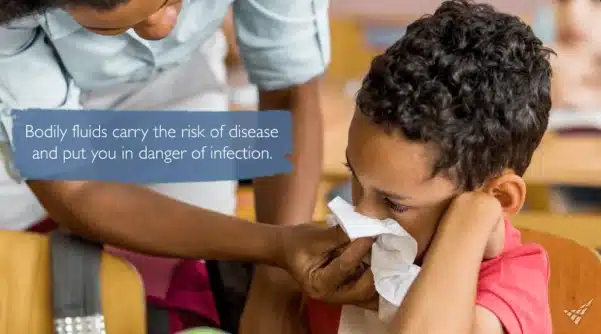
“As a school staff member, you’re exposed to germs and potentially infectious agents on a daily basis. After all, that’s part of working in any environment with a high concentration of people. Specifically, bodily fluids carry the risk of disease and put you in danger of infection. From a bloody nose to a child vomiting to a soiled tissue left on a desk, the risk of exposure is real.”


