










Slips, Trips and Falls
This course provides employees with essential guidance on preventing workplace slip, trip, and fall incidents, one of the most common causes of injury across all industries. Learners will explore practical strategies for navigating slippery or uneven surfaces, recognizing and avoiding trip hazards, and following safety protocols designed to reduce fall risks. The course also emphasizes the importance of maintaining a clean and organized work environment, wearing appropriate footwear, and adhering to organizational safety policies.


Demos + Pricing
Learn more about our courses, get pricing, and see our platform.
Course Details
Learning Objectives
- Explain how to build safe habits to avoid slips, trips and falls
- Identify slippery conditions in your workplace and take steps to avoid them
- Describe trip hazards and take action to remove them from walkways
- Address fall prevention strategies, especially around ladders and stairs
Specs
- English (US)
- Spanish (US)
- Spanish (European)
- Spanish (Mexican)
- French (Canada)
- French (European)
- Arabic
- Chinese (Simplified Mandarin)
- Chinese (Traditional Mandarin)
- Filipino Tagalog
- German
- Hindi
- Italian
- Japanese
- Korean
- Portuguese (Brazilian)
- Portuguese (European)
- Russian
- Thai
- Vietnamese
Frequently Asked Questions
Why is slip, trip, and fall prevention important in a college or university setting?
Slip, trip, and fall incidents are among the leading causes of injuries on college and university campuses. These accidents can lead to serious injuries, time away from work or studies, and increased liability for the institution. With large, diverse populations and high foot traffic across classrooms, residence halls, labs, and dining facilities, campuses present a variety of risks. Proactive prevention through regular maintenance, quick spill response, and safety training helps create a safer environment for faculty, staff, students, and visitors alike.
What hazards commonly lead to slips, trips, and falls on campus?
Typical hazards in higher education settings include wet floors, uneven pavement, poorly lit stairwells, unsecured cords in lecture halls or labs, and cluttered corridors. Risks like spills, equipment, or wet surfaces may occur in dining halls, science labs, or athletic facilities. Other risk factors include seasonal hazards such as snow, rain, or fallen leaves.
How can employees help prevent trip hazards on campus?
Employees can help prevent trip hazards by keeping walkways clear, securing loose wires and cords, reporting or addressing maintenance issues, and ensuring adequate lighting in shared spaces. Taking personal responsibility for workspace organization and observing safety signage also contributes to accident prevention.
Are certain areas more prone to slip, trip, and fall incidents?
Due to frequent use or environmental conditions, some areas are more susceptible to slips, trips, and falls. Entryways and high-traffic hallways often accumulate moisture, dirt, or debris from outside. Kitchens and food service areas pose risks from spills, grease, and dropped items. Stairwells with poor lighting, uneven steps, or missing handrails can be particularly dangerous. Outdoor spaces like sidewalks and parking lots can also be risky when they become slippery from rain, ice, snow, or leaves. Regular maintenance, good lighting, and safety signage are important in these areas to help reduce the likelihood of accidents.
Sample Video Transcript
A slip occurs when there is too little friction or traction between your shoes and the walking surface. The most common causes of slips are wet or oily surfaces, spills, weather hazards, loose, unanchored rugs or mats, walking surfaces with uneven slip resistance or traction, and improper footwear.
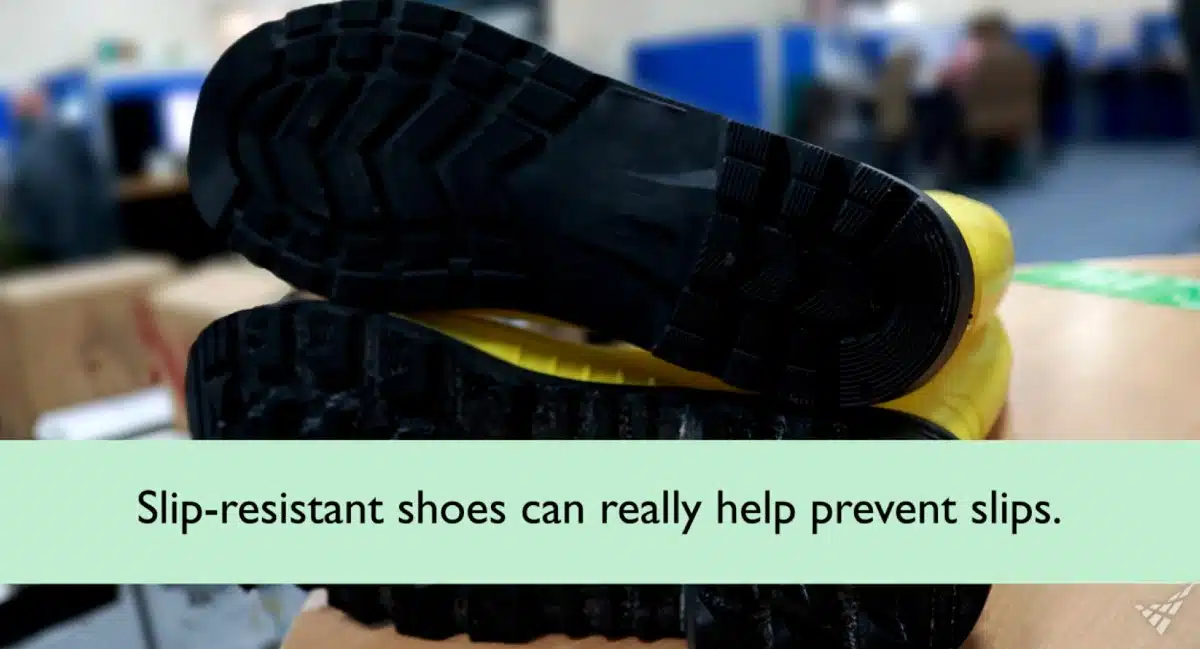
When it comes to slips and falls, slip-resistant shoes can help prevent slips. It’s also important to make sure your shoes have good tread. When that tread is worn, even slip-resistant shoes can be slippery. And while many casual or dress shoes have slip-resistant features, high heels are unlikely to provide good slip resistance because of their small heel area. High heels are also more likely to catch floor imperfections, resulting in tripping.


