











Air-Purifying Respirators
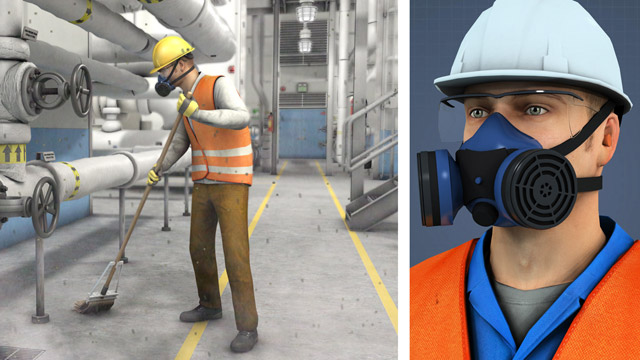
Air-purifying respirators are one of two major classes of respirators (the other being air-supplying respirators). This course explains the basics of air-purifying respirators, including the three major types: single-use disposable respirators, also called dust masks; air-purifying respirators with a flexible, elastomeric quarter-mask, half-mask, or full-mask facepiece; and powered air-purifying respirators, or PAPRs. Topics covered include uses, inspection, maintenance, cleaning, and storage of air-purifying respirators.


Demos + Pricing
Learn more about our courses, get pricing, and see our platform.
Course Details
Learning Objectives
By the end of this course, you will be able to:
- Differentiate between an air-purifying respirator and an air-supplying respirator
- List situations in which air-purifying respirators are commonly used
- Recall three types of air-purifying respirators and some of their characteristics
- Explain what particulate filters, cartridges, and canisters are used for and the purpose of their lettering, numbering, and color-coding systems
- Describe general requirements for medical evaluations, fit tests, seal checks, inspection, maintenance, cleaning, and storage of air-purifying respirators
Specs
Frequently Asked Questions
What is an air-purifying respirator?
What are the three basic types of air-purifying respirators?
What’s a primary difference between air-purifying and air-supplying respirators?
What should one know before using an air-purifying respirator at work?
What are the filters and cartridges in air-purifying respirators used for?
What are the different types of filters?
What are the different types of cartridges?
Sample Video Transcript
Tight-fitting, elastomeric respirators come in three sizes: full mask, half mask, and quarter mask. A full mask air purifying respirator covers the entire face. This provides the most protection out of these three respirators because it creates a better seal against the face and also because it protects the eyes and face from airborne irritants or splashed materials. A half mask air purifying respirator covers the nose, mouth and chin. A quarter mask air purifying respirator covers the nose and mouth. Always choose the size of the mask to match the hazards where you’ll be working.
Additional Resources
- Occupational Safety & Health Administration (OSHA) – www.osha.gov
- OSHA Health Topics – https://www.osha.gov/SLTC/respiratoryprotection/index.html
- OSHA InfoSheet – https://www.osha.gov/Publications/OSHA3789info.pdf
- OSHA Publications – https://www.osha.gov/Publications/3384small-entity-for-respiratory-protection-standard-rev.pdf
- The National Institute for Occupational Safety and Health (NIOSH) www.cdc.niosh.gov
- NIOSH Topics – http://www.cdc.gov/niosh/topics/respirators/default.html
- American National Standard of Safety Engineers (ASSE) – www.asse.org
- ASSE Standards – http://www.asse.org/ansi/asse-z88-2-2015-american-national-standard-practices-for-respiratory-protection/


