











Black Liquor Evaporators – Introduction
Contains an overview of the kraft chemical pulping process and the role evaporators play in the chemical recovery process. It details the flows of steam, vapor, and black liquor in a typical multiple effect evaporator setup, and includes a discussion on “steam economy.”

Demos + Pricing
Learn more about our courses, get pricing, and see our platform.
Course Details
Learning Objectives
• List in order the key steps in the kraft chemical pulping process
• Describe the role of black liquor evaporators at a kraft pulp mill
• Identify the flows of steam, vapor, and black liquor in a multiple effect evaporator system
• Define “steam economy”
Specs
Frequently Asked Questions
Where is black liquor separated from cooked pulp?
What is the primary purpose of black liquor evaporators?
What is a mulitple effect evaporator?
What is the largest advantage of a multiple effect evaporator?
What is steam economy in a multiple effect evaporator?
Sample Video Transcript
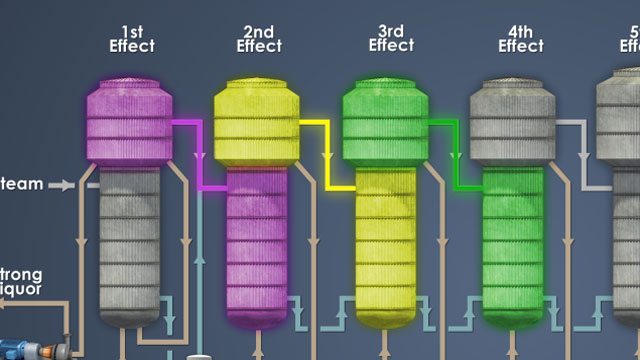
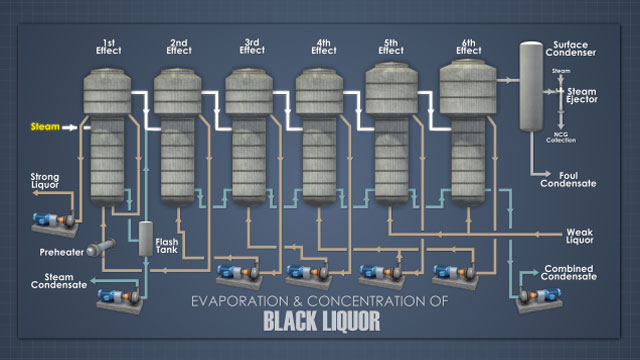
At kraft pulp mills, black liquor evaporators are typically installed in multiple effect systems. These systems usually contain from five to seven evaporator bodies that are set up in a series. The term multiple effect comes from the effective use of steam energy multiple times to evaporate water from the black liquor. Each effect is made up of one or two evaporator bodies which operate at a different pressure and temperature from the other effects. In a typical system fresh steam from the recovery boiler is used to heat the black liquor in the first effect only, which operates at the highest temperature and pressure. The vapor generated from boiling the black liquor in the first effect is then used to heat the liquor in the second effect. This process of using vapor from one effect to heat the liquor in the next effect continues through the entire set with each effect operating at a slightly lower temperature and pressure than the previous effect.


