










Communication and Documentation
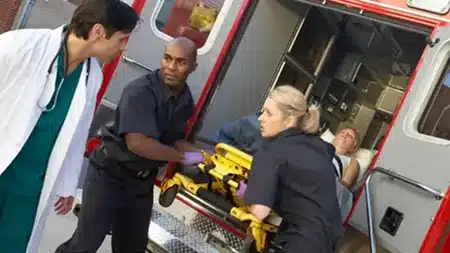
Communications is at the center of what and how, we, as emergency responders fulfill our professional responsibilities. How we listen and interact with 9-1-1 calling parties, dispatchers, co-responding agencies, allied health professionals, and others will determine whether those interactions are positive and successful or negative opportunities. Communications isnt related solely to the verbal realm. There is also non-verbal and written communication that will also be a part of every response that we go to. When we assess and treat a patient, the care that was provided can potentially go for naught if we fail to communicate all that we saw, did, and why we did those things to the staff at the patients receiving facility. For fire rescue and EMS, communications begin when the call comes into the public safety access point or PSAP for 9-1-1. It continues during the pre-dispatch scripted questioning, during the dispatch/response phase and well after the call has actually ended. Therefore, knowing that communications lie at the heart of what we do professionally, fire rescue, EMS, and first responders of all stripes must have excellent communication skills now more than ever before. Communications link everything that we do. How we communicate has professional and potentially even personal outcomes. Helping you to be more effective and efficient in this vital skill is the goal of this course.
Demos + Pricing
Learn more about our courses, get pricing, and see our platform.
Course Details
Continuing Education
- Accreditation: CAPCE
- CAPCE Course ID: 2285
- CAPCE Course Number: 6303
- CAPE CEH Category: Basic/ Advanced/ Operational
Frequently Asked Questions
What operational challenges does this course address?
This course addresses provider health, fatigue, stress, injury prevention, infection awareness, and sustainable performance related to Communication and Documentation. Communications is at the center of what and how, we, as emergency responders fulfill our professional responsibilities.
What real-world situations or incidents is this training designed to prepare personnel for?
The training is designed to prepare personnel for day-to-day field operations and the practical decisions that affect responder and patient safety associated with Communication and Documentation. Communications is at the center of what and how, we, as emergency responders fulfill our professional responsibilities.
What safety or compliance concerns does this course help organizations address?
This course helps organizations address documentation quality, legal and ethical expectations, policy alignment, patient privacy, and defensible EMS decision-making tied to Communication and Documentation. It supports stronger awareness, more consistent practices, and better day-to-day decision-making across EMS operations.
Which personnel or departments would benefit most from this training?
This training is most relevant for personnel across all EMS certification levels, including EMRs, EMTs, AEMTs, and paramedics, as well as field supervisors, training officers, and agencies, managing operational readiness and response responsibilities, along with EMS agencies seeking to strengthen knowledge, consistency, and role-specific readiness connected to Communication and Documentation.
How can this course support department readiness, consistency, or professional development?
This course can support EMS readiness and professional development by supporting safer field operations, improving documentation and communication habits, and reinforcing consistent agency practices related to Communication and Documentation.
How does this course fit into a broader training program?
This course fits well within a broader training program focused on EMS operations, scene safety, documentation, communication, rescue support, and field readiness. It can be used to support onboarding, refresher training, continuing education, and more consistent performance across EMS teams.


