










Electromagnetic Induction
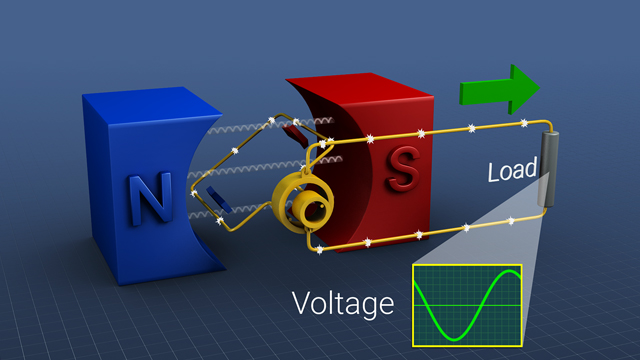
Voltage applied to a conductor creates a magnetic field around that conductor. It is possible to reverse this process and for a magnetic field to generate a voltage in a conductor. For this to occur, there must be some relative motion between the conductor and the magnetic field. Electromagnetic induction takes place whenever a conductor moves through a magnetic field or when a magnetic field moves across a conductor. The voltage inducted in the conductor is called electromotive force. If the conductor is connected in a complete circuit, a current will flow. This module covers the definition of electromagnetic induction, voltage generators, the left hand rule, solenoids, relays, and transformers.


Demos + Pricing
Learn more about our courses, get pricing, and see our platform.
Course Details
Learning Objectives
• Definition of electromagnetic induction • Voltage generators • Left hand rule • Solenoids • Relays • Transformers
Specs
Frequently Asked Questions
What are some practical applications for a magnet that can be switched on and off?
What is a relay?
What are some features of relays?
How is electromagnetic induction used in sound recording?
What are the components of a transformer?
Sample Video Transcript
Conversely, if a conducting wire is moved through an existing magnetic field, the field will affect the electrons in the wire and create a voltage within the wire and cause a current to flow. The generation of voltage in a conductor by moving it through a magnetic field is called electromagnetic induction. These interactions of magnetism and electrical current have many applications, including providing the basis for the entire modern power generation and transmission grid.


