











Hydraulic System Basics
In a hydraulic system, pressure applied anywhere to a contained, incompressible fluid is transmitted undiminished throughout the fluid. This course is an introduction to hydraulic systems and their uses. It covers hydraulic theory, common components, what mechanical advantage is, and how hydraulic fluid is contaminated.




Demos + Pricing
Learn more about our courses, get pricing, and see our platform.
Course Details
Learning Objectives
• Describe hydraulic theory
• Identify and describe common hydraulic system applications
• Identify and describe basic hydraulic system components
• Describe mechanical advantage
• Describe the purpose of hydraulic fluid
• Explain the causes and effects of fluid contamination
Specs
Frequently Asked Questions
What are the primary components of a basic hydraulic system?
What’s the primary purpose of a hydraulic system?
What is an accumulator used for?
What is a ‘Mechanical Advantage’?
What are some common causes of hydraulic fluid contamination?
Sample Video Transcript
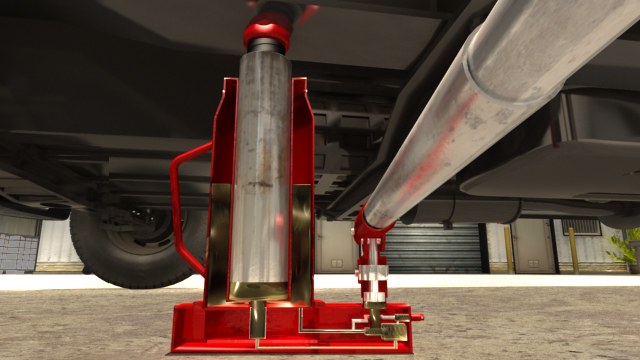
A common hydraulic bottle jack is a perfect example of mechanical advantage from force multiplication. A single pump compresses fluid with a small piston and requires little force. But that small force is transmitted and multiplied by the much larger surface area of the jack’s lifting cylinder. In this way, a hydraulic system can easily produce output forces that are 10 to 20 or more times that of the input force.


