










Paper Coating Ingredients
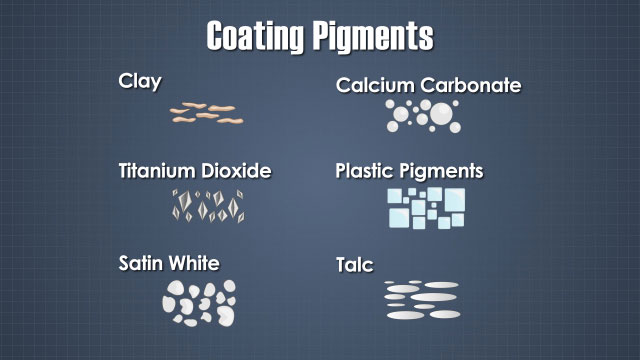
Paper and board grades are sometimes coated to improve the printability, visual properties, or functionality of the sheet. Coating formulas typically contain three categories of ingredients: pigments, binders and additives. Pigments improve printing and optical properties of the sheet, binders adhere the pigment particles to each other and to the sheet, and additives either assist in the coating process or enhance sheet properties. This module describes common coating formulas and coating ingredients.



Demos + Pricing
Learn more about our courses, get pricing, and see our platform.
Course Details
Learning Objectives
• List the sheet properties that are enhanced by paper coating • List the three main ingredient categories used in paper coating mixtures • Describe the purpose of pigments, binders, and additives in coating mixtures • Describe the functionality of the more common paper coating pigments and binders • Identify and describe common coating additives
Specs
Frequently Asked Questions
Why are some paper and board grades coated?
What does a typical paper or board coating mixture contain?
What is the purpose of pigments in coating mixtures?
Why do some coating mixtures smell like latex paint?
Antifoamers and defoamers can be used to control foam in coating systems. What is the difference?
Sample Video Transcript
Binders can be natural or synthetic and they have three functions in paper coatings. One, to hold the pigment particles to each other and to the bay sheet. Two, to partially fill voids between the pigment particles and improve printability. And three, to affect the viscosity and water retention of the coating solution. Natural binders include starches and proteins from either animal and vegetable sources. They can be either grown specifically for the job or obtained as a byproduct. Starch is the most important natural binder used in paper coatings. Other natural binders are casein and soy polymer. Casein is derived from excess milk production and is the best of all binders when the quality is good. Unfortunately, quality is variable and so is availability.


