











Patient Lifting, Moving and Transportation
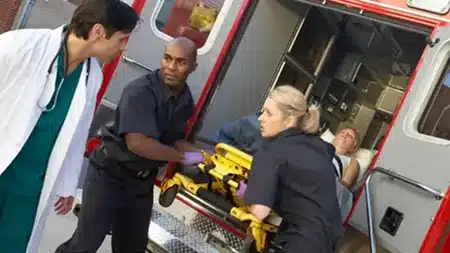
In todays environment, responding to emergency calls and providing high-quality patient care has become increasingly more demanding and strenuous on EMS personnel than ever before. As a result of this systemic pressure for improved patient care, both EMS and healthcare industries are reflecting a rising need for continuous training on patient lifting, moving, and transportation. For the purpose of this course, the term EMS responder refers to all levels of emergency medical personnel involved in incident response, including emergency medical technicians (EMTs), paramedics, and other personnel who perform similar duties. While many EMS responders are cross-trained as an EMT and firefighter, this specific course on patient lifting and transportation applies to these workers only when they are functioning as an EMS responder.
Demos + Pricing
Learn more about our courses, get pricing, and see our platform.
Course Details
Continuing Education
- Accreditation: CAPCE
- CAPCE Course ID: 2610070
- CAPCE Course Number: 6160
- CAPE CEH Category: Basic/Advanced
Frequently Asked Questions
What operational challenges does this course address?
This course addresses scene safety, extrication, patient movement, transport, communication, documentation, hazmat awareness, restraint decisions, and operational risk controls related to Patient Lifting, Moving and Transportation. In today’s environment, responding to emergency calls and providing high-quality patient care has become increasingly more demanding and strenuous on EMS personnel than ever before.
What real-world situations or incidents is this training designed to prepare personnel for?
The training is designed to prepare personnel for day-to-day field operations and the practical decisions that affect responder and patient safety associated with Patient Lifting, Moving and Transportation. In today’s environment, responding to emergency calls and providing high-quality patient care has become increasingly more demanding and strenuous on EMS personnel than ever before.
What safety or compliance concerns does this course help organizations address?
This course helps organizations address safe patient handling, documentation quality, restraint accountability, responder safety, hazmat awareness, and operational policy alignment tied to Patient Lifting, Moving and Transportation. It supports stronger awareness, more consistent practices, and better day-to-day decision-making across EMS operations.
Which personnel or departments would benefit most from this training?
This training is most relevant for EMTs, first responders, AEMTs, and paramedics across both basic and advanced certification levels, as well as field supervisors, training officers, and agencies, managing operational readiness and response responsibilities, along with EMS agencies seeking to strengthen knowledge, consistency, and role-specific readiness connected to Patient Lifting, Moving and Transportation.
How can this course support department readiness, consistency, or professional development?
This course can support EMS readiness and professional development by supporting safer field operations, improving documentation and communication habits, and reinforcing consistent agency practices related to Patient Lifting, Moving and Transportation.
How does this course fit into a broader training program?
This course fits well within a broader training program focused on EMS operations, scene safety, documentation, communication, rescue support, and field readiness. It can be used to support onboarding, refresher training, continuing education, and more consistent performance across EMS teams.


