










Rapid Trauma Secondary Assessment
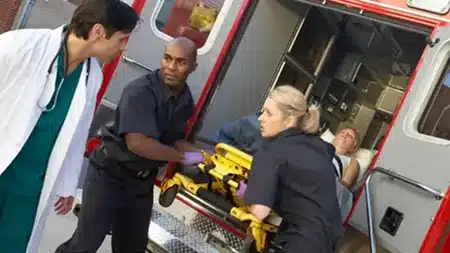
Accidental injuries are the leading cause of death for children and adults under 44 years of age, and patients with severe trauma pose a significant challenge in the prehospital environment. Rapid Secondary Assessment plays a critical role in the care of such patients. For trauma patients with a significant mechanism of injury, it provides a more thorough means of assessing the patient’s injuries and condition. When performed properly, rapid secondary assessment is both thorough and quick, and provides the EMS provider with a better understanding of the patients injuries and their severity so that he or she can make better informed decisions about patient care. This course provides an overview of rapid secondary assessment. It aims to give EMS providers a better understanding of the importance and method of performing a rapid secondary assessment over each major body section. Also included in the course are sectional case studies that allow the learner to apply their knowledge.
Demos + Pricing
Learn more about our courses, get pricing, and see our platform.
Course Details
Continuing Education
- Accreditation: CAPCE
- CAPCE Course ID: 3041823
- CAPCE Course Number: 6215
- CAPE CEH Category: Basic
Frequently Asked Questions
What operational challenges does this course address?
This course addresses primary and secondary assessment, differential thinking, exam technique, patient history, triage priorities, and documentation related to Rapid Trauma Secondary Assessment. Accidental injuries are the leading cause of death for children and adults under 44 years of age, and patients with severe trauma pose a significant challenge in the prehospital environment.
What real-world situations or incidents is this training designed to prepare personnel for?
The training is designed to prepare personnel for unclear or evolving calls where EMS providers must gather information, recognize acuity, and refine treatment or transport decisions associated with Rapid Trauma Secondary Assessment. Accidental injuries are the leading cause of death for children and adults under 44 years of age, and patients with severe trauma pose a significant challenge in the prehospital environment.
What safety or compliance concerns does this course help organizations address?
This course helps organizations address assessment completeness, documentation quality, patient safety, clinical handoff accuracy, and defensible decision-making tied to Rapid Trauma Secondary Assessment. It supports stronger awareness, more consistent practices, and better day-to-day decision-making in prehospital care.
Which personnel or departments would benefit most from this training?
This training is most relevant for EMTs and first responders (with added value for paramedics reinforcing foundational skills), as well as EMS educators, reinforcing systematic assessment and clinical decision-making, along with EMS agencies seeking to strengthen knowledge, consistency, and role-specific readiness connected to Rapid Trauma Secondary Assessment.
How can this course support department readiness, consistency, or professional development?
This course can support EMS readiness and professional development by improving systematic assessment habits, strengthening clinical reasoning, and supporting more consistent patient care reports related to Rapid Trauma Secondary Assessment.
How does this course fit into a broader training program?
This course fits well within a broader training program focused on patient assessment, differential decision-making, clinical prioritization, and documentation consistency. It can be used to support onboarding, refresher training, continuing education, and more consistent performance across EMS teams.


