











RCRA – Emergencies, Inspections, and Training
The Resource Conservation and Recovery Act (RCRA) was passed by congress in 1976 to manage hazardous wastes. RCRA regulations apply to any company that generates, transports, treats, stores, or disposes of hazardous waste. The goal of the emergency preparedness and prevention standards is to minimize the potential of a hazardous waste release and the resulting affects to human health and the environment. This course covers the required equipment needed for emergency preparedness, contingency plans, emergency procedures, inspection requirements, frequency, and logs, as well as personal training requirements and documentation.



Demos + Pricing
Learn more about our courses, get pricing, and see our platform.
Course Details
Learning Objectives
• List the requirements of the emergency preparedness and prevention standards
• Describe a contingency plan
• Describe the responsibilities of the emergency coordinator
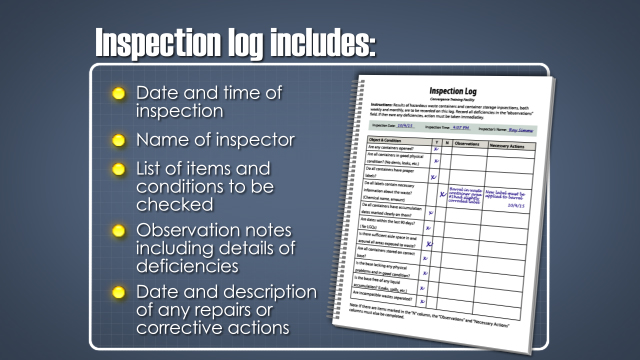
• Identify the items that should be included in a written inspection schedule
• List the areas and equipment that must be inspected, and identify the required inspection frequency
• List the items that should be on a typical inspection
• List the information required to document personnel training
Specs
Frequently Asked Questions
Emergency preparedness and prevention standards apply to which generators?
What is a contingency plan?
What is the role of an emergency coordinator?
How often should containers, container storage areas, and containment systems be inspected?
How long do training records need to be kept?
Sample Video Transcript
All hazardous waste facilities must have internal communications or alarm systems to alert employees and provide instructions in an emergency. A telephone or two-way radio is required so police, fire departments, or emergency response teams can be contacted immediately. All employees must have access to communication devices at all times. Emergency response equipment including portable fire extinguishers, fire control equipment, spill control equipment, and decontamination equipment need to be available. Fire suppression equipment such as fire hoses or sprinklers must have an adequate water supply. All emergency equipment must be tested and maintained to ensure it operates correctly during an emergency. Adequate aisle space must be provided to allow for unobstructed movement of people and emergency response equipment in the event of an emergency.
Additional Resources
- Environmental Protection Agency – http://www.epa.gov
- EPA Information Resources – http://www.epa.gov/epawaste/inforesources/online/index.htm
- EPA Quick Reference Guide – http://www.epa.gov/epawaste/inforesources/pubs/trifold.pdf
- EPA RCRA Policy Outline – http://www.epa.gov/agriculture/lrca.html


