











Refrigeration – Refrigerant Selection
Copper tubing is generally used for plumbing, heating, and refrigeration systems. It has good thermal transfer characteristics, is easily bent and fabricated, is harder than aluminum, and is easier to join than aluminum. This course will discuss the piping and valves used in refrigeration systems.


Demos + Pricing
Learn more about our courses, get pricing, and see our platform.
Course Details
Learning Objectives
By the end of this course, you will be able to:
- Identify desirable characteristics for refrigerants in vapor-compression refrigeration systems
- Explain the properties of, and differences between, CFC, HCFC, HFC, HFO, and natural refrigerants
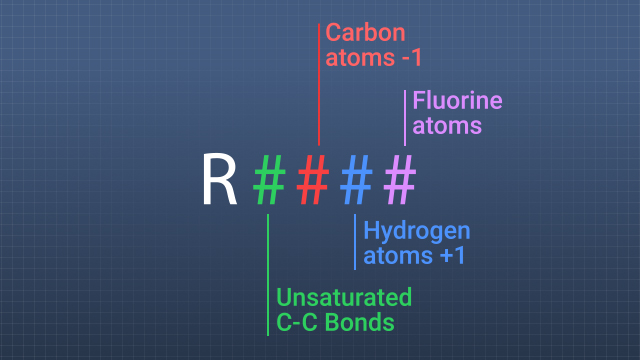
- Describe how refrigerant identification numbers and safety classifications are assigned, including for HFO and other low-GWP refrigerants
- Evaluate compatibility considerations for refrigerants, lubricants, and system equipment in real-world applications
- List safety guidelines and best practices for handling and using refrigerants
- Discuss the importance of selecting refrigerants that align with environmental goals, including low-GWP options, as part of modern refrigeration technician training
Specs
Frequently Asked Questions
Why are CFC and HCFC refrigerants being phased out?
What is Ozone Depletion Potential, or ODP?
What is Global Warming Potential, or GWP?
What are HFO refrigerants?
Can any naturally-occurring substances be used as refrigerants?
Sample Video Transcript
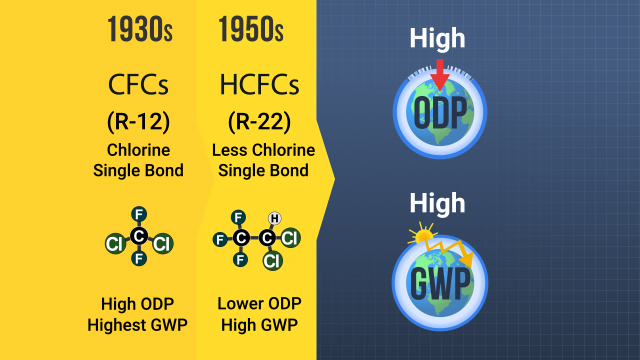
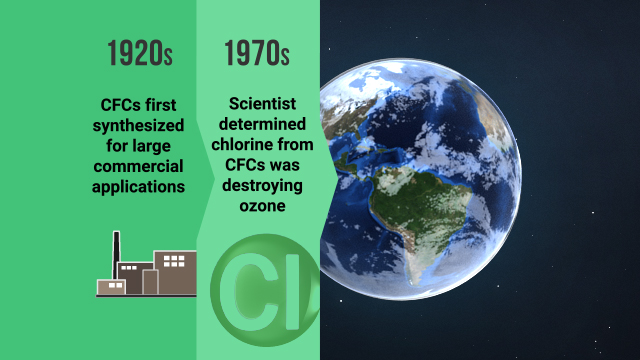
Three common types of refrigerants are: • Chlorofluorocarbons, or CFCs, which contain chlorine, fluorine, and carbon • Hydrochlorofluorocarbons, or HCFCs, which contain hydrogen, chlorine, fluorine, and carbon • Hydrofluorocarbons, or HFCs, which contain hydrogen, fluorine, and carbon CFC and HCFC refrigerants were widely used in the 20th century because they are relatively inert, nonflammable, and nontoxic, which made them much safer than early refrigerants, like ammonia (NH3), sulfur dioxide (SO2), and methyl chloride (CH3Cl). However, CFCs and HCFCs are being phased out because it was discovered that they have both high Ozone Depletion Potential (ODP) and high Global Warming Potential (GWP).


