











Supported Scaffold Safety
This course covers some of the more important OSHA requirements for supported scaffolds, as well as basic safe practices for working on or near these scaffolds. It is intended as an introductory or refresher course for construction and general industry workers who will be working on or near scaffold systems.




Demos + Pricing
Learn more about our courses, get pricing, and see our platform.
Course Details
Learning Objectives
At the end of this module, you will be able to:
- Identify the main types of supported scaffolds;
- List hazards associated with working on or near scaffolds;
- List four main causes of scaffold injuries;
- List scaffold training requirements;
- List important scaffold safety regulations;
- Identify and describe safe principles of supported scaffold assembly;
- Describe safe work practices on supported scaffolds; and
- Describe fall prevention and protection for working on scaffolds.
Specs
Frequently Asked Questions
What are you required to do if working on surfaces over 10 feet tall?
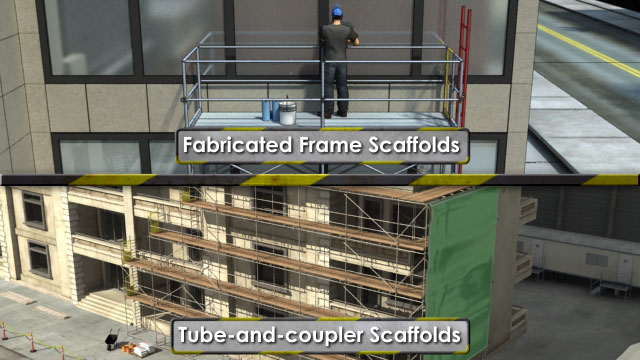
What are the four most common frame and tube-and-coupler supported scaffold types?
What are the main components to scaffold footing?
What are the height restrictions for a free-standing scaffold?
What additional supports must you use if the height of a scaffold cannot be freestanding?
What factors must be taken into account when determining load capacity for a scaffold?
What are the commonly used scaffold tags used to communicate the status of a scaffold to onsite workers?
What is the fall protection system OSHA requires if a person is working in an area where they could fall more than 10 feet?
How often should the competent person inspect the scaffold and it’s components?
Sample Video Transcript
Scaffolding can be overloaded by placing too much weight on the structure. Overloading is a common cause of scaffold collapse. In general, a scaffold must be able to support its own weight, plus four times the maximum intended load. The intended load includes people, materials, tools, and any additional components the scaffold will support. Most scaffolding components have a designated load capacity given by the manufacturer. For the most part, components from different scaffold systems should never be mixed and matched. This is especially true of components that are made of different metals, because there can be a chemical reaction between the metals that weakens them. The competent person can decide if components from different systems can be used safely together. There are many other factors that must be taken into account when determining load capacity, including the scaffold height, the material being used, and the amount of cross-bracing. Osha has several tables that give loading rules based on these factors.
Additional Resources
- U.S. Department of Labor’s Occupational Safety & Health Administration (OSHA) – www.osha.gov
- OSHA Safety and Health Topics – https://www.osha.gov/SLTC/scaffolding/index.html
- OSHA eTools – https://www.osha.gov/SLTC/etools/scaffolding/supported/index.html
- OSHA Publications – https://www.osha.gov/Publications/OSHA3150/osha3150.html
- Scaffold & Access Industry Association (SAIA) – www.saiaonline.org
- SAIA Supported Scaffold Council – http://www.saiaonline.org/SupportedScaffold


