











Tissue Machine Hydraulic Systems
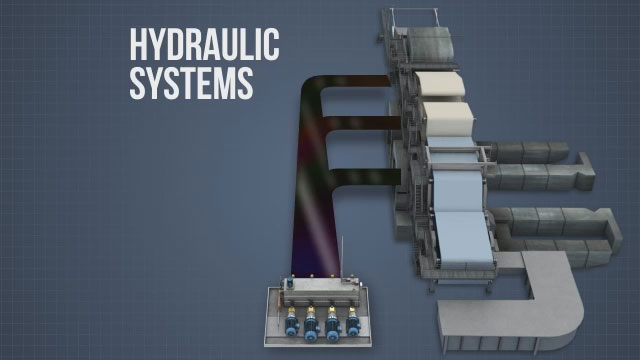
Hydraulic systems can be used to load, unload, lift, retract, rotate, and operate many different components. Tissue machines typically employ one or more hydraulic systems, each composed of a fluid reservoir, reservoir heaters, one or more hydraulic pumps, filtration equipment, cooling heat exchanger, distribution and return piping, valves, actuators, and instruments and controls. Strainers, filters, heat exchangers, and sometimes water-removal equipment are used to keep the hydraulic fluid clean and dry, and in the proper temperature range, in order to minimize problems and wear, and successfully operate hydraulically-actuated equipment.




Demos + Pricing
Learn more about our courses, get pricing, and see our platform.
Course Details
Learning Objectives
Explain the purpose of hydraulic systems Identify the safety hazards and safety guidelines associated with hydraulic systems Identify and describe the common components of a typical tissue machine hydraulic system List the functions of common hydraulic system components Describe the types of valves that are commonly used in hydraulic systems Identify and describe the typical process flows of a hydraulic system
Specs
Frequently Asked Questions
What are some of the things that hydraulic systems are used for on tissue machines?
What are some of the safety hazards associated with hydraulic systems?
What is the purpose of the “breather assembly” on hydraulic fluid reservoirs?
Why is it important to have a relief valve downstream of a hydraulic pump?
Why does a hydraulic system have equipment to both heat AND cool the hydraulic fluid?
Sample Video Transcript
Accumulators are often installed in hydraulic systems to provide stored energy when high loads are required or when hydraulic pressure is suddenly lost, such as when a pump shuts down. They are pressure vessels with pressurized bladders that are used to maintain and control the fluid pressure inside the vessel. Accumulators can be used to maintain hydraulic pressures for short periods of time, dampen pressure pulses in the fluid flow, or allow equipment to slowly return to a lower energy state if hydraulic pressure is lost.


