A training management system tailored for the fire service—track all training, EMS recerts, skill evaluations, ISO, and more for 100% of training in one place.
A training management system tailored for EMS services—EMS online courses for recerts, mobile-enabled skill evaluations, and more for 100% of training in one place.
Increase performance, reduce risk, and ensure compliance with a training management system tailored for your FTO/PTO and in-service training for 100% of training in one place.
Integrated solution purpose-built for modern regulatory demands. ArdentSky, delivers automated, integrated compliance solutions trusted by global gaming manufacturers, operators, and suppliers.
In industries where heavy lifting and material handling are routine, the safety and reliability of cranes are critical. The Occupational Safety and Health Administration (OSHA) has established comprehensive inspection requirements to ensure that cranes operate safely and efficiently, minimizing the risk of accidents and equipment failure. These regulations are critical for maintaining safety standards and protecting workers across various sectors including Construction, Manufacturing, and Mining.
For employers, meeting OSHA crane inspection requirements is not just a compliance obligation, it’s a key part of creating a safe workplace. That means understanding both overhead crane inspection requirements and hoist inspections, which fall under OSHA standards like 29 CFR 1910.179 (overhead and gantry cranes) and 29 CFR 1910.180 (crawler, locomotive, and truck cranes).
Complying with these OSHA’s standards is not only required to avoid expensive fines, but to improve safety. In this article we’ll go over some of the basic OSHA requirements crane inspection standard and what you can do for easy compliance.
OSHA Standards for Overhead Cranes and Hoists
OSHA provides detailed requirements for crane and hoist inspections under 29 CFR 1910.179 and 1910.180, covering inspection intervals, maintenance, and safety practices. OSHA standards that pertain specifically to crane inspections, these include:
29 CFR 1926 Subpart CC – Cranes and Derricks in Construction: This standard applies to cranes and derricks used in construction activities and covers aspects such as ground conditions, assembly/disassembly, operation, and inspections. It includes requirements for crane operator certification, signal person qualifications, and inspection protocols.
29 CFR 1910.179 – Overhead and Gantry Cranes: This standard pertains to overhead and gantry cranes used in general industry settings. It includes requirements for crane design, inspection, testing, maintenance, and operation. The standard outlines inspection frequencies and procedures to ensure that cranes are safe for operation.
29 CFR 1910.180 – Crawler Locomotive and Truck Cranes: This regulation covers the use of crawler, locomotive, and truck cranes in general industry. It specifies requirements for crane inspections, load testing, and maintenance to ensure safe operation.
29 CFR 1910.181 – Derricks: This standard addresses the use of derricks, which are a type of crane with a boom pivoted at its base. It includes requirements for the inspection and maintenance of derricks to prevent accidents and equipment failures.
29 CFR 1910.184 – Slings: Although not specific to cranes, this standard is relevant because slings are often used in conjunction with cranes for lifting operations. It includes requirements for the selection, use, inspection, and maintenance of slings.
29 CFR 1926.251 – Rigging Equipment for Material Handling: This standard covers the use of rigging equipment, such as slings and shackles, in material handling operations with cranes. It includes requirements for inspection, maintenance, and safe usage to prevent accidents during lifting operations.
Overhead Crane and Hoist Inspection Checklist
Using a comprehensive crane inspection checklist is essential for maintaining safety and compliance with OSHA regulations. It helps ensure that all critical components of the crane are regularly examined, which helps prevent accidents and equipment failures.
Here’s a breakdown of what an effective crane inspection checklist should include:
Daily/Pre-Shift Inspections
Visual Inspection of the Crane
Operational Check
Safety Devices
Monthly Inspections
Mechanical Components
Hydraulic and Pneumatic Systems
Electrical Systems
Annual Inspections
Structural Examination
Load Testing
Documentation Review
A well-structured crane inspection checklist helps ensure that all aspects of the crane’s operation and safety features are examined regularly. It standardizes the inspection process, making it easier to identify and address potential issues before they lead to accidents or equipment failure. By rigorously adhering to inspection checklists, companies can maintain compliance with OSHA standards, protect their workforce, and minimize downtime due to unexpected crane malfunctions.
Incorporating a detailed checklist into your crane safety program is a proactive step toward creating a safer work environment and ensuring the longevity and reliability of your lifting equipment.
Frequent inspections: Daily to monthly checks of critical components such as operating mechanisms, hooks, and safety devices, depending on crane use and service class.
Annual (periodic) inspections: A thorough, documented review conducted at least once every 12 months by a qualified professional. These inspections focus on structural integrity, wear, and compliance with OSHA standards.
Frequent Crane Inspections
Frequent inspections encompass examining the operating mechanisms, components of the air or hydraulic systems, and the condition of hooks and hoist chains. These inspections should be conducted visually daily, with OSHA recommending testing and examination before each shift.
Monthly inspections of hooks and hoist equipment by a certified crane inspector are also necessary. It is crucial to maintain written records of these inspections, signed and dated by the inspector, for documentation purposes.
Maintaining comprehensive records of all frequent inspections is crucial. In an incident or OSHA investigation, these records serve as evidence of compliance with safety procedures, potentially mitigating liability.
Periodic Crane Inspections
During periodic inspections, attention is given to identifying loose bolts, cracked sheaves, damaged locking devices, and wear on the braking system. Also, inspections cover load and wind indicators, gasoline and electric power plants, and electrical wiring.
For cranes utilized in “normal” or “heavy” service, periodic inspections are required yearly. Cranes operating under “severe service” conditions necessitate quarterly inspections.
It is essential to adhere to both OSHA requirements and manufacturer guidelines regarding crane inspections. Manufacturers may provide specific recommendations for inspection intervals and procedures that complement OSHA standards.
Crane Inspection Software and Mobile Apps
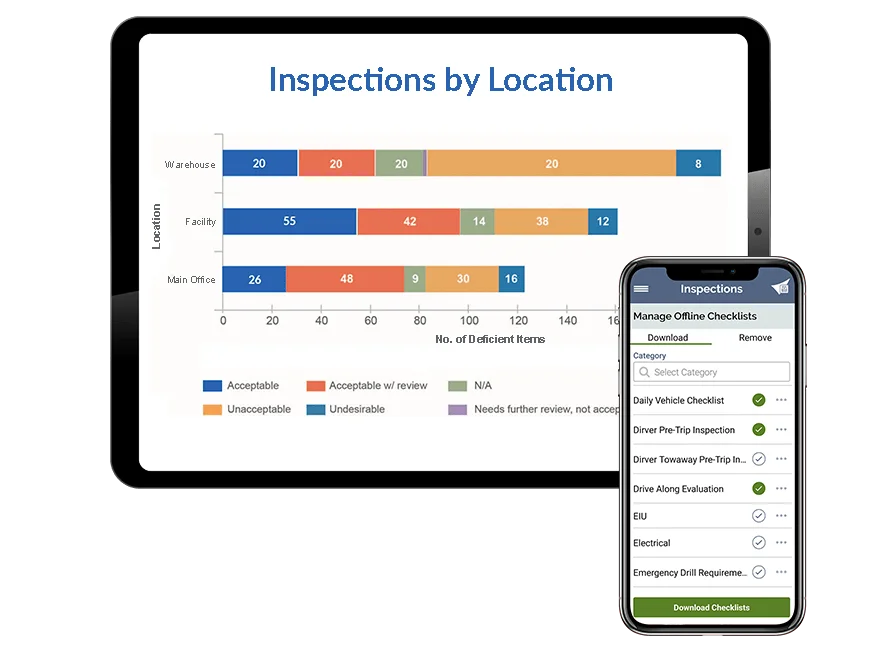
In today’s digital age, technology plays a vital role in streamlining processes and enhancing efficiency. When it comes to crane safety and compliance with OSHA standards, utilizing crane inspection software and mobile apps can significantly improve inspection workflows, documentation, and overall safety management.
Mobile apps for crane inspections enable inspectors to capture inspection data in real-time, right from the field. This immediate data capture reduces the risk of errors and delays associated with manual data entry, ensuring that inspection records are accurate and up to date.
If you want to learn more about inspection software and inspection apps? Check out a free demo of Vector EHS Management and see how it helps your organization meet OSHA’s crane inspection requirements, as well as other health and safety regulations.
Inspections Software
Mobile inspection software for any type of inspection.
Q: What are OSHA’s overhead crane inspection requirements?
A: OSHA requires both frequent (daily to monthly) and periodic (annual) inspections of overhead cranes, per 29 CFR 1910.179.
Q: How often must cranes be inspected?
A: Inspections must occur frequently based on usage (daily to monthly) and at least once per year as a periodic inspection.
Q: What’s the difference between a frequent and an annual inspection?
A: A frequent inspection checks basic functions and safety items regularly, while an annual inspection is a thorough, documented review by a qualified professional.
Q: Do hoist inspections follow the same OSHA rules as cranes?
A: Yes, hoists are also covered under OSHA standards, and they must be inspected for wear, defects, and safe operation.
Q: What should be on an overhead crane inspection checklist?
A: Items include operating mechanisms, hooks, chains, ropes, safety devices, and load test records.