











Respirators – Voluntary Use
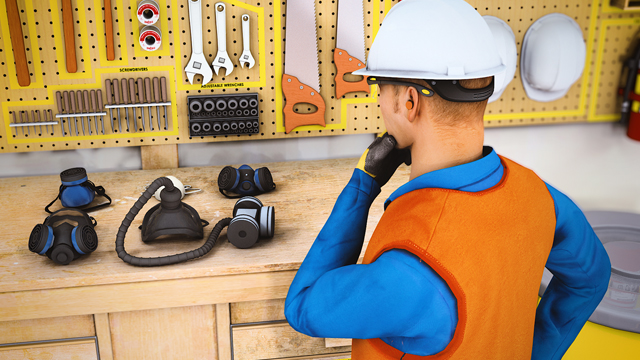
A respirator is a piece of personal protective equipment (PPE) that protects its user from inhaling hazardous substances in the form of dusts, mists, fumes, gases, or vapors. There are many different types of respirators; each type protects its user from a specific airborne hazard. “Voluntary use” situations occur when workers use respirators even when they are not required. When employers allow the “voluntary use” of respirators, there are several requirements they must fulfill.


Demos + Pricing
Learn more about our courses, get pricing, and see our platform.
Course Details
Learning Objectives
By the end of this course, you will be able to:
- Discuss the purpose of respirators and explain “voluntary use” of respirators
- Identify dust mask designs and explain the rating system for dust masks
- Explain elements of the OSHA Respiratory Protection Standard
- List employer responsibilities for the voluntary use of other types of respirators
Specs
Frequently Asked Questions
What does the “N95” rating on a dust mask mean?
Why would someone choose an N95 dust mask over an N100 dust mask? Isn’t it better to filter out more particles?
What are the requirements regarding the type of dust mask purchased by an employer?
Are OSHA’s requirements for dust masks and other more complex respirators very different?
Why are OSHA’s requirements so stringent?
Sample Video Transcript
Filtering face pieces, also called dust masks, are the simplest, least expensive, and least protective type of respirator. Dust masks can protect against some airborne particles, fumes, and mists, and are intended for low hazard levels only. They are usually disposable and must be replaced when they become discolored, damaged, or clogged. When a dust mask is used voluntarily by an employee, the employer has two responsibilities: 1. To determine that the mask does not pose a hazard to the worker – by ensuring that dirty or contaminated masks are not used, and that mask use does not interfere with the worker’s ability to work safely 2. To provide the information in Appendix D of OSHA’s Respiratory Protection Standard to each voluntary dust mask user on a one-time basis


