











Lean Manufacturing: Continuous Improvement and the PDCA Cycle
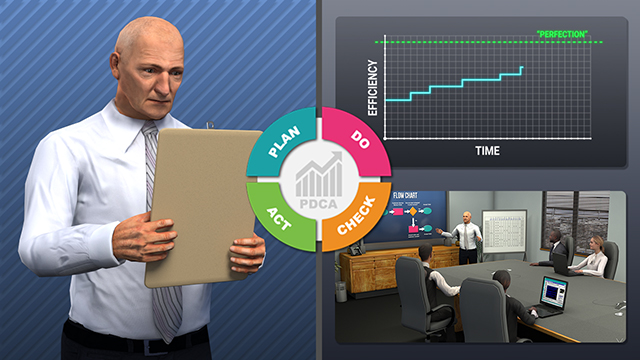
Did you know the Plan-Do-Check-Act (or PDCA) cycle is the correct methodology to follow when solving problems and managing changes? The PDCA cycle is an ordered sequence of four stages, which will take a process condition from “problem-found” to “problem-solved.” This interactive online course provides an overview of the PDCA cycle used as a continual improvement procedure, promoting the dominion of the tools needed for solving problems and managing changes. This course will define the phases of PDCA, explain how to use it as a continual improvement procedure, and list the benefits of implementing PDCA into your processes.


Demos + Pricing
Learn more about our courses, get pricing, and see our platform.
Course Details
Learning Objectives
- Define the basics of a PDCA (Plan-Do-Check-Act) cycle
- Explain the phases of continuous improvement
- List the benefits of PDCA
- Describe when to use the PDCA cycle
Specs
Frequently Asked Questions
What is the Plan-Do-Check-Act Cycle used for?
What is the Plan stage of the PDCA Cycle?
What is the Do stage of the PDCA Cycle?
What is the Check stage of the PDCA Cycle?
What is the Act stage of the PDCA Cycle?
Sample Video Transcript
“DO” is the stage at which a selected idea or resolution is implemented, but on a small scale to minimize any potential risk of negative impact within the selected process. This is the implementation stage of actions necessary to achieve planned results. This should, however, be on a small scale as opposed to the whole business or facility. This is when the plans and strategies defined in the previous stage are put into practice. It is important to perform the project according to what has been planned, instead of deciding to make a change and suddenly affecting all operations. It is vital to implement changes slowly while testing the improvement idea. Document every step by collecting data for analysis. Gathering data that can be compared against the initial condition helps to better understand the outcome of the test. This allows you to validate the improvement and benefits of the changes that have been implemented before committing to full implementation. Check that the appropriate tools are available to measure the effectiveness and the planned benefits of the implemented solutions. It is also important to communicate with the related personnel delivering the results and determine or recruit the resources needed to support the solution. Returning to our previous scenario, the Team will be meeting to discuss ways to minimize the difference in pricing. They will be utilizing their combined experience to do the following: • Look for current process instruction on price changes. If none exist, then customer service personnel should agree and write one with the approval of the manager; • Set a training session to go over every step listed on the process instruction; and • Define a tracking chart for the price changes to be processed in the next 2 weeks. Any concerns will need to be clarified and a scheduled audit is established by the manager to review the outcomes for the period and adjust as needed.


