











Hazardous Material Labeling
People commonly work near or with many different hazardous chemicals. Pesticides, paints, solvents, acids, gasoline, compressed gases such as propane, and liquid cleaning products such as bleach are just a few of the hazardous chemicals workers can be exposed to on a regular basis. To ensure workers are provided with sufficient information to understand the hazards of the chemicals they work with, OSHA maintains a Hazard Communication Standard (HCS). Hazardous material labeling is a key element of the HCS. This module will cover the labeling requirements of the Globally Harmonized System of Classification and Labeling of Chemicals (GHS) and alternative workplace labeling options.



Demos + Pricing
Learn more about our courses, get pricing, and see our platform.
Course Details
Learning Objectives
At the end of this course, you will be able to:
- Describe the purpose of the HazCom Standard and the GHS
- Identify and describe the elements of GHS hazard labels
- Describe the requirements of hazardous material labeling in the workplace
Specs
Frequently Asked Questions
What information is required on GHS labels?
What are hazard statements?
What are precautionary statements?
What do the signal words mean?
Are GHS labels required on chemicals in the workplace?
Sample Video Transcript
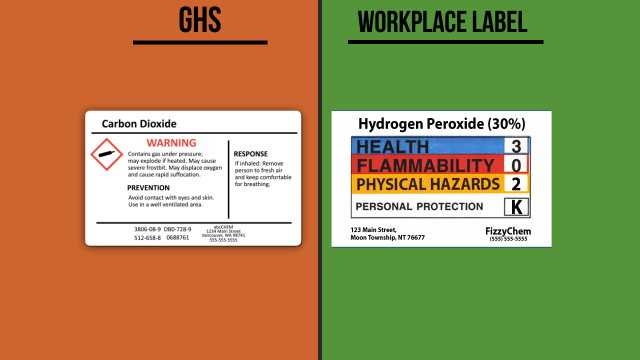
Standard labeling makes it easier for workers to understand hazards and how to protect themselves. Employers can choose to use GHS compliant shipping labels or an alternative workplace labeling program to communicate chemical hazards to employees. A label must identify the hazardous chemical, communicate appropriate warnings, and provide the name and address of the chemical supplier.


