










Work Zone Safety
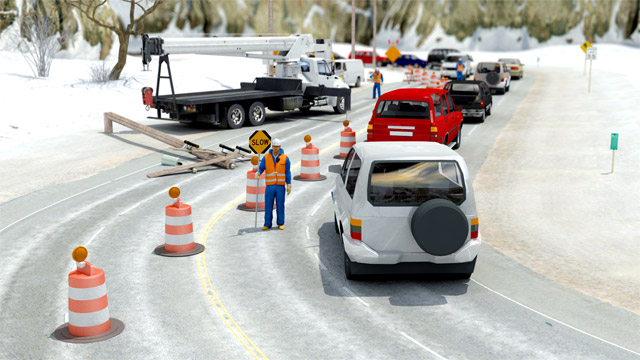
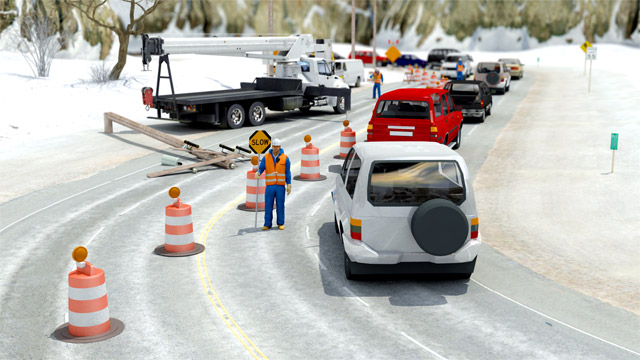
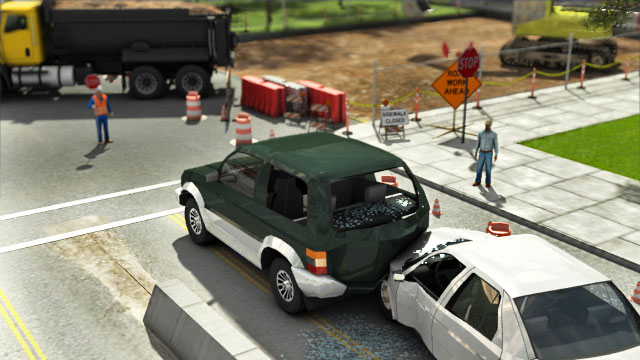
A “work zone” is an area of roadway associated with construction, maintenance, or utility work activities. Work zones are typically marked by a combination of signs, channeling devices, pavement markings, and/or work vehicles. Because they are often adjacent to active roadways, work zone workers are exposed to significant risks. Motorists, cyclists, and pedestrians traveling through and around work zones also face significant risks.
Roadways and work activities differ, and weather, traffic volumes, and local environments also vary, so a “one size fits all” approach to work zone safety is not appropriate. However, there are policies, procedures, and guidelines which do apply. These are all covered in this module.
Demos + Pricing
Learn more about our courses, get pricing, and see our platform.
Course Details
Learning Objectives
At the end of this course, you will be able to:
- Define the term “work zone”
- List hazardous conditions that work zones can present
- Describe the components of a “Transportation Management Plan,” which can include a “Temporary Traffic Control” plan, “Transportation Operations” plan, and “Public Information” plan
- Describe the purpose and contents of the “Manual on Uniform Traffic Control Devices”
- Identify and describe “positive protection devices,” “exposure control measures,” and “other traffic control measures”
- Identify the four areas of a work zone
- Describe the elements of an “Internal Traffic Control Plan” for a work zone
- List safe behaviors to use when driving in or around work zones
Specs
Frequently Asked Questions
What are the three fundamental ways to improve work zone safety and reduce work zone crashes?
Where can I find out more information on traffic control devices, including the design and placement of these devices?
Does the “Work Zone Safety and Mobility Rule” apply to all road work projects?
What are some examples of “positive protection devices” for work zones?
What are some examples of “exposure control measures” for work zones?
Sample Video Transcript
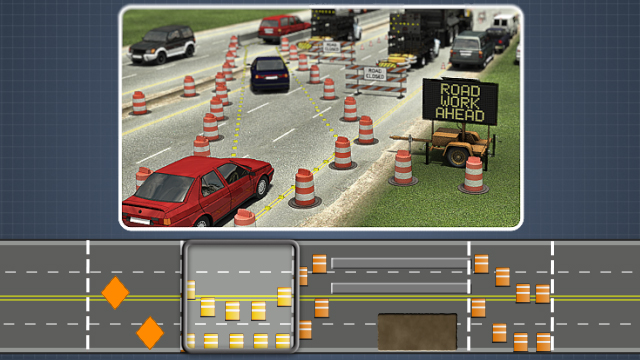
The manual on uniform traffic control devices specifies four work zone areas. One, the advance warning area, where road users are informed of work activities ahead. One or more signs may be used here with or without warning lights. Two, the transition area, where road users are redirected from their normal path. Channeling devices and pavement markings are often used in this area. Three, the activity area, where work activities take place. Workspaces, traffic spaces, and buffer spaces must be clearly defined in this area by channeling devices or temporary barriers. And, four, the terminations area, where road users return to their normal path. This area ends at the last traffic control device such as an “End Road Work” sign. Guidelines and worksheets for all four areas are fully detailed in the MUTCD.
Additional Resources
- US Department of Transportation Federal Highway Administration (FHWA) – http://www.fhwa.dot.gov/
- FHWA Office of Operations – www.ops.fhwa.dot.gov
- Office of Operations Work Zone Safety – http://www.ops.fhwa.dot.gov/wz/resources/final_rule.htm


