









Hydraulic System Equipment
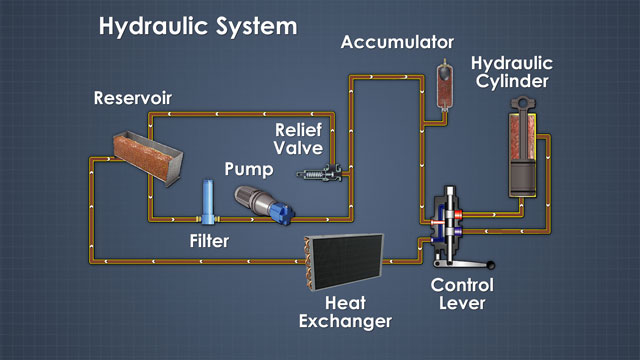
In a hydraulic system, pressure applied anywhere to a contained, incompressible fluid is transmitted undiminished throughout the fluid. This course covers the purpose and function of the major equipment used in a typical hydraulic system.


Demos + Pricing
Learn more about our courses, get pricing, and see our platform.
Course Details
Learning Objectives
• Identify the components of a basic hydraulic system • Describe the common types of hydraulic pumps and their applications • Describe the function of actuating cylinders • Describe the function of accumulators • Describe the function of reservoirs • Describe the function of filters • Describe the function of heating elements and heat exchangers
Specs
Frequently Asked Questions
How do hydraulic pumps work?
What is a hydraulic actuating cylinder?
What are the different types of hydraulic accumulators?
What’s the point of heating hydraulic fluid?
What happens when hydraulic filters become clogged?
Sample Video Transcript
Double acting actuating cylinders push and pull. They contain a cylinder bore with fluid ports at each end and a piston and rod assembly extending through one end of the cylinder. Pressure from fluid entering through port A, causes the piston to move in one direction and this forces the fluid on the opposite side of the piston, out through port B. When pressure is changed and applied from fluid entering the cylinder bore through B, the piston and rod move in the opposite direction, forcing the fluid in the other chamber, out through port A. A selector valve is usually used to control a double acting actuating cylinder.


