











Motor Starters
When a relay is used to switch a large amount of electrical power through its contacts, it is designated by a special name: contactor or starter. This course covers contactors, incoming and auxiliary contacts, overload heaters, starter construction, starter operation, using heater elements in troubleshooting, and typical starter configurations.


Demos + Pricing
Learn more about our courses, get pricing, and see our platform.
Course Details
Specs
Frequently Asked Questions
What is a contactor?
What is the difference between circuit breakers and overload protection devices?
How does a bimetallic overload protection device work?
What are some types of alternative starters that are available?
What are the advantages of a solid-state starter over an electromagnetic starter?
Sample Video Transcript
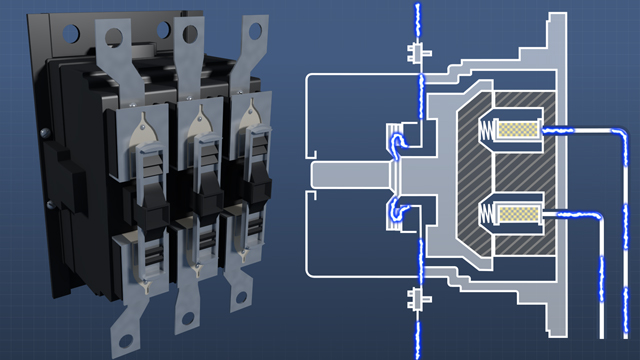
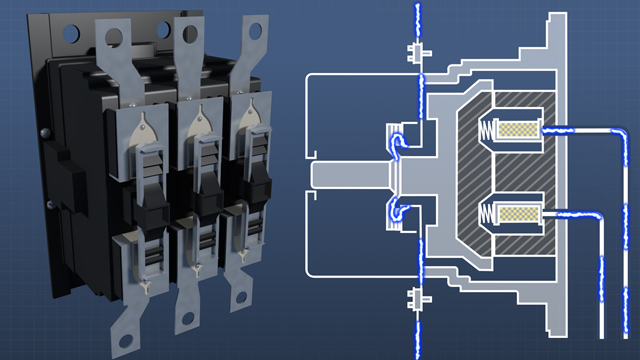
Note that there are two electrical circuits in a contactor, one is the control circuit connected to the coil that typically runs at a lower voltage, such as 24 or 120 volts. The second circuit is the primary power circuit that connects the power lines to the motor through the contactor contacts. As mentioned earlier, the contactor closes or opens all three power lines simultaneously when the coil moves the core. The contactor also simultaneously activates auxiliary contacts which can be used for control purposes and for contactor status reporting.


