October 10, 2025 3 min read

The Three Phases of Risk Assessment: Risk Management Basics
Industry:
Solution:
Mitigating risk is an important consideration for preventing injury and saving your organization time and resources. In this blog, we’ll break the risk assessment process down into three phases: risk identification, risk analysis, and risk evaluation. When learning the 3 phases of risk assessment, organizations gain a better understanding of risk management and will provide you with risk mitigation techniques for your workplace.
Overview: 3 Phases of Risk Assessment
The three phases of risk assessment include:
- Risk Identification – spotting potential risks that could impact operations.
- Risk Analysis – understanding the likelihood and impact of those risks.
- Risk Evaluation – comparing risk levels against your risk management framework to prioritize action.
Your organization should conduct risk assessment in a systematic manner. Perform risk assessments collaboratively, as a team, and involving different stakeholders, always taking into account their unique knowledge and views.
When performing your risk assessment, use the best information available to your organization, realizing this may mean you’ll have to look outside your organization and/or do additional research to gather more information and more knowledge.
Vector EHS Management
Bring all your organization’s EHS activities, tasks, and reports into one single, easy-to-use solution to gain visibility into the data and trends needed to shift from a reactive to a proactive safety culture
Learn More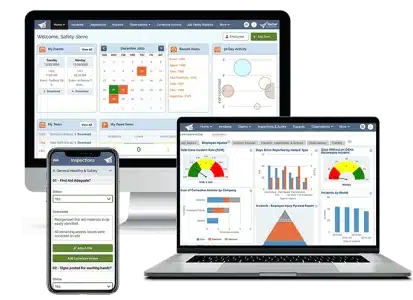
What Is Risk Identification?
Risk identification is the first phase of risk assessment. During this phase, teams identify potential risks that could disrupt operations, projects, or safety goals.
Risk identification is the process of finding and describing risks that might help or prevent an organization from achieving its objectives.
Side note: Remember that risk can be thought of as the effect that uncertainty may have on your organization’s attempt to reach your objectives, and that effect may be positive/beneficial or negative/harmful.
During the risk identification process, your organization should identify risks that seek to identify risks that are both under your control and those that are not.
What Is Risk Analysis?
During risk analysis, it’s your goal to learn the nature of the risk(s). During risk analysis, be sure to consider:
Uncertainties, including those with possible negative and positive consequences
Sources of risk
- Events
- Likelihood of events
- The consequence of those events
- The effectiveness of current controls
- The effectiveness of potential future controls
A risk analysis will be more accurate if you’re using high-quality, accurate, and complete information. Remember, you may have to go outside your organization to get some of this information.
You should be aware of, document, and communicate to decision makers the opinions, biases, assumptions, exclusions, as well as any limitations of any techniques used, during the risk analysis process.
This analysis helps organizations understand the level of risk each event presents and prioritize accordingly.
What Is Risk Evaluation?
During risk evaluation, you’ll compare the results you came up with during your risk analysis and compare those to your organization’s existing risk criteria to determine if you’ll need to do more to treat the risk(s) you’re assessing. Evaluation often takes place within a broader risk management framework or even as part of enterprise risk management, ensuring consistency across the organization.
During risk evaluation, your organization may choose to:
- Do nothing
- Consider implementing other risk treatments
- Reconsider your organization’s objectives
- Return to the risk analysis phase to develop a more thorough understanding of the risk at hand
Explore how Vector EHS Management Software supports tracking and monitoring risks.
What’s Next: Risk Treatment
The outcomes of the evaluation phase inform the next step, which is treatment. This means deciding whether to mitigate, accept, transfer, or monitor risks as part of your broader risk management strategies. Risk treatment is the process of considering, selecting, and implementing one or more options for addressing the risk(s) you’ve been assessing. It’s also essential to continuously monitor risks so that strategies remain effective as conditions change.
Award-Winning Online Safety Training
Improve safety and reduce risk at your organization with our comprehensive HSE Training library.
View Courses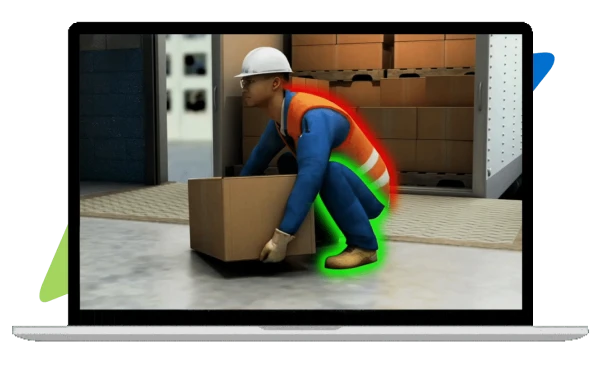
Three Phases of Risk Assessment Frequently Asked Questions
What are the 3 Cs of risk assessment?
The 3 Cs are Control, Communication, and Competence. They emphasize the importance of taking preventive action so that information flows across teams and that there is trained staff who understand the process.
How do I start a risk assessment?
Begin by defining the scope, identifying potential risks, and gathering relevant data. From there, follow the three phases of identification, analysis, and evaluation to guide informed decisions.
What’s the difference between risk analysis and evaluation?
Risk analysis looks at the likelihood and impact of risks, while evaluation compares those risks against criteria or thresholds to decide which need treatment.
What are the five basic steps of risk management?
Identify, analyze, evaluate, treat, and monitor risks. This cycle forms the foundation of a risk management framework. Leverage training resources to help with your risk management efforts, such as the Vector Solutions’ Health and Safety Library.
What are the 5 principles of risk management?
They include identifying risks early, analyzing them consistently, applying appropriate treatments, monitoring risks continuously, and communicating effectively.
What are the 5 Cs of risk management?
Commonly listed as Commitment, Communication, Culture, Competence, and Compliance, these principles help embed risk management in enterprise risk management programs.
Conclusion: Effective Risk Management Programs Are Built on Strong Foundations & Principles
Risk management techniques are applicable across industries, but they are especially valuable in safety contexts, where training and incident management systems help organizations strengthen compliance and reduce risk. By applying structured risk management strategies, organizations can reduce exposure not only to operational threats but also to financial risk.
Risk Matrix Guide
Understanding the components of a risk matrix will allow you and your organization to manage risk effectively.
Get the Guide