









April 28, 2026 5 min read

Warehouse Safety: Hazards, Guidelines, & Best Practices
Industry:
Solution:
You need a warehouse safety framework that reduces incidents and holds up when auditors appear. This article explores warehouse safety topics. It identifies common hazards, controls that reduce risk, and the documentation you need to prove compliance.
Main Takeaways
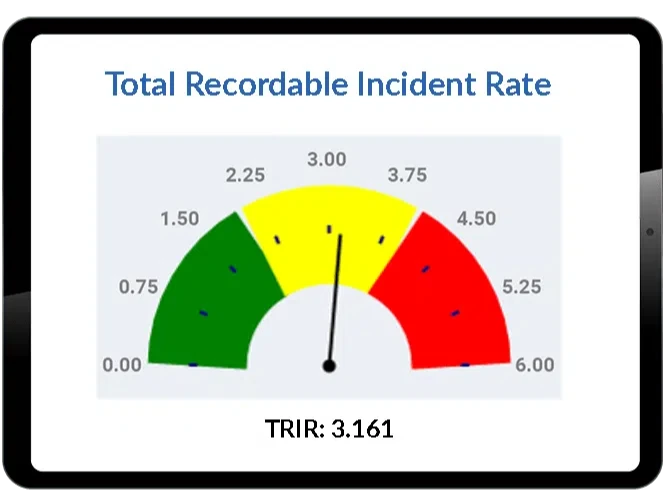
- The recordable injury rate in warehousing is nearly double the all-industry average.
- No single OSHA standard governs warehouses. Compliance requires coordinating general industry regulations by hazard type.
- Effective warehouse safety programs tie training to role-specific exposures. They trigger retraining when incidents, new equipment, or regulation changes occur.
- Warehouse safety audit readiness depends on documented corrective action closure.
Reinforce Daily Controls That Prevent Injuries
Reinforce controls for forklifts, ergonomics, housekeeping, and hazardous materials with quick, actionable practices your teams can apply on the floor.
Get Warehouse Safety Tips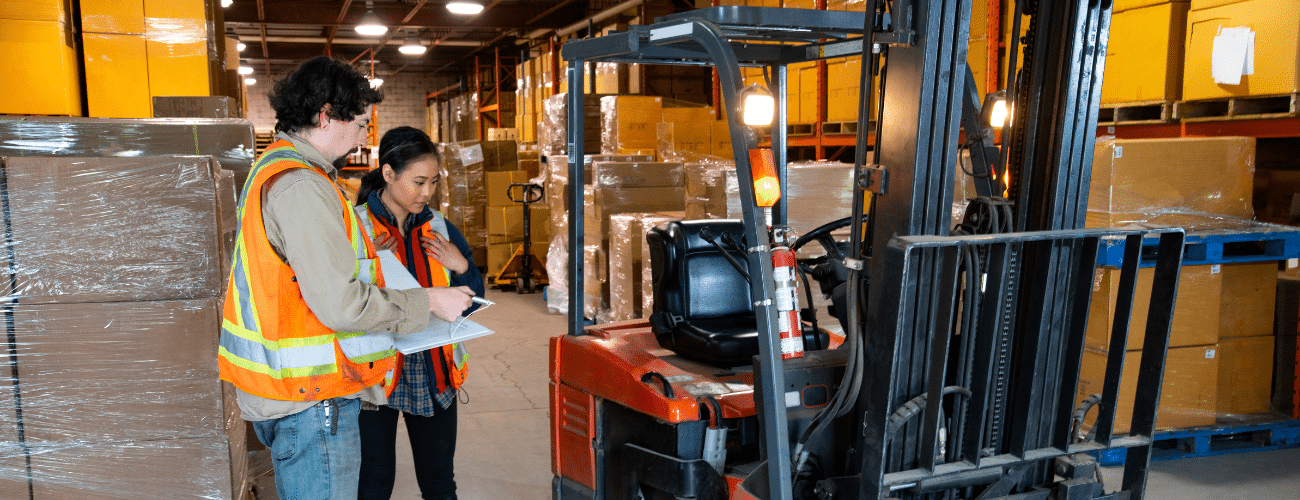
Common Warehouse Safety Hazards and How to Control Them
Most warehouse injuries and OSHA citations are from:
- Slips, trips, and falls
- Powered industrial trucks
- Falling objects
- Ergonomics and manual handling
- Hazardous materials
- Machinery and conveyors
- Fire and atmospheric hazards
Each needs its own controls, regulatory alignment, training, and documented proof.
In 2024, the industry saw 4.8 cases per 100 full-time workers, according to the U.S. Bureau of Labor Statistics. This is largely because the typical warehouse has a concentration of high-energy exposure. Items sharing the floor include:
- Vehicles
- Elevated platforms
- Heavy loads
- Chemicals
- Combustible materials
No single “warehouse standard” exists in OSHA’s regulations. Your facility falls under general industry requirements. The matrix below covers all hazard categories in one reference.
Warehouse Safety Hazards and Controls
| Hazard | Top Controls | Training Required | Evidence to Have |
| Slips, trips, and falls | Housekeeping program; anti-slip flooring / mats; spill response kits; dock-edge and elevated platform guardrails | Walking-working surfaces; fall protection for work at 4+ feet | Inspection logs; housekeeping checklists; fall protection equipment records |
| Forklifts / PIT | Operator certification; daily pre-use inspections; marked pedestrian lanes; speed limits; dock-edge awareness | PIT operator training and evaluation; recertification every 3 years | Operator evaluation records; daily inspection forms; traffic management plan |
| Falling objects | Secure stacking (heavier loads lower); rack guards / bollards; toe boards on elevated storage; load-weight labels | Safe stacking; racking inspection awareness | Racking inspection schedule; load-limit signage photos; incident / near-miss reports |
| Ergonomics / manual handling | Lift assists, conveyors, adjustable workstations; job rotation and micro-breaks; proper lift technique coaching | Manual handling / ergonomics; JSA for high-risk tasks | JSA records; ergonomic assessment reports; MSD incident tracking |
| Hazardous materials | SDS access; HazCom program and labeling; spill containment; ventilation | HazCom / GHS; SDS access and use | Written HazCom program; SDS access log; training sign-off sheets |
| Machinery / conveyors | Machine guarding; LOTO procedures; emergency stops; exclusion zones during maintenance; guarded pinch / nip points; proper lighting of conveyor areas and surrounding walkways; ergonomic assessment of conveyor-adjacent tasks | LOTO (authorized and affected); machine guarding awareness | Written LOTO procedures; annual LOTO audit; guarding inspection records |
| Fire and atmospheric hazards | Fire extinguishers and sprinkler systems; clearly marked, unobstructed exits; combustible material storage controls; CO monitoring in enclosed spaces with powered equipment; adequate ventilation | Fire extinguisher use; evacuation procedures; CO symptom recognition for PIT operators | Fire extinguisher inspection tags; drill attendance logs; EAP document; ventilation assessment records |
Forklift Safety and Loading Dock Controls
Forklifts remain one of the deadliest warehouse hazards. 84 workers died in incidents involving forklifts, order pickers, or platform trucks in 2024, according to NSC Injury Facts.
Controls that reduce injury exposure are:
- Require hands-on certification for every operator, with a documented evaluation.
- Start shifts with a pre-use inspection on a standardized checklist.
- Clearly mark pedestrian lanes with physical barriers at intersections.
- Enforce speed limits and horn-at-blind-corner rules.
Loading docks pack fall-from-height and struck-by-vehicle risk into a small footprint. Address this zone with:
- Guardrails or safety chains at open dock edges
- Vehicle restraints or wheel chocks, locked before loading begins
- Pedestrian exclusion zones whenever trucks move in or out
Match PPE to the task:
- Safety shoes for everyone on the floor
- Hi-vis vests wherever PIT traffic flows
- Cut-resistant gloves for material handling
- Hearing protection in high-decibel zones
Fire and Atmospheric Hazards
Warehouses are particularly susceptible to rapid fire spread. High-density storage, combustible packaging, and limited egress routes raise risk. A small ignition can quickly become a serious incident.
- Regularly inspect fire extinguishers.
- Place extinguishers where workers can reach them without crossing a hazard zone.
- Clearly mark every emergency exit and keep them unobstructed.
- Practice quarterly drills, so staff know what to do in an emergency.
Carbon monoxide is an equally serious risk. This is especially true wherever gas or diesel-powered equipment operates indoors. Train workers, especially PIT operators, to recognize early symptoms:
- Impaired vision
- Loss of muscular coordination
- Headaches
- Dizziness
- Nausea
Ensure adequate ventilation and include CO symptom recognition in forklift operator training.
Both hazards need documentation. Keep fire extinguisher inspection logs, drill attendance records, and ventilation assessment findings.
Conveyor Safety: Controls, LOTO, and Injury Prevention
Conveyors create distinct injury mechanisms:
- Contact with pinch points or in-going nip points. Guard each one before the conveyor enters service, and inspect the guarding weekly.
- Being struck by falling products. Train workers on load limits and proper placement at the feed end to prevent falling during transport.
- Musculoskeletal problems from sustained awkward postures at fixed workstations. Ergonomic assessments, job rotation, and adjustable-height equipment reduce cumulative MSD exposure.
Every maintenance employee needs documented LOTO training before performing any service task. Affected employees need basic training. This helps ensure they don’t re-energize equipment while service is in progress.
Audit documentation should include:
- Guarding inspection records
- Machine-specific LOTO procedures
- Authorized and affected employee training records
- Incident or near-miss reports involving conveyor contact
Hazardous Material Storage Controls
Hazardous material storage best practices are:
- Stack loads in straight columns, ensuring an even distribution.
- Place heavier items on the lowest and middle shelves.
- Remove one item at a time from the shelving.
- Keep aisles clear, clean, and in good repair at all times.
- Keep secondary containment for liquid chemicals.
- Mark spill kit locations with clear signs.
- Have a written spill response procedure that workers can follow quickly.
- Include spill response drills in your annual emergency preparedness.
These practices belong in new hire training and your monthly audit checklist.
Ergonomics and Emerging Hazards
MSD risk is built into the work, so warehouse safety controls should be, too. Lift assists and adjustable-height workstations reduce force and awkward postures. Lower strain with job rotation, scheduled micro-breaks, and standardized work methods.
Capture both layers in JSAs for your highest-risk tasks to prove a systematic approach during audits.
Heat stress is shifting from a seasonal concern to a regulatory obligation. California requires protective measures for workers in restrictive gear when it’s 82°F or hotter. Baseline controls include:
- Accessible hydration stations
- Designated cool-down areas
- Acclimatization protocols for new and returning workers
Close Corrective Actions Before They Age
Evaluate how our system links mobile inspections, incident reporting, and corrective action closure so you can pull audit evidence fast.
Explore Vector EHS Management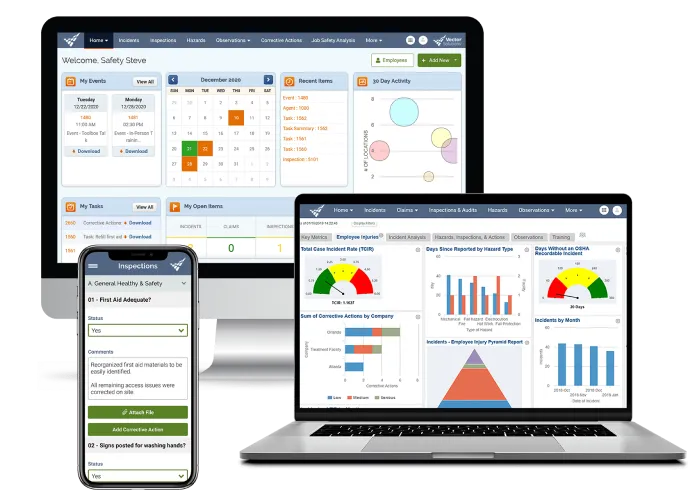
Warehouse Safety Training Requirements by Role
Effective warehouse safety training ties specific courses to specific exposures. To make your program defensible, assign training based on what each role encounters. Document every completion and define clear triggers for retraining. The matrix below provides training suggestions based on role.
Suggested Training Based on Role
| Training Topic | General Associates | PIT Operators | Maintenance | Supervisors |
| HazCom / GHS / SDS access | ✓ | ✓ | ✓ | ✓ |
| PPE selection and use | ✓ | ✓ | ✓ | ✓ |
| Emergency action plan / evacuation | ✓ | ✓ | ✓ | ✓ |
| Safe material handling / ergonomics | ✓ | ✓ | ✓ | — |
| PIT operator certification and evaluation | — | ✓ (every 3 years) | — | — |
| LOTO (authorized employee) | — | — | ✓ | — |
| LOTO (affected employee) | ✓ | ✓ | — | ✓ |
| Fall protection (work at 4+ feet) | As needed | As needed | ✓ | — |
| Incident investigation / root cause | — | — | — | ✓ |
| BBS observation and coaching | — | — | — | ✓ |
Retrain every time:
- New equipment or processes enter the operation
- An incident exposes a competency gap
- A supervisor witnesses at-risk behavior
- Regulation changes occur
For every event, record the trigger, date, and the employee’s signed acknowledgment.
When training spans multiple roles and sites, you need Vector LMS. Our centralized platform enables:
- Role-based course assignments
- Real-time completion tracking
- Automated reminders before certifications lapse
Warehouse Safety Best Practices Checklist
Structure your warehouse safety inspection schedule in tiers:
- Daily PIT pre-use checks and housekeeping walkthroughs
- Weekly inspections of racking, docks, and fire extinguishers
- Monthly full-facility audits to address every hazard category
Assign each zone to a specific supervisor so nothing gets overlooked. Use the checklist below as a starting point.
- Walking surfaces and aisles: Clear, dry, and properly marked
- Racking and storage: Load limits posted, no visible damage, heavier items stored lower
- PIT and traffic: Lanes marked, pedestrian barriers in place, pre-use forms completed
- Dock areas: Edge protection in place, wheel chocks available, dock plates secured
- PPE: Available, in good condition, matched to current hazard assessment
- Emergency equipment: Exits unblocked, extinguishers charged, EAP posted
- HazCom: SDS accessible, labels legible, spill kits stocked
- Ergonomics: Lift assists available, workstation heights appropriate
Prove Compliance at Any Time
Standardize inspections, document PIT evaluations, and close corrective actions across sites with audit-ready records available on demand.
Request a Demo
Build Your Warehouse Safety Program with Vector Solutions
Vector Solutions brings inspections, incidents, training, and corrective actions together in one system. Each location follows the same inspection cadence and training requirements. Audit-ready evidence is available the moment you need it. Corrective actions close faster because ownership, due dates, and escalation happen automatically.
See how Vector Solutions supports EHS teams by connecting hazard controls to documented training and measurable outcomes. Request a demo today.