











Hazardous Material Storage
People commonly work near or with many different hazardous chemicals. Pesticides, paints, solvents, acids, gasoline, compressed gases such as propane, and liquid cleaning products such as bleach are just a few of the hazardous chemicals workers can be exposed to on a regular basis. The risk of being exposed to a hazardous chemical is greatly reduced when the chemical is handled and stored according to manufacturer recommendations and in compliance with facility standards. This module will present best practices for the safe storage of hazardous chemicals.


Demos + Pricing
Learn more about our courses, get pricing, and see our platform.
Course Details
Learning Objectives
By the end of this course, you will be able to:
- State the definition of a hazardous material
- List the two primary classifications of hazards
- List the four main elements of the HazCom standard
- Describe what a Safety Data Sheet (SDS) is and how it relates to hazardous material storage
- List and describe general hazardous material storage guidelines
- Describe recommended items to verify during a storage area inspection criteria
- Describe the required hazard characteristics and storage conditions guidelines for some specific hazards common types of hazardous materials
Specs
Frequently Asked Questions
Where do I find storage information?
What are some general storage requirements?
How should chemicals be segregated?
What should I do with expired or unwanted chemicals?
What safety equipment is needed in storage areas?
Sample Video Transcript
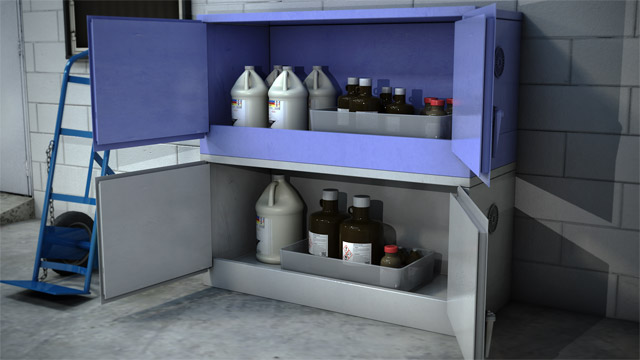
Proper storage of hazardous chemicals is critical to reduce the risk of exposure. Proper storage practices include: • Identify products with appropriate hazard labels • Use appropriate storage containers and cabinets • Segregate incompatible materials • Store chemicals in a cool, dry location with adequate ventilation and lighting • Eliminate ignition sources • Control inventory to minimize quantities on hand • Restrict access to storage areas When hazardous chemicals are stored properly, the risks to employees and property are greatly reduced. Chemical- specific storage information can be found on labels and safety data sheets.


