July 7, 2026 5 min read
How to Create an Employee Training Program: A Step-by-Step Guide
Industry:
Solution:
A well-structured employee training program isn’t just a nice-to-have. It’s essential to improve workforce performance, meet compliance requirements, and reduce costly errors and employee turnover.
But how do you build one that truly works? This guide breaks down how to create a training program in eight steps. You’ll get a proven framework spanning design, delivery, and refinement that drives measurable outcomes for your organization.
Main takeaways
- A training program is an ongoing system spanning multiple roles, topics, and (in regulated industries) regulatory requirements; a training plan is a single-event document. Building the wrong one is the most common structural mistake.
- A skills gap analysis is the required first step. Without it, training produces scrap learning: content delivered but never applied, wasting limited training hours on the wrong topics.
- Delivery method must match workforce type. Shift-based and field workers need mobile-accessible eLearning with offline capability; classroom-only training leaves coverage gaps.
- Completion rates alone do not prove a program works. The Kirkpatrick Model evaluates at four levels: reaction, knowledge gain, behavior change, and operational results such as productivity, retention, and, in safety-critical settings, incident-rate and audit-pass improvements.
- Five failure modes kill otherwise well-designed programs: skipping the needs assessment, vague objectives, one delivery method for every worker, no measurement plan, and no leadership buy-in.
Training program vs. training plan
Distinguish a training program (an ongoing system spanning topics, roles, and where they apply regulatory requirements) from a training plan, or training plan template (a single-event document for one course or session). The first step in how to create a training program for employees is recognizing you are building infrastructure, not a one-time schedule.
| Training Program | Training Plan | |
| Scope | Ongoing, multi-topic system | Single course or event |
| Audience | All roles across the organization | Specific group or session |
| Documentation | Completion records, certifications, audit trails | Attendance log or sign-in sheet |
| Lifecycle | Continuous; updated as requirements change | Ends when the event is delivered |
| Example | An annual compliance program covering HazCom, LOTO, and fall protection | A one-day forklift operator refresher class |
The program delivers reduced incident rates, faster onboarding to competency, audit-ready documentation, lower workers’ compensation costs, and fewer compliance gaps. The average medically consulted work injury cost $48,000 in 2024.
How to create a training program in 8 steps
Following these eight training program steps to create a training program that drives performance, supports compliance, and improves employee engagement.
| Step | Training Program Step | Purpose / Outcome |
| 1 | Perform a Training Needs Assessment | Aligns training with business goals and identifies performance gaps |
| 2 | Keep Adult Learning Principles in Mind | Builds relevance and engagement by designing training for how adults learn best |
| 3 | Develop Learning Objectives | Provides clear, measurable outcomes to guide the training plan |
| 4 | Design Training Materials | Structures the program with methods and formats that support learning objectives |
| 5 | Develop the Training Materials | Creates the actual content, tools, and resources employees will use |
| 6 | Implement the Training Program | Delivers training consistently across the workforce using the right tools and methods |
| 7 | Evaluate the Training Program | Measures effectiveness, ROI, and compliance outcomes to inform improvements |
| 8 | Continuously Improve and Refine the Training Program | Keeps training relevant and effective as business needs, processes, and technologies evolve |
Step 1: Perform a Training Needs Assessment
Every successful program starts with a clear business objective. A needs assessment confirms whether training is the right solution for a specific organizational goal, such as improving compliance, upskilling staff, or supporting new processes. In regulated environments, treat the needs assessment as a skills gap analysis that also compares each role’s current competencies against the standards it must meet.
There are four key activities:
- Identifying the business goal the program supports
- Defining the tasks employees need to perform to achieve that goal
- Outlining training activities to teach those tasks
- Considering employee learning characteristics for effectiveness
Skipping this step produces scrap learning, training employees receive but never apply. With organizations averaging just 16.7 formal learning hours per employee in 2025 (under 20 minutes a week), misdirected training wastes a budget that is already tight.
Breaking Down the Four Key Activities
A training needs assessment may seem straightforward, but each step plays a critical role in building an effective employee training program.
1. Identify the business goal
Never launch training without knowing exactly why it’s needed. Training must support a defined organizational goal such as improving efficiency, reducing costs, rolling out a new product, updating processes, or meeting compliance requirements. For example, your business goal might be to train employees on how to produce and deliver a new product line.
2. Determine the tasks employees need to perform
Once the goal is clear, outline the specific tasks employees must master to achieve the goal. This step helps uncover the “performance gap” between current capabilities and required outcomes. Continuing the new product example, employees may need to understand the product features, follow production procedures, and consistently perform key tasks on the job.
3. Define the training activities that support those tasks
With tasks identified, map them into targeted training courses. Depending on the needs, this may include eLearning modules, instructor-led sessions, demonstrations, learning paths, or hands-on practice. An effective training plan blends formats so employees can learn, apply, and retain new skills. An LMS with built-in competency assessment functionality, can also help to uncover targeted training needs based on the task.
4. Consider employee characteristics
Training is most effective when it reflects how your employees learn best. Factors like comfort with technology, preference for self-paced vs. guided learning, generational differences, or cultural context all matter. Since one-size training rarely works, developing a training program that blends learning methods, such as classroom, on-the-job, and digital learning, helps reach a wider range of learners.
By following these training program steps, organizations can create an effective training program that is relevant, goal-driven, and more likely to deliver measurable business results.
Modernize Your Training Program with Blended Learning
Discover how to boost knowledge retention, streamline compliance, and improve workforce performance with the right mix of instructor-led and online training.
Download the Guide
Step 2: Keep Adult Learning Principles in Mind
Employees learn best when training is relevant, practical, and respectful of their experience. Adult learning principles highlight that employees are self-directed, goal-oriented, and motivated when they see “what’s in it for them.”
When developing a training program, it’s essential to recognize that adult learners bring unique needs and expectations. Effective training programs take these principles into account:
- Self-directed: Employees want control over how they learn, making flexible formats and optional learning paths valuable.
- Experienced: Learners bring existing knowledge and context, so training should connect new skills to real-world situations.
- Goal-oriented: Adults learn best when training is tied to clear objectives and business outcomes.
- Relevant: Content must directly relate to job responsibilities and organizational priorities.
- Task-focused: Training should emphasize application not just theory.
- Value-driven: Employees engage more deeply when they understand “what’s in it for them.”
- Respectful: A respectful approach fosters trust, participation, and stronger results.
By embedding these adult learning principles into the design and delivery of your employee training program, you increase learner engagement, retention, and on-the-job performance. In short, aligning your training program with how adults learn transforms training into a business driver rather than a compliance checkbox.
Step 3: Develop Learning Objectives
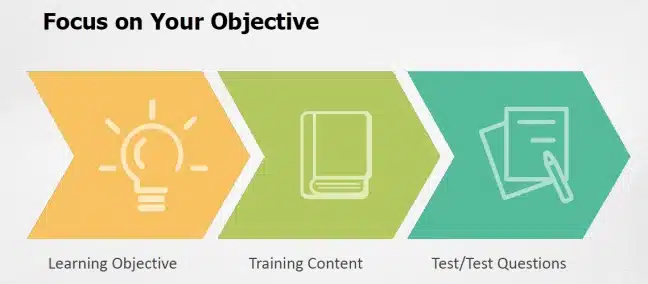
Learning objectives are the foundation of any effective training program. They define what employees should be able to know, do, or demonstrate after training, supporting that the training plan stays on target.
When outlining the training plan, use SMART objectives (Specific, Measurable, Achievable, Relevant, Time-bound) and the ABCD model (Actor, Behavior, Condition, Degree) to create clear, actionable goals that guide program design and evaluation.
Reduce recordable incidents tied to fall hazards by 15% within 90 days of completion, measured against the site’s current DART rate. The national total recordable case rate was 2.3 per 100 full-time workers in 2024; readers should use their own industry (NAICS) baseline to set a realistic target.
Step 4: Design Training Materials
At the design stage, you’re creating the blueprint for your program. Effective training program design includes:
- Aligning all training content with learning objectives
- Breaking material into digestible sections
- Selecting and blending delivery methods (eLearning, instructor-led, on-the-job)
- Including interaction, feedback, and practice opportunities
This planning approach meets learner needs while supporting organizational outcomes.
Step 5: Develop the Training Materials
Once your training program design is finalized, it’s time to develop the actual materials that will bring the plan to life. This step transforms your outline into tangible resources that employees can engage with — from digital modules to hands-on practice guides.
As Harvard Business Publishing notes, the strongest learning experiences pair clear objectives with chances to apply new skills in a real context. When developing a training program, the goal isn’t just to produce content, but to create materials that directly support employee performance and business outcomes.
Common training materials may include:
- Instructor resources such as guides, outlines, and handouts
- Employee-facing materials like job aids, role-play scenarios, or interactive worksheets
- Digital content including eLearning modules, simulations, or microlearning videos
- Visual tools such as slides, infographics, or process diagrams to simplify complex information
- Practice opportunities that allow employees to apply knowledge in real or simulated work environments
As workplace training evolves, many organizations also incorporate immersive gamified training and industry-specific learning platforms to strengthen engagement. But regardless of format, effective training materials should:
- Align with your learning objectives and business goals
- Be accessible and engaging for your audience
- Reinforce the skills and behaviors identified in your training plan
By focusing on these principles, organizations can develop training materials that not only transfer knowledge but also build competence and confidence on the job. This step is critical in creating an employee training program that goes beyond compliance and truly drives performance.
Step 6: Implement the Training Program
With your training plan developed, the next step is implementation which brings the program to your workforce. While it may seem like the straightforward part, how you roll out an employee training program directly impacts adoption, engagement, and long-term effectiveness.
Implementation is more than scheduling sessions or uploading courses. The Association for Talent Development (ATD) notes that success depends on alignment across L&D, the business, and learners, which starts with clear communication, leaders who champion the change, and learners who know what’s expected of them.
Office-based teams can attend scheduled classroom sessions, but shift-based and field workers need mobile-accessible eLearning with offline capability so they can complete assignments between shifts or in areas without reliable connectivity. Classroom-only training leaves those workers with coverage gaps.
Key considerations when implementing a training program include:
- Communication and buy-in: Employees need to know why the program matters, how it connects to organizational goals, and what’s expected of them. Support from managers and leaders reinforces its importance.
- Logistics and accessibility: Training must be accessible across schedules, roles, and locations. Using a learning management system (LMS) can streamline registration, notifications, delivery, and tracking. Programs are even more effective when the LMS allows flexible content configuration, so organizations can tailor courses for their site specific information and assign courses by role, department, or compliance requirement, delivering the right training to the right employees at the right time.
- Consistency across formats: Whether training is delivered in a classroom, virtually, or on the job, implementation should provide a consistent experience.
- Integration into workflow: Effective training programs are implemented in a way that minimizes disruption. This may mean blending microlearning into daily routines, assigning digital modules before workshops, or scheduling hands-on training during quieter production periods.
- Manager involvement: Research published by SHRM highlights that training programs are more successful when managers reinforce learning, provide feedback, and model desired behaviors after training sessions.
- Compliance documentation: For compliance training (HazCom, LOTO, fall protection, powered industrial trucks), align content to the exact regulatory standard and document completion with trainee name, date, and trainer identity, as required under standards like 29 CFR 1910.178(l)(6) for forklift operators. Keep mandatory tracks separate from voluntary development so auditors can pull records cleanly.
- Current HazCom deadline: Under the 2024 HazCom revision (as extended by OSHA’s January 2026 final rule), employers must provide updated employee training on newly identified substance hazards by November 20, 2026.
Implementing the training program isn’t just a delivery task, it’s a strategic step in creating an effective training program that sets the tone for participation and determines how well learning translates to on-the-job performance. Organizations that treat implementation with the same rigor as design and development are far more likely to see measurable results.
Step 7: Evaluate the Training Program
Evaluation is essential to determine if your employee training program is effective and aligned with business outcomes. While the Kirkpatrick Model (Reaction, Learning, Behavior, Results) is widely respected, recent critiques suggest beginning with business results can improve focus and impact.
Key evaluation components to include:
- Business results first: Start by identifying the desired outcomes (e.g., improved compliance, productivity, cost savings) and work backward to shape evaluation. This “end in mind” approach ensures your training plan remains strategic.
- Behavior changes on the job: Observe whether employees are applying new skills, not just whether they learned them. Measuring behavior change offers stronger proof of training program effectiveness.
- Knowledge or skills gained: Assess learning through quizzes, simulations, or competency tests to confirm content has been absorbed.
- Learner reaction with context: Collect feedback but treat completion and satisfaction surveys as one data point, not the sole measure of success. Studies show learners often enjoy content that doesn’t drive behavior change.
In safety-critical settings, track DART-rate changes, audit findings, and workers’ compensation claim trends against the pre-training baseline. These are the metrics leadership recognizes, and they tie training directly to risk reduction.
By developing a training program that includes built-in evaluation methods, organizations can prove ROI, refine future training efforts, and strengthen compliance reporting. Regular evaluation also provides data points that demonstrates the true value of an effective training program to leadership.
Step 8: Continuously Improve and Refine the Training Program
An effective employee training program is never static. Business needs evolve, regulations change, and new technologies reshape how work gets done. For training to remain valuable, it must be treated as an ongoing process rather than a one-time event.
Key practices for refining and improving your training program include:
- Review performance data: Use evaluation results, assessments, and competency metrics to identify what’s working and where gaps remain.
- Adapt to organizational change: Update training content when processes, regulations, or business priorities shift to keep employees aligned and compliant.
- Incorporate modern learning methods: Spaced practice, microlearning, and blended learning strategies help employees retain knowledge and apply it on the job.
- Leverage feedback loops: Collect input from employees, managers, and compliance audits to continuously adjust the training plan.
- Support career growth: Introduce learning paths and skill-based progression to align training with long-term workforce development.
Treating refinement as a core step in developing a training program builds agility into your learning strategy. The result is a training program that stays relevant, effective, and tied to business outcomes over time.
Common employee training program mistakes to avoid
- Skipping the needs assessment. Training without a skills gap analysis produces scrap learning; you waste limited hours on the wrong topics while the gaps that drive incidents stay open.
- Setting vague objectives. “Improve safety awareness” is not measurable; without SMART objectives tied to outcomes, you cannot prove the program worked to leadership or an auditor.
- Using one delivery method for every worker. Classroom-only training does not reach field crews on rotating shifts; if the method does not match the workforce, completion rates drop and coverage gaps open.
- Having no measurement plan. Tracking completions tells you who finished, not whether behavior changed; build Kirkpatrick Levels 3 and 4 into the plan from the start.
- Failing to get leadership buy-in. Frame training as risk reduction; a single serious OSHA violation can cost up to $16,550 and a willful violation up to $165,514, which makes the business case straightforward.
Build an effective employee training program with Vector Solutions
Done well, these eight steps turn training from a compliance checkbox into a system that measurably improves performance, readiness, and audit confidence. Getting there is easier with a platform built to run it.
For over 25 years, Vector Solutions has helped organizations across industries strengthen their workforce readiness through training and safety platforms. Our online training programs and Vector LMS are built to simplify compliance, manage continuing education, and enhance employee onboarding and upskilling.
Our solutions help teams:
- Streamline and scale employee training programs across locations
- Provide skills training with structured learning paths and competency assessments
- Deliver safety courses that protect workers and reduce risk
- Manage compliance and continuing education requirements with ease
- Reduce administrative workload through automation and reporting
- Drive stronger employee engagement, performance, and retention
- Keep your workforce prepared, qualified, and confident on the job
See Vector LMS in Action for Your Organization
Vector LMS automates training assignment by role, tracks completions with certification records, and generates compliance dashboards, so your documentation is ready when auditors arrive.
Request a demo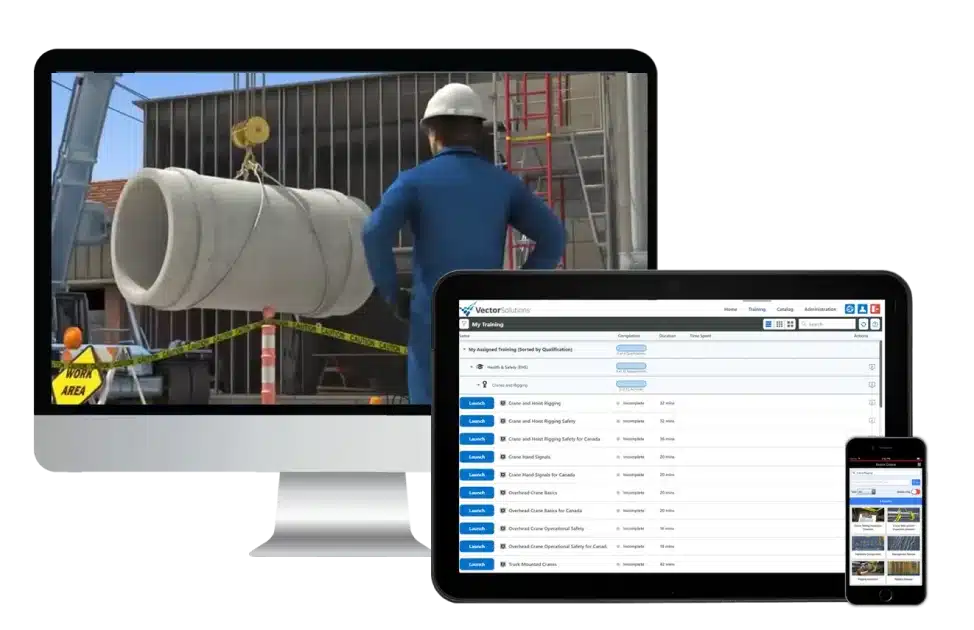
FAQs about how to create a training program
How do I create an effective employee training program?
Walk the full workflow: skills gap analysis, SMART objectives tied to measurable outcomes, delivery methods matched to the workforce, and Kirkpatrick measurement of behavior change and results. In regulated settings, tie objectives to safety outcomes such as DART-rate reductions and measure against the organization’s own industry baseline.
What should I prioritize if I’m building a training program from scratch?
For regulated industries, start with compliance training and onboarding (highest immediate risk reduction and audit readiness). Compliance training targets the most-cited OSHA standards (HazCom, LOTO, fall protection, powered industrial trucks); onboarding establishes baseline competency before employees work independently. Layer in technical and leadership development once that base is stable.
How do I choose between eLearning and classroom training for field workers?
Prioritize mobile, offline-capable eLearning for shift and field workers; use a blended approach, eLearning for refreshers and just-in-time topics, classroom for hands-on skills like forklift operation and confined-space entry. Mobile delivery removes the “waiting for the next scheduled session” bottleneck that creates coverage gaps.
What happens if I skip the training needs assessment?
Scrap learning: content delivered but never applied because it does not address actual gaps. With formal learning time already limited, every misdirected hour wastes a constrained budget; without a gap analysis you are guessing rather than targeting the deficits that create incidents or audit findings. (Reference the constrained-hours point without repeating the ATD figure used in Step 1.)
When does a spreadsheet-based approach break down for training management?
At roughly 25 or more employees or across multiple sites, manual assignment, completion tracking, and audit-report generation create gaps and consume hours that should improve the program. An LMS automates assignment by role, tracks completions with certification records, and generates compliance dashboards; when evaluating platforms, look for mobile access, offline sync, automated reminders, and scheduling integration.