











Delivery Truck Maintenance
Many businesses depend heavily on their fleet of vehicles. In some businesses, such as package or propane delivery, or taxis, the fleet really is the business. In other cases, such as trades like electricians and plumbers, the vehicle is somewhat secondary to the actual job being performed, but no less important. In order for businesses which rely on vehicles to thrive, those vehicles which make up the fleet need to be able to operate safely and properly as close to 100% of the time as possible.


Demos + Pricing
Learn more about our courses, get pricing, and see our platform.
Course Details
Learning Objectives
- Describe the difference between “reactive maintenance” and “preventive maintenance”
- List the benefits of preventive truck maintenance
- Describe how preventive maintenance can save money
- List the major elements of preventive maintenance systems
- List the responsibilities of a driver in a preventive maintenance system
- List some safety related inspection items for a delivery truck
- List some scheduled mechanical maintenance items for a delivery truck
Specs
Frequently Asked Questions
What is “preventative maintenance”?
If parts are renewed and replaced before they are used up, isn’t that more expensive?
Are there other benefits to preventative maintenance, besides cost savings?
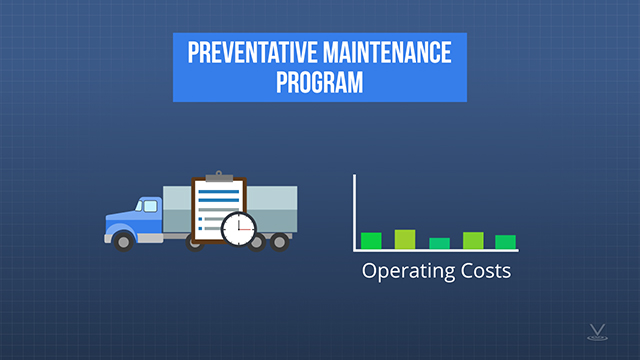
What is a “preventative maintenance program”?
What are some of the costs of not performing preventative maintenance?
Sample Video Transcript
If an engine overheats, or a lift gate fails to lower, probably no one will be injured. However, if a safety system such as vehicle steering or brakes, or a window defroster fails to operate correctly, both the operator of the vehicle and the general public are placed at risk. It’s just not acceptable to run a safety related system to the point of failure. An essential part of a preventative maintenance system is to periodically check and maintain all systems which affect the ability of a vehicle to be operated safely.


