










First Aid – Cardiopulmonary Resuscitation (CPR)
If a person’s not breathing and their heart is not beating, they can die or suffer permanent brain damage very quickly. In situations like this, it’s important to know how to perform cardiopulmonary resuscitation, or CPR. This course explains when and how to perform cardiopulmonary resuscitation. The proper process for providing Hands-Only CPR is also explained.




Demos + Pricing
Learn more about our courses, get pricing, and see our platform.
Course Details
Learning Objectives
By the end of this course, you will be able to:
- Explain when to summon emergency medical assistance if a person’s heart isn’t beating
- Describe what CPR is
- Recall when to provide CPR
- List four things to check before performing CPR on a person
- Explain how to provide CPR
- Describe how to perform Hands-Only CPR
Specs
Frequently Asked Questions
When should emergency medical assistance be summoned in a situation requiring CPR?
How long should one wait before beginning CPR?
When should one perform CPR?
What is the pattern for performing CPR?
What is Hands-Only CPR?
Is Hands-Only CPR as effective as normal CPR?
Sample Video Transcript
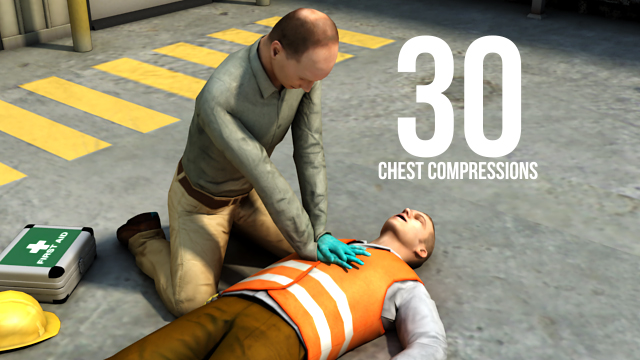
Cardiopulmonary Resuscitation or CPR is a first aid technique that involves compressing a person’s chest 30 times and breathing into their mouth two times in an alternating pattern. CPR is used to move blood and oxygen through a person’s body when their heart is not beating. The chest compressions cause blood to flow through the victim’s body and the breathing introduces oxygen into the victim’s lungs. Which in turn reaches the blood and is carried to the rest of the body.
Additional Resources
- The American Red Cross – www.redcross.org
- The American Red Cross offers hands-on CPR training – http://www.redcross.org/ux/take-a-class
- Mayo Clinic – www.mayoclinic.org
- Mayo Clinic CPR Web Pages – http://www.mayoclinic.org/first-aid/first-aid-cpr/basics/ART-20056600
- WebMD – www.webmd.com
- WebMD First Aid & Emergencies – http://www.webmd.com/first-aid/cardiopulmonary-resuscitation-cpr-treatment


