









Boiler Feedwater – Deaeration
A boiler recovers heat from burned fuels. This is accomplished when high pressure boiler feedwater inside tubes located throughout the boiler is heated and turns into steam or hot water. The steam or hot water is then used in a variety of facility processes. Boiler feedwater often contains dissolved oxygen, which is a common cause of corrosion inside boilers. The dissolved oxygen reacts with the boiler’s waterside metal surfaces to damage boiler tubes, headers, and drums. Corrosion can become more aggressive depending on the concentration of gas, pH, and temperature of the boiler feedwater. Therefore, the purpose of deaeration is to remove dissolved oxygen, carbon dioxide, and other non-condensable gases from boiler feedwater.



Demos + Pricing
Learn more about our courses, get pricing, and see our platform.
Course Details
Learning Objectives
• Identify and describe the safety hazards and safe work practices associated with boiler feedwater deaeration
• Explain the purpose of deaeration
• Explain how the amount of dissolved gases in water can be reduced
• Describe the function of tray-type and spray-type deaerators
• Identify and describe the key equipment and process flows associated with feedwater deaeration
• Describe the purpose of oxygen scavengers
Specs
Frequently Asked Questions
Explain the purpose of deaeration?
How can the amount of dissolved gases in water be reduced?
How does a tray-type deaerator function?
How does a spray-type deaerator function?
What are oxygen scavengers?
Sample Video Transcript
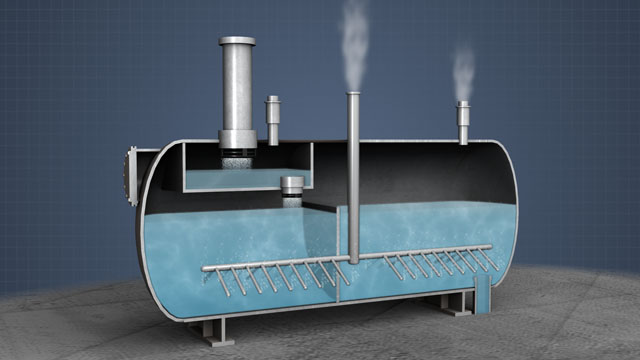
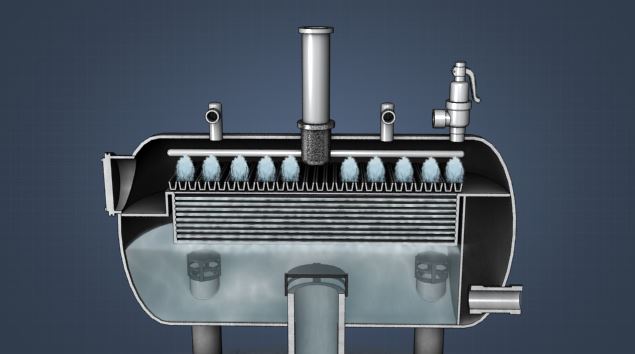
The spray-type is also referred to as the spray-scrubber type, because a separate scrubbing section is used to provide additional steam water contact after spraying. In this type, nozzles typically spray feed water in from the top of a steam environment. The feed water is first preheated with steam to prepare the dissolved gases to be driven out. Then, the feed water passes into a deaerating, or scrubbing section, which uses steam to strip the dissolved gases from the feed water. The feed water is pumped from the bottom of the deaerator and sent to the boiler, and the gases are vetted from the top.


