











Lab Safety Series: Handling Compressed Gas Cylinders
Compressed gas cylinders may look like harmless steel furniture sitting quietly in the corner, but they’re actually pressurized systems that combine stored mechanical energy with chemical hazards—capable of becoming high-speed projectiles if damaged or creating toxic, flammable, or oxygen-deficient atmospheres if they leak. This course teaches laboratory personnel how to safely identify, store, move, connect, use, and inspect compressed gas cylinders while recognizing when to evacuate or report problems rather than attempting to improvise solutions. By focusing on real-world decisions that lab workers make daily—from reading labels and selecting regulators to checking for leaks and segregating incompatible gases—participants will learn that good compressed-gas safety is based on procedure, restraint, and respect for the combination of pressure and chemistry.
Demos + Pricing
Learn more about our courses, get pricing, and see our platform.
Course Details
Learning Objectives
By the end of this course, you should be able to:
- Identify common types of compressed gases used in laboratories and the main hazards they present.
- Explain the physical hazards associated with high-pressure cylinders and why cylinders must be protected from impact and valve damage.
- Describe chemical hazards associated with flammable, oxidizing, toxic, and inert compressed gases, including oxygen-displacement and oxygen-enrichment risks.
- Apply correct storage requirements, including upright storage, securing, valve-cap use, and segregation of incompatible gases.
- Explain how to inspect regulators, connect and disconnect cylinders safely, and check for leaks.
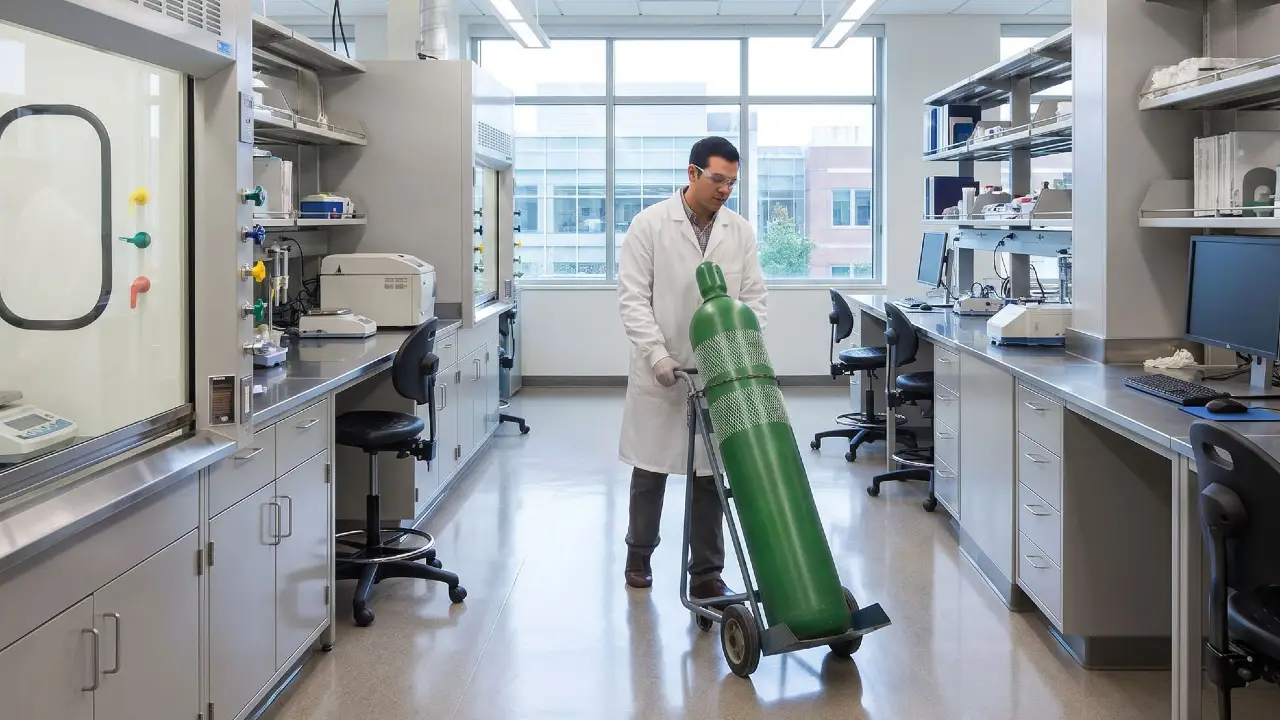
- Demonstrate safe transport practices and identify prohibited handling practices such as dragging, rolling, or lifting by the cap.
- Recognize when to evacuate, report, or isolate a cylinder-related problem rather than attempting to improvise a response.


