











Online Laboratory Safety Course for Safer Workplaces
This course is part of the Laboratory Safety collection of the Health & Safety (EHS) Library.
This course looks at the hazards that are found within the laboratory and some ways to protect lab workers from those hazards. Also included is an overview of the OSHA Lab Standard, the elements of a Chemical Hygiene Plan, and some of the basic rules of good chemical hygiene. Chemical storage requirements and some general procedures to follow in case of an emergency are also covered.

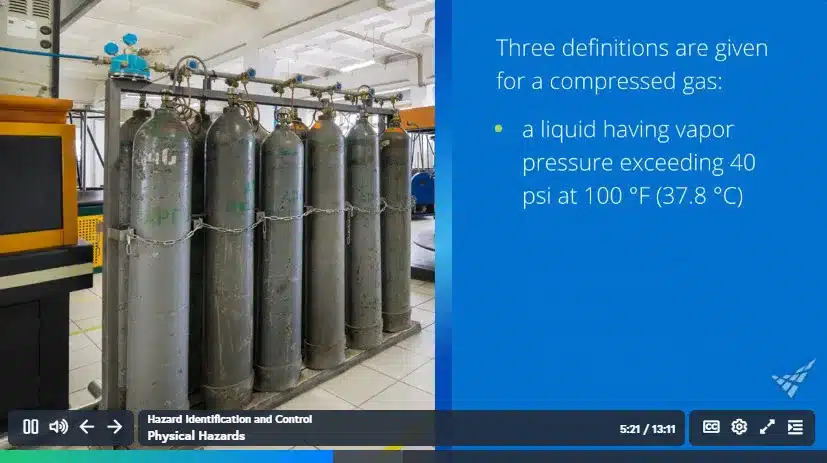
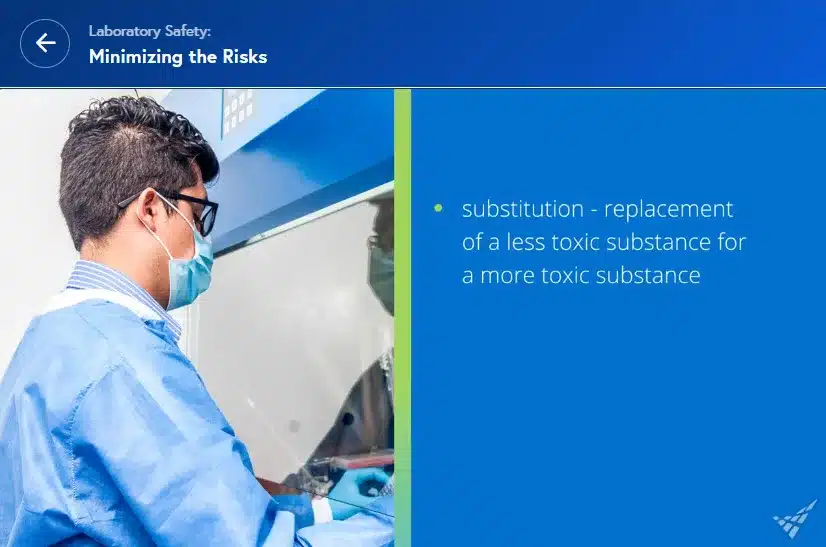
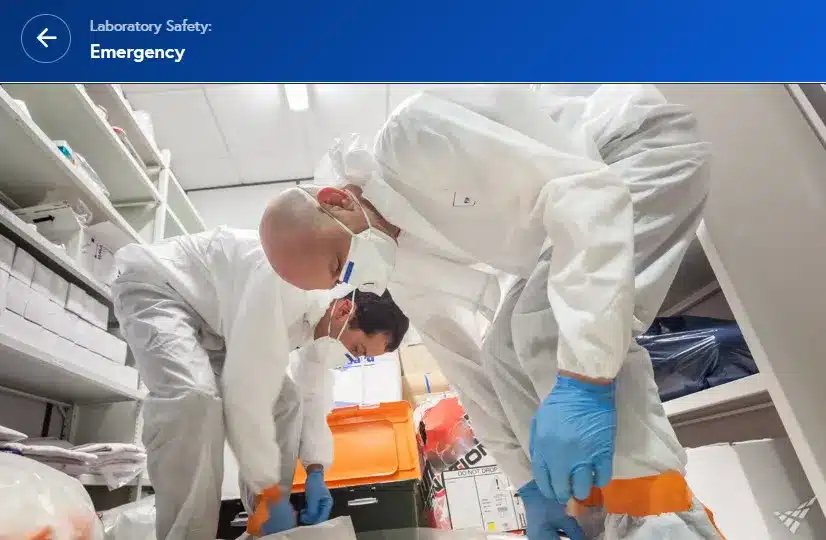
Demos + Pricing
Learn more about our courses, get pricing, and see our platform.
Course Details
Learning Objectives
By the end of this course, you will be able to:
- State resources for identifying and controlling hazards
- Describe two broad categories of chemical hazards.
- Explain the difference between acute and chronic health effects from chemical exposure.
- Describe the four routes of chemical exposure.
Specs
Frequently Asked Questions
Who should take this laboratory safety course?
This laboratory safety course is ideal for anyone who works in or around a lab setting, such as employees in pharmaceuticals, healthcare, biotech, manufacturing, or research. It’s designed for lab personnel such as lab technicians, lab managers, research scientists, quality control analysts, chemical engineers, and safety coordinators.
What topics are covered in the laboratory safety course?
Course topics include hazard identification, chemical storage and labeling, proper use of personal protective equipment (PPE), spill response, fire prevention, and emergency procedures. These topics support both new and experienced lab personnel and help them build heightened safety awareness. The courses can be accessed through a lab safety training platform and learning management system (LMS) like Vector LMS.
Do learners receive a certificate of completion?
Yes. Learners receive a completion certificate immediately upon finishing the course. This certificate can be printed or saved digitally to support internal training records and compliance documentation.
Does this course help meet regulatory training needs?
This course helps support compliance with OSHA’s General Duty Clause because it promotes best practices in chemical handling, PPE usage, and lab safety emergency planning. It can be used as a lab safety solution and used alongside site-based protocols to strengthen your lab safety training program.
In addition to lab safety, what are the other top 10 safety training courses?
Ten most commonly utilized safety training courses include:
- Bloodborne Pathogens
- Hazard Communication GHS
- Heat Stress
- Personal Protective Equipment (PPE)
- Slips, Trips, and Falls
- Fire Extinguisher Safety
- Lockout/Tagout (LOTO)
- Electrical Safety
- Hearing Conservation
- Driving Safety
These courses cover essential topics for maintaining a safe work environment across industries. This Vector Solutions’ safe working environment resource breaks down each course in detail and explains how they contribute to a safer, more compliant workforce.
What are other popular lab safety courses from Vector Solutions?
In addition to this core Laboratory Safety Course, Vector Solutions provides additional lab safety courses that enhance any comprehensive lab safety solution within your organization’s lab safety training platform. Popular courses include:
- Orientation to Laboratory Safety: An introduction for both new hires and seasoned lab staff, reviewing OSHA Lab Standard and other OSHA regulations, basic chemical hygiene, and general safety best practices
- Flammables & Explosives in the Laboratory: Covers safe handling, storage, and emergency protocols for hazardous materials
- OSHA Formaldehyde Standard: Delivers essential training around formaldehyde compliance, exposure prevention, and regulatory procedures
- Laboratory Ergonomics: Focuses on setting up lab workspaces safely to reduce strain and prevent injury
Sample Video Transcript
“OSHA Lab Standard
The OSHA Lab Standard is similar to the Hazard Communication Standard that protects most workers in the United States, but it takes into account the special circumstances and conditions found in laboratories.
Applicability and Requirements – The OSHA Lab Standard applies to facilities engaged in the “laboratory use” of hazardous chemicals on a non-production basis.
The primary requirement of the standard is that lab employees’ exposure to hazardous chemicals must not exceed the PELs defined by OSHA or other guidelines as appropriate.
There are several elements of the standard that provide the methods for meeting this requirement. For example, if there is reason to believe that employee exposure levels routinely exceed the action level or exposure limits of a specific chemical, the employer must conduct monitoring of the employee’s exposure and inform the employee of the results.”
Additional Resources
Safety Training for Easy Compliance Guide – https://www.vectorsolutions.com/resources/whitepapers-guides/safety-training-for-easy-compliance/
Health and Safety Premium Online Training Library – https://www.vectorsolutions.com/resources/course-catalogs/health-safety-environment-hse-premium-online-training/
A Leader’s Essential Checklist for Workforce Safety Training – https://www.vectorsolutions.com/resources/whitepapers-guides/a-leaders-essential-checklist-for-workforce-safety-training/
Strategies to Bridge the Gap: Leadership’s Role in Driving Safety & Compliance –
https://www.vectorsolutions.com/resources/webinars/strategies-to-bridge-the-gap/


