











Precision Measuring Tools
This course covers micrometers and telescoping gauges. It also demonstrates how to read and use micrometers, dial indicators, digital calipers, thermometers, tachometers, and strobe RPM monitors.


Demos + Pricing
Learn more about our courses, get pricing, and see our platform.
Course Details
Specs
Frequently Asked Questions
What is a micrometer?
What are calipers used for?
What are dial indicators used for?
What are feeler gauges used for?
What are gauge blocks used for?
Sample Video Transcript
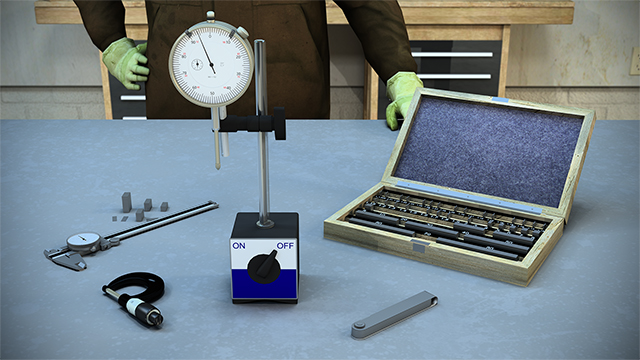
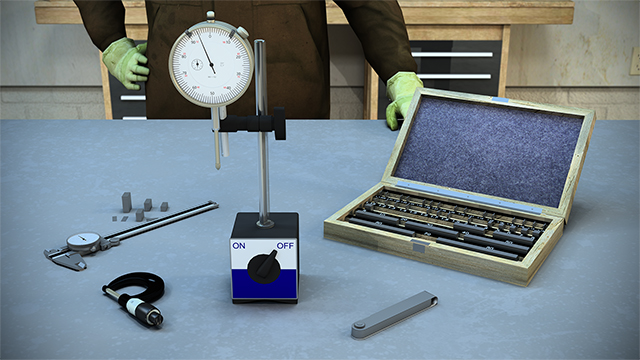
Precision measuring tools must be handled with care to maintain their accuracy. If treated properly, these tools can provide years of reliable service. Precision tools should be kept clean and lubricated. Clean before and after each use to prevent rust and ensure accurate measurements. Wipe off dirt, sweat, and fingerprints with a soft cloth. Precision instruments should be lightly oiled after each use to prevent corrosion. Wipe excess oil with a clean, dry cloth because small dirt particles can stick to the oil and cause damage to internal parts. Finally, always store precision instruments in a protective case or in a way that vibration, moisture, and contact with other tools or objects is avoided.


