











RFID Readers
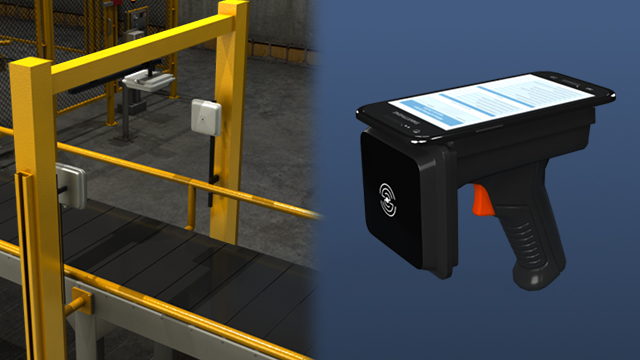
An RFID reader sends commands and information to an RFID tag and receives information from the tag. A reader consists of a transceiver, antenna, controller, and computer interface. Readers communicate with tags using either inductive coupling or backscatter coupling. Both techniques rely on the tag modifying the electromagnetic field to send encoded information back to the reader. Besides handling radio communications, the reader is responsible for performing data verification and passing tag data to a database.


Demos + Pricing
Learn more about our courses, get pricing, and see our platform.
Course Details
Learning Objectives
• List the primary components of an RFID system • List the primary components of an RFID reader • Describe a typical reader-to-tag interaction • Describe inductive coupling • Describe backscatter coupling • Describe the effect of antenna polarization • Describe how readers deal with tag collision • Explain how data is encoded between a reader and a tag
Specs
Frequently Asked Questions
How can an RFID reader communicate with the computer system? Is a wired connection required?
How exactly do readers and tags use radio signals to pass useful information?
How does a single reader scan multiple tags simultaneously?
What is “inductive” coupling?
What is “backscatter” coupling?
Sample Video Transcript
There is a sequence of operations that a reader and tag go through to communicate, regardless of the reader type, reading frequency, or tag type. 1) When a tag moves into the carrier signal of a reader, the antenna of the tag will absorb energy from the field and the electronics will activate. 2) The tag will modulate the reflected carrier wave and return unique encoded information to the reader. 3) The reader will receive the returned signal and turn it into digital data. 4)The digital information will be sent via a network connection to a computer which can store it in a database. We will now examine each of these steps in more detail.


