











Safety Showers and Eye Washes
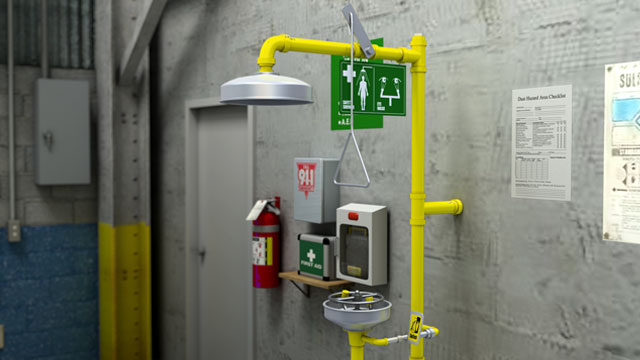
Chemicals are frequently used and stored in industrial environments. It is imperative to handle them with care and wear appropriate PPE to avoid exposure. If an accident does occur, however, safety showers and eye washes can be used to cleanse the affected area and decrease the extent of injury. Knowing use procedures, maintenance practices, and the locations of safety showers and eye washes will reduce the risk of serious injury and lead to safer conditions in the workplace.



Demos + Pricing
Learn more about our courses, get pricing, and see our platform.
Course Details
Learning Objectives
This module will cover the following topics:
- Chemical related skin and eye injuries
- Personal protective equipment and chemical safety
- Types of safety showers and eye washes
- How to operate and use safety showers and eye washes
- Helping an accident victim use a safety shower or eye wash
- Maintaining and testing safety showers and eye washes
Specs
Frequently Asked Questions
What are safety showers and eye washes used for?
What adverse effects can chemical exposure have?
What can exposure of the skin to chemicals cause?
What can exposure of the eyes to chemicals cause?
What is an SDS?
What should one know about the safety showers at a workplace?
How should one use a safety shower?
How should one use a safety eyewash?
How can you help a coworker who has been exposed to chemicals?
Sample Video Transcript
When chemical exposure occurs, one, immediately move to an eye wash station. Two, use either the paddles, levers, or pull lever to turn on the eye wash. Three, hold your eyes open with your hands to ensure water reaches the eyes. Four, flush the eyes for 15 to 60 minutes, depending on the corrosive properties of the chemical. Be sure to keep the eyes open and rotate the eyeballs in all directions. And five, once flushing is complete, turn off the eye wash. Follow these guidelines for eye wash use: never hesitate to use an eyewash if needed. Have a coworker contact emergency medical assistance immediately. If there is no one to ask, rinse for the allotted time recommended in the SDS and then seek medical assistance. If irritation persists, repeat the flushing procedure. Do not use lab or drench hoses as an eye wash. These hoses are typically used for cleaning and may not be sanitary. Never rely on sink faucets to replace an eye wash. Some outdoor eye washes may run discolored water for a few seconds. Never hesitate to use them immediately when needed. Do not the shower for any other purpose that might inhibit the immediate use for an emergency. And beware of slippery floors during and after use.
Additional Resources
- U.S. Department of Labor’s Occupational Safety & Health Administration (OSHA) – www.osha.gov
- OSHA Regulations – https://www.osha.gov/law-regs.html
- OSHA eTools – https://www.osha.gov/SLTC/etools/eyeandface/employer/requirements.html
- US Environmental Protection Agency (EPA) – www.epa.gov
- EPA Resources – http://www.epa.gov/region7/education_resources/teachers/ehsstudy/ehs13.htm


