










Volatile Solvent Spill Response
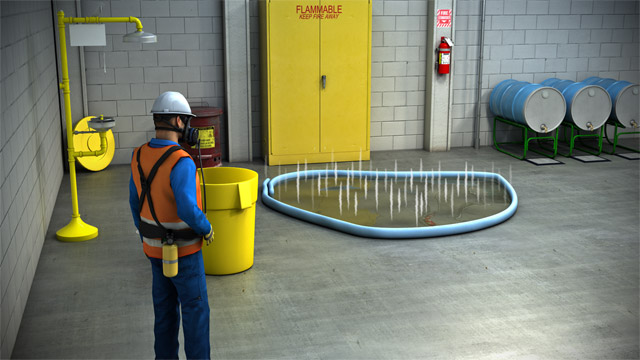
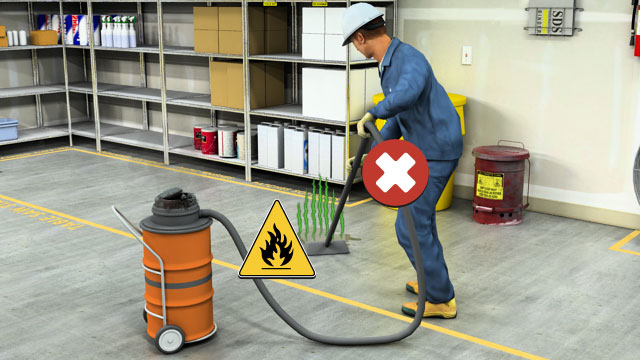
Spills involving volatile solvents are a unique class of spills. This is due to the fact that in addition to any damage and pollution directly caused by the spilled liquid, evaporation of a volatile solvent will contaminate the air in the vicinity with the gaseous form of the liquid. Because the vapors from most volatile solvents are flammable and toxic to some degree, the response to this type of spill must take the presence of the vapor into consideration.



Demos + Pricing
Learn more about our courses, get pricing, and see our platform.
Course Details
Learning Objectives
• Define the meaning of “volatility” • Describe the significant difference between a volatile solvent spill and a normal spill • Describe how to deal with the vapor of a solvent spill • Describe how to deal with the liquid portion of a solvent spill • Describe how to deal with a large scale volatile liquid spill
Specs
Frequently Asked Questions
What is volatility?
What are two important precautions which should be taken in response to an indoor volatile solvent spill?
What is the best way to respond to a small solvent spill?
What is the best way to be prepared for a solvent spill?
What is best way to deal with a large scale volatile liquid spill?
Sample Video Transcript
A “volatile solvent” is a liquid in which the molecules in the liquid easily move into the air at room temperature. Stated another way, the liquid evaporates quickly. For example, a tablespoon of water dropped on cold concrete will create a dark spot which will last for several minutes before drying, or evaporating away. The same amount of gasoline will create a spot which starts to shrink almost immediately and then evaporates and disappears in less than a minute. Gasoline is therefore a more volatile liquid than water. Other examples of volatile solvents include paint thinner, acetone, toluene, turpentine, and ethanol.
Additional Resources
- University of Iowa Environmental Health and Safety – https://ehs.research.uiowa.edu
- UIOWA Spill Response Guide – https://ehs.research.uiowa.edu/spill-response-guide-flammable-or-combustible-liquids
- American Chemical Society (ACS) – ww.acs.org
- ACS Publications – https://www.acs.org/content/acs/en/about/governance/committees/chemicalsafety/publications/guide-for-chemical-spill-response.html


