











Blog
May 1, 2018
Behind the Scenes: Vector Solutions Creates First-Of-Its-Kind Virtual Reality Training for Firefighters
Industry:
Fire Public Safety
Solution:
Fire Innovation
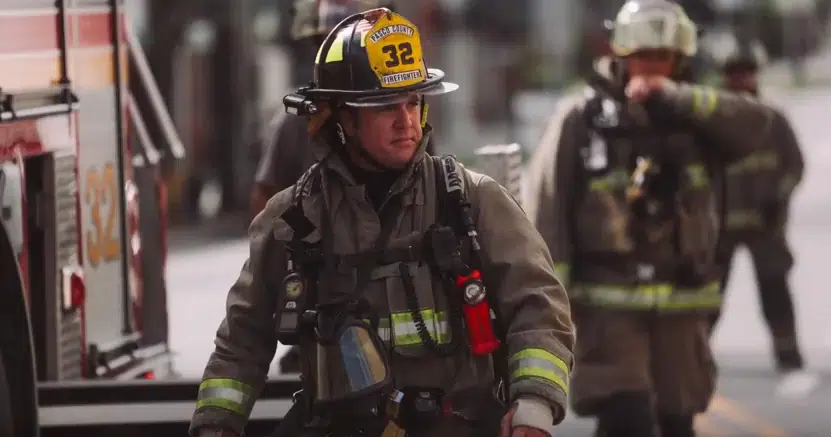
To create the most life-like training course videos, Vector Solutions partnered with the Pasco County Fire Rescue for a 360 Virtual Reality (VR) video shoot using the latest drone technology to film actual fire-firefighter training in real-life simulations. The video can then be used to create firefighter safety training courses to help thousands of firefighters prepare for the high-stakes environments they face on the job.
Focusing on 360-degree VR ‘smoke reading’ training, the video was created with expert help from consults and field insights from subject matter experts, Fire Service Instructors, and EMT-Ps. Its learners will be immersed in a virtual reality training environment where they will receive instruction on how to read smoke and make decisions about how to attack – or not attack – a fire based on what the smoke tells them.
Why Virtual Reality for Firefighters?
Prior to virtual reality training for firefighters, training was relegated to the recreation of realistic fire rescue scenarios, which was costly and challenging, ultimately leaving many firefighters ill-prepared for real-life situations. Thorough, effective training was once only achieved through rigorous training in real-life situations, with actual fire and real danger – until now. By leveraging the latest in virtual reality technology and learning trends, such as VR video, Vector Solutions has created realistic, scenario-based training to help firefighters increase safety, efficiency and performance to mitigate risk when entering real-life fire calls.Safer Firefighter Training with Virtual Reality
Beyond its ability to provide an immersive training experience for firefighters, virtual reality training boasts all the benefits on-the-job experience – without the inherent dangers of real-life, on-the-job scenarios as fighting structure fires is dangerous and involves high-risk, life-threatening situations. And as first responders, firefighters must enter every burning building with the confidence and experience to not only to contain and extinguish the fire, but also to make split-second decisions that save lives, including their own.Virtual Reality Meets Reality
Through Vector Solutions’s partnership with the Pasco County Fire Rescue, firefighters will soon be able to use VR goggles and immerse themselves in a rescue environment. The department was approached to create one of the first virtual reality training videos for firefighters across the country in order to give them an improved, more interactive training experience. According to Fire Chief Scott Cassin, being able to do it virtually – rather than executing full-scale training exercises that take a lot of time and resources to close down a city block – enables learners to sit safely on a computer, run the scenarios and experience different outcomes based on the decisions they make. Then, once the video is completed, firefighters can either watch it on their computers or use virtual reality goggles in order to become completely immersed in the environment. And while virtual reality training can never completely replace actual hands-on training, Cassin said it does allow them to simulate certain situations that are very difficult and costly to reproduce on their own. For example, a smoke-charged room – without having to bring in a lot of extra equipment – is hard to recreate. But now with virtual reality training, firefighter can visualize and experience this unique environment beforehand. Undoubtedly, VR can be a very important tool to augment typical training programs and enhance training techniques. Watch for more to come soon on our course release date.Related Resources
Success Stories
Hamilton Township Volunteer Fire Department Adopts a Right-Sized Approach to Training Management
April 7 2026
Webinars
The Future of Fire Service Technology: Introducing AI Across the Vector Suite
March 25 2026
Whitepapers & Guides
How Fire Departments Can Master ISO Readiness in 2026
March 17 2026
Explore our software solutions designed to help your organization succeed
Request a Demo