











January 25, 2024 1 min read
Reducing Workplace Injury Costs
Industry:
Solution:
Webinar Overview
Workplace injuries can be costly for any organization, no matter the industry. According to the Liberty Mutual Workplace Safety Index, last year the top 10 causes of workplace injuries cost U.S. businesses more than $1 billion a week, with total injuries costing more than $58 billion every year.
Beyond the financial costs, reducing incidents can cut absenteeism and turnover, increase productivity, and raise workplace morale by demonstrating a commitment to employee health and safety.
In this webinar, we’ll review best practices for reducing employee injuries and illnesses using effective incident management and a proactive safety training approach.
Attendees will learn how to:
- Define serious injuries and fatalities (SIFs) and recognize the impact they have on businesses and communities
- Develop SIF prevention strategies
- Use EHS metrics to track performance of incident reduction efforts
- Apply technology to gain greater insights into risk mitigation opportunities
- Establish a proactive safety program that includes up-to-date, OSHA compliant safety training

Presenter Dan Davidson
Sr. Product Manager, Vector EHS, Vector Solutions
Mr. Davidson has over 10 years of experience as a Product Manager with a drive for data analytics and developing strong relationships with inter-departmental teams. With a background in public safety, regulatory compliance, and legislation, Mr. Davidson works with our software engineering teams to deliver an EHS platform that meets customer needs. He has a bachelor’s degree in political science and criminal Justice from Washington State University.
Online Safety Training Courses
Complete with powerful 3D animations and models, these interactive online safety training courses address common hazardous situations faced in a variety of environments and industries
View Courses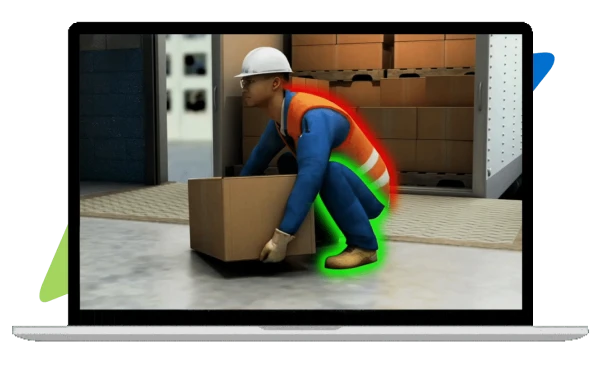
Webinar Transcript
Hello, everyone, and welcome to our webinar: Reducing Workplace Injury Costs. I’m Lauren with Vector Solutions, and I’ll be serving as your webinar organizer today.
We are very excited to welcome you and provide this opportunity to hear from Dan Davidson, Senior Product Manager of Vector EHS, on how to effectively manage incidents and provide proactive safety training to mitigate employee injuries and illnesses.
We are Vector Solutions, and we aim to make your organization safer, smarter, and better. If you’re not familiar with us, we make learning management systems, online training courses, and accredited continuing education for many industries.
We also offer a risk intelligence and communication platform, as well as EHS and SES management software.
Dan Davidson: Thank you so much for the introduction, Lauren. My name is Dan Davidson, and I will be your presenter for the webinar today. I am the Senior Product Manager for our Vector EHS Management Software, and I’m excited to be here with you all today to discuss some extremely important topics.
So today, we will begin our presentation by defining serious incidents and fatalities and the types of events that can have the potential to result in those types of consequences.
Then we’ll review some best practices for creating SIF prevention strategies, and how you can use your organization’s EHS data to inform and guide your incident prevention efforts.
For a deeper dive, watch 'Reducing Serious Injuries & Fatalities (SIFs) with a Proactive Prevention Program'
Watch the SIF webinarWe’ll provide an overview of some technology and tools that can assist with incident management and reduction.
And finally, we’ll go over implementing a proactive safety program with OSHA-compliant training.
What is a Serious Incident or Fatality (SIF)?
SIF prevention hinges on the ability to detect those situations and work activities that could result in life-threatening, life-altering, or fatal incidents.
Dan Davidson
Sr. Product Manager, Vector EHS, Vector Solutions
So first, we’ll begin by defining a serious incident or fatality event, which I’ll refer to as a SIF or SIFs from here on out.
Defining this term is important as SIF prevention hinges on the ability to detect those situations and work activities.
Defining Serious Injury
While fatality is well defined, a quick look at the literature and research on serious injuries reveals that there is not yet an official definition of a serious injury.
While there is still room to arrive at a consensus, DECCRA and other consulting agencies developed a commonly used broad definition of a serious injury as a life-threatening or life-altering work-related injury or illness that is commonly used as the standard definition of a SIF.
However, to go a bit further on that definition, life-threatening generally encompasses injuries that are likely to kill the injured person if not immediately addressed.
For example, abdominal trauma or damage to the brain or spinal cord. Life-altering injuries, on the other hand, include incidents that lead to permanent disability or disfigurement.
Typically, a life-altering injury is one that will continue to cause pain long after the initial scars have healed, such as with paralysis or amputations.
Organizational Criteria for SIFs
With that said, some organizations choose to develop and use their own unique criteria to define an SIF. For example, an incident could be categorized as serious if it results in over one hundred days of lost time or other similar thresholds. An organization’s industry or location could also impact the types of incidents that are classified as a SIF.
You can ultimately use the criteria that make the most sense for your organization’s needs and goals, but for today, we’re going to use the standard definition of SIFs being life-threatening, life-altering, and fatal incidents.
So, moving on, after identifying SIFs, the next question then becomes, how can we prevent them?
Why Preventing SIFs Matters
Helping team members come home safe at the end of every shift or workday is really the driving force behind everything that EHS professionals do.
Dan Davidson
Sr. Product Manager, Vector EHS, Vector Solutions
In 2023, Gartner Research conducted a global corporate survey of EHS professionals, and 56% of the 300 respondents indicated that they considered reducing serious injuries and fatalities as a top priority for their EHS function, and there are several reasons for this.
First and foremost, helping team members come home safe at the end of every shift or workday is really the driving force behind everything that EHS professionals do.
So it does make a lot of sense that preventing SIFs would be such a high priority for companies.
In addition, within the past few years, research has also indicated that traditional EHS management practices and models haven’t been quite as effective in reducing serious incidents as was previously thought, so many organizations are currently seeking to explore a paradigm shift in the way we’re thinking about incident prevention. We’ll discuss this aspect a little bit more in the coming slides.
Another major reason that organizations are prioritizing reducing serious incidents and fatalities is that these incidents can significantly impact operations and financial performance.
The total cost of work injuries in 2021 was $167 billion, and this figure includes wage and productivity losses of $47.4 billion, medical expenses of $36.6 billion, and administrative expenses of $57.5 billion.
The cost per medically consulted injury in 2021 was $42,000, while the cost per death was $1.3 million.
While these figures include estimates of wage losses, medical expenses, administrative expenses, and employer costs, they don’t include potential costs from stopped production or equipment downtime, which can also number in the thousands of dollars.
So, you can see how the prevention of just a single SIF has the potential to return significant savings for an organization.
It’s also important to mention that, besides the costs incurred, high rates of serious incidents can also be damaging to an organization’s hard-earned reputation, and it can make it more difficult to attract and retain talent.
So, investing in the prevention of SIFs in the workplace helps demonstrate the company’s commitment to protecting its workers and the communities they serve, providing benefits beyond being good for the bottom line.
Rethinking Traditional Approaches
So, earlier, I mentioned that one of the reasons that organizations are prioritizing reducing SIFs is that recent research and data suggest that we need to rethink the traditional approaches to incident reduction.
For additional context, over the past ten years, the United States has seen enormous gains in workplace safety regarding the total recordable incident rate, or TRIR.
Since 2011, TRIR rates have been steadily dropping to reach 3.6 in 2021, according to the Bureau of Labor Statistics—which is fantastic news.
But this reduction in workplace injuries shouldn’t be overshadowed by another more concerning trend, namely that the number of life-altering injuries and fatal incidents has been on a much slower decline and has largely remained level over the past ten years, if not even slightly increasing.
So, while it’s encouraging that the nation’s overall recordable incident rate is decreasing, the next step in the journey to safety excellence, and one that many organizations are already pursuing, is the reduction of these serious injuries and life-altering events.
So, the fact that the rates of fatalities didn’t experience a corresponding drop with the reduction in TRIR rates was actually a rather surprising trend.
So Dr. Tom Cross, a long-standing thought leader in environmental health and safety, established a working group with a number of companies to further research this phenomenon.
The Heinrich Triangle and Its Limitations
What they found is that we really need a paradigm shift in the way that we approach incident prevention. Previously, a lot of existing incident management strategies were based on the traditional Heinrichs triangle.
Now, if you aren’t familiar with that term, Herbert Heinrich was an assistant superintendent for a large insurance company. In nineteen thirty-one, he conducted and published a study of more than seventy-five thousand accident reports.
The data showed that for every major injury accident, there were twenty-nine minor injury accidents and three hundred no injury accidents.
So, based on these findings, Heinrich concluded that reducing the number of minor accidents would result in a reduction in the number of major accidents.
So, in other words, if safety leaders were able to reduce the number of total incidents of any severity, the number of more serious injury-causing incidents would also go down.
However, the data shows that the effort and resources that organizations were pouring into programs to reduce minor incidents did not have a massive impact on reducing major incidents.
This is because, as Tom Cross argues, the underlying causes or precursors for incidents with SIF potential are different compared to those without, and the Heinrich model doesn’t account for a subset of recordable injuries that have the potential to be life-altering or fatal.
So the point here is to think less about the actual outcome and more about the potential outcomes, because not every near miss or incident is one that could have led to a SIF.
Example: Two falls, two different potentials.
- In the first case, an employee tripped and fell down the few steps of a stairwell and strained their wrist as they were attempting to break their fall.
- The second case also involved a fall and a sprained wrist, but in this circumstance, the strain occurred as the result of a worker grabbing onto a railing to prevent themselves from falling fifty feet to the ground below—which could have resulted in loss of life.
So, we have two minor incidents with the same, if not similar, consequences and types, but very different potential outcomes.
So, there’s a general consensus that the subset of incidents with SIF potential has a different severity and root cause, and it’s because of those differences that we require a different strategy for preventing them.
We can’t keep treating all minor incidents and near misses as if they have the same potential to result in a SIF, because, in these cases, one size truly does not fit all.
So by assessing the potential severity of risk, we can better prevent serious incidents and fatalities.
Assessing and Measuring SIF Risk
By assessing the potential severity of risk, we can better prevent serious incidents and fatalities.
Dan Davidson
Sr. Product Manager, Vector EHS, Vector Solutions
To determine potential SIFs, most organizations look at an event that could have been worse if not for one factor or one thing that changed. This could be a control that failed, someone standing in a different spot, or simply different timing.
So when determining the potential outcome of how bad an event could have been, organizations commonly use a risk matrix. With a risk matrix, you look at the potential severity and consequence of the risk and consider whether it would result in a recordable injury or illness, or a life-altering event or fatality.
Then you would look at the likelihood of it occurring, whether certain, likely, or unlikely. And using this matrix, you could set a threshold that anything that is scored at a six or higher, for example, would be considered to have SIF potential.
However, this is just one method that companies can use to measure potential SIF risks. Your organization may choose to introduce additional levels or criteria into this matrix, but we wanted to provide an example of how you can use a matrix to build a framework for gauging risk with SIF potential.
Okay, so, now that we’ve defined SIF precursors and reviewed how to use a risk matrix and assessment to measure them, we can talk about how to build SIF prevention strategies.
Elements of SIF Prevention Strategies
Leadership sets the priorities, and they control the resources…it is critical to the success of SIF prevention that leaders are on board in championing the cause.
Dan Davidson
Sr. Product Manager, Vector EHS, Vector Solutions
So there are three elements behind strong SIF prevention strategies that you can use.
Leadership Engagement
And the first is all about building engagement, ideally at all levels of an organization, but it’s important to start with leadership.
Leadership sets the priorities, and they control the resources, but most leaders don’t really need convincing that the business needs a SIF prevention strategy because they understand that the organization still has exposure to potentially life-altering risks, and that’s often motivation enough. Honestly, it’s commonly the senior leaders of an organization who push for SIF prevention anyway.
But regardless of where the driving force within an organization is, it is critical to the success of SIF prevention that leaders are on board in championing the cause.
Workforce Education and Awareness
Another critical element is educating the workforce and increasing their awareness. Workers need to understand the framework you’re using to define SIFs and the methods you’re implementing to prevent them.
Employees need to know that it is a priority. It’s also helpful for them to know what metrics they’re using to measure success.
Recognition and Success Reinforcement
There’s also a side benefit in focusing on SIFs in that it helps to build employee engagement with your safety policies and overall program, which can help you see an overall lift in safety performance.
The final element of building engagement is to recognize and celebrate any successes that you experience as further reinforcement.
Understanding Organizational SIF Risk Profiles
So, moving on to our second priority, this is all about understanding SIF risk, as it’s extremely important to understand your organization’s risk profile because they’re all a little unique to the type of work you do.
Examples of elevated risk by industry:
- Transport/logistics: elevated risk of vehicle accidents
- Construction: employees working at heights; fall injuries may be a top priority
- Manufacturing/warehousing: forklift traffic; energized equipment; lockout/tagout and forklift safety may be key
However, these are all just examples, and no one will know your organization’s risk better than you and your workforce.
And that understanding of the unique risk your organization faces will help you determine the type of activities that could lead to a SIF.
Identifying SIF Precursors
So, the next step is to understand the SIF precursors that are present in the field. A 2015 study found that one in five injuries has SIF exposure, or, in other words, they have the potential to become SIFs. A precursor event is a high-risk situation in which controls are absent or are ineffective. If it is allowed to continue, it will result in a serious incident or fatality.
That absence of controls is an important part of the definition.
So, while working at heights in and of itself isn’t a precursor, working at heights without fall protection equipment is. So, we’re still in the early stages of our ability to consistently identify precursors, and it’s an area that needs more development.
But you can imagine that if we know more about these types of situations, we can better correct them and ultimately save lives. This area also really speaks to the importance of establishing and validating controls that are in place and effective.
The Hierarchy of Controls
So, speaking of controls, the hierarchy of controls is a tool developed by the National Institute of Occupational Safety and Health, or NIOSH, to help organizations understand where controls fall in regard to their level of effectiveness.
You see, at the bottom, PPE is listed as the least effective. That’s largely because you need to rely on people to wear the PPE, to wear the right kind, to wear it properly, and to wear it at the right times.
It is not at all to say that PPE is completely ineffective. It’s just the least reliable control on the scale, the last line of defense, so to speak.
A step above PPE is administrative controls, and this involves changing the way that people work, typically through safety procedures, policies, and training.
If we move up another step, we reach engineering controls, which involve isolating people from a hazard. So if there’s a guard covering a belt on a piece of equipment, that machine guard would be in engineering control.
Another step up and a more effective control is around substitution, which entails replacing the hazard with one that is less risky, and obviously, the most effective control is to eliminate the hazard entirely, but unfortunately, that isn’t always practical or even possible.
So, again, if we look at a SIF precursor, it’s a high-risk situation that has an absent or ineffective control. So, using this hierarchy, you can brainstorm and plan to introduce more effective controls for risk.
Data and Metrics for SIF Prevention
Circling back to our three elements of creating a SIF prevention strategy, the third priority is all about data and metrics. It’s important to have data because that information can help you build your specific risk profile from different sources, like incident or near-miss reports, inspections, observations, corrective actions, and feedback from the field.
So this data can help you zero in on where SIF is present within your organization, and then, in some cases, even help you predict where future events can occur. The goal is to develop metrics that drive behaviors to reduce SIFs.
So, if we think back to our hierarchy of controls, you can take, say, each corrective action that you assign for an incident and categorize it to correspond to a level of the hierarchy of controls. So, say, looking at your data, you find that ninety percent of your corrective actions relate to PPE and administrative controls. And, as we discussed earlier, those are typically less effective controls. So, when your organization is developing corrective actions moving forward, you might try to introduce more effective controls like engineering controls and substitution.
This is just one example, but by having that as a metric, what percent of controls correspond to each level of the hierarchy, that can change behavior and ultimately make the workplace safer.
The culmination of all of this is to look at the data and identify and implement controls or interventions, because in doing so, we find previously hidden or unrecognizable risks to our teams.
Leading vs. Lagging Indicators
Metrics are commonly sorted into two categories: leading and lagging indicators. Traditional safety performance measures like the total recordable incident rate are commonly lagging, or after-the-fact metrics. By definition, lagging indicators are reactive.
Lagging indicators are often the first metrics that safety professionals learn to use, and they are also typically the KPIs that management or leadership teams are most familiar with.
They can be used to track how many recordable or lost time incidents took place in your organization and how severe the injuries or illnesses were.
This is obviously important for setting a baseline of how many SIPs are taking place at your organization over a certain period of time.
And the formula that’s commonly used to calculate SIP rates is to take the number of actual SIP cases and multiply that number by two hundred thousand, which is a benchmark established by OSHA as it represents the total number of hours one hundred employees would log in fifty weeks based on a forty-hour work week.
So, after multiplying the number of SIF cases by two hundred thousand, you then divide that figure by the number of total employee hours worked, and that will result in your SIF rate.
Now, if an organization is just starting to monitor and act on safety data, lagging indicators like these might be the only indicators that an organization tracks. However, it is important to balance your lagging indicators with leading indicators as well.
So while lagging indicators can alert you to a failure in an area of your safety and health program, or to the existence of a hazard, leading indicators, on the other hand, allow you to take preventative action to address that failure or hazard before it turns into an incident. So while lagging indicators are reactive, leading indicators are proactive by nature. And good leading indicators and good safety metrics of all kinds in general are based on SMART principles, meaning that they are specific, measurable, accountable, reasonable, and timely.
So the National Safety Council’s Campbell Institute organized a work group of environmental health and safety professionals to define a key set of leading indicators that are relevant to SIF prevention. As part of this working group, interviews were conducted with nine Campbell Institute member organizations, where interviewees shared details about leading indicators in SIF prevention approaches.
The interviews included questions about data collection efforts and analysis strategies, leading indicators related to SIF prevention, leadership and employee engagement around SIF prevention, and challenges the organizations had faced.
One Campbell Institute member created a ten-year strategy that included goals to reduce injury rates, potential serious injuries and fatalities, or precursor SIFs, and SIFs. Developing aspirational goals like that can play a role in building a cultural belief that all injuries, including SIFFs, are preventable. However, some organizations choose not to create goals around SIFS metrics because of the potential that these goals might create fear or discourage reporting.
An organization’s vision and approach to goal setting are heavily influenced by its culture, so it’s important to consider your organization’s culture when selecting the metrics to track.
Implementing SIF Prevention Strategies
Okay, now we’re going to discuss some tips for implementing SIF prevention strategies.
So, what are some of the features of a strong reporting culture? To successfully implement a SIF prevention strategy, an organization really needs to develop a culture of trust and transparency.
There needs to be open and honest communication around the reporting of events in unsafe conditions, as reporting of SIF potential incidents is the basis for the data and inputs for all your prevention efforts. If people only report minor things like paper cuts and then hide almost falling off a roof, then we’re not going to know about what’s contributing to that risk until it actually results in a fall, and by then it’s too late. So, it’s important to thank people when they report near misses and concerns, and not penalize them so that they’ll be encouraged to continue to report in the future.
You can also compare different departments and shifts from a reporting perspective. If you see that one area isn’t reporting events, or is much lower than the rest of their peers, this could lead you to investigate a little further and start asking questions as to why.
When learning of a SIF potential event, leaders should respond with care and compassion. And most leaders do care and respond with a desire to learn how to prevent serious injuries from happening. While knee-jerk reactions might be cathartic in the moment, they really don’t help, and so it’s important to allow for an open and honest discussion of how and why the event occurred.
That way, we can identify appropriate solutions so it doesn’t happen again and results in more significant consequences and an actual SIF the next time. You want to treat potential SIFs with the same gravitas we would approach an actual serious incident or fatality.
Now, when leaders are in the field, they can also change the conversation. Instead of just asking, “Hey, how’s work?” or “How are you doing?” you can ask:
- What hazards do you have here?
- Are there any exposures to getting a serious injury?
- Do you have everything you need to protect yourself?
- Have you ever exercised stop work authority?
When leaders ask questions like this, it helps to personalize SIF prevention and put it on a human level.
Okay, so now I know there’s a lot of information to digest on this slide, so I do want to remind everyone that we will be sharing a copy of this presentation at the conclusion of the webinar, so you can refer to it in more detail later. But the main takeaway here is that it’s really critical to integrate your SIF prevention strategies into your existing EHS management system. For example, you can expand your current incident investigation program to include SIF potential events. You could also update your safety metrics, dashboards, spreadsheets, or whatever tools you might be using to incorporate your SIF metrics and then look at everything holistically.
By integrating your SIF strategy into your existing safety management system, you accelerate changes because people understand more of how it all fits into their existing work. That way, SIF prevention doesn’t become tacked on or feel like extra or more work. It simply becomes the way you work.
Technology and Tools for SIF Management
Technology like EHS management software and online training can ensure your organization is striving towards safety excellence.
Dan Davidson
Sr. Product Manager, Vector EHS, Vector Solutions
Okay, next, we’re going to move on to the technology and tools that can be used to support SIF management and prevention.
One of the biggest challenges in SIF prevention is not having enough structured data to look at, or difficulties in collecting information from employees in a way that ensures it is complete, consistent, and accurate.
One issue is fixing problems on the spot, but not formally reporting the issues or corrections. This type of undocumented (while proactive) behavior limits essential information in the network because the learnings from the data collection are not easily shared beyond those who were directly involved. Additionally, the corrective action may not have fully addressed the cause of the hazard, and that risk may still be present.
When one organization analyzed this issue more deeply, it identified that frontline supervisors found it difficult to remember and report the problem once they were back in their offices. So they implemented a mobile digital reporting tool that enabled frontline supervisors to report issues and corrective actions from the field and identify potential SIF incidents. That on-the-spot reporting restored the benefits of an active safety network.
One of the most important benefits of EHS software is that it brings all your EHS-related information together into one central location. It can also help improve compliance with environmental health and safety regulations, and help track activities and inspections for compliance obligations.
An EHS management system can also improve communication between employees and management, and can disseminate information about hazards that have been reported at a facility, keeping responsible parties and impacted employees in the loop. Additionally, dashboards and scheduled reports can provide more transparency and visibility into safety performance for leaders.
Digital reporting tools enable frontline employees and supervisors to report issues, hazards, and corrective actions from the field with or without internet access. With mobile applications, employees at any level can participate in capturing compliance and risk data. An employee can record safety observations, hazards, inspections, and create corrective actions to resolve identified concerns on the spot, then sync that information to the EHS management system whenever they get back online. This eliminates the need to return to the desk and file or re-enter information manually and minimizes the chance of error or incomplete data.
To provide a real-world example, one customer shared that after digitizing their incident forms and improving their analysis of root causes and incident rates, they reduced serious incidents and non-serious injuries and illnesses by eighteen percent and sixteen percent, respectively, and reduced workers’ comp claims resulting from SIFs by 50%.
All of this to say: if your organization is prioritizing SIF reduction, there are a number of tools and resources out there that can help you achieve your goals.
As I mentioned earlier, technology can have a big impact on safety—reducing incidents through awareness, maintaining compliance, or mitigating risks. Technology like EHS management software and online training can ensure your organization is striving towards safety excellence. And this is where Vector Solutions can really help. Instead of having multiple different systems for incident prevention, regulatory compliance, skills-based training, and data collection, having those systems working together allows you to take a comprehensive view of risk mitigation.
This creates buy-in from employees on your safety program, where everyone understands their safety at work is a major priority, and establishes a proactive safety program at your organization.
Establishing a Proactive Safety Program
Considering the benefits of a proactive safety program, it becomes paramount to take a holistic approach to establishing one that best fits your organization’s circumstances and needs.
Preventing injuries to employees is always going to be a primary concern for any safety program.
Ongoing Refresher Training
One method is providing ongoing refresher training. Studies show people typically forget seventy percent of new information within twenty-four hours of receiving it. With training often conducted annually or biannually, that can account for a lot of lost information over time.
Training needs to evolve: keep relevant information in front of employees often and provide it in engaging ways. Ongoing training reinforces safe behaviors to prevent injuries.
The Role of 3D Animation in Training
Engagement is paramount. 3D animation helps by showing employees scenarios rather than only telling them or asking them to read.
We get 83% of what we learn from our sense of sight versus the rest of our senses.
With 3D, you can show a wide range of scenarios: very small objects to large facilities, extremely fast equipment, and areas you normally wouldn’t be able to see. 3D also mitigates risk during training and doesn’t require shutting down or disassembling equipment.
Our strategy at Vector is to incorporate 3D into more safety courses to improve engagement, ultimately increasing safety, reducing injuries, and improving retention.
Multilingual Training for a Diverse Workforce
Another key aspect is accommodating multilingual workforces. While many safety programs still deliver training primarily in English, studies show benefits to delivering training in an employee’s preferred language.
- Increased productivity: 80% of employees are more productive when information is delivered in their preferred language.
- Greater retention: improves employee confidence and motivation.
- Decrease in job-related accidents: OSHA estimates language barriers contribute to 25% of job-related accidents.
- Employee engagement: 90% of people would rather learn in their language of choice.
To conclude: multilingual training can reduce incidents and increase engagement by providing training that supports the modern workforce.
Multi-Channel Communication and Training Delivery
Finally, a multi-channel approach is important. Frontline workers—especially younger generations—often prefer receiving training and communications through multiple channels like text messages, emails, and mobile applications.
The 2023 State of the Frontline Workers Survey reinforced this approach, showing that among younger generations, text messages and email are among the preferred methods to receive information.
Workplace safety technology should allow delivery of training notifications and microlearning via mobile applications to meet these preferences. A multi-channel approach allows organizations to continually provide safety training and communications in ways that align with learning preferences, boosting engagement and improving safety outcomes.
OSHA Compliance and Training
OSHA requires some organizations to train on specific compliance topics, so it’s vitally important that your safety training program can provide immediate access to relevant topics to maintain compliance.
Vector Solutions offers award-winning courses and microlearning to support compliance needs, aligning to OSHA requirements while supporting your organization’s training and safety goals.
OSHA Recordkeeping Software
Simplify OSHA recordkeeping and improve safety compliance with Vector Solutions' OSHA Recordkeeping Software. Automate log creation, track incidents, and ensure regulatory compliance effortlessly.
Discover Vector EHS
And with that, we wanted to open this up to any questions you might have.
Q&A and Discussion
Leading vs. Lagging Indicators
Question: Please share any insights into helping convince management about the merits of using leading indicators rather than lagging indicators.
Answer (Dan): Lagging indicators are extremely helpful for showing how many serious incidents have taken place and the contributing factors.
But if you’re already thinking after the fact instead of proactively (like with leading indicators), it’s hard to focus on prevention before an incident occurs. It’s less about focusing on what happened already and more about what could happen in the future and how to prevent it. Focusing on leading indicators improves lagging indicators over time because you’re preventing issues beforehand. Framing it as proactive versus reactive often helps gain traction and support.
Question: Have you seen any SIF injury data being used in lieu of total recordable incident rate and OSHA 300 logs for contract prequalification or selection?
Answer (Dan): Not really. TRIR is still commonly used for contractor prequalification. There may be organizations that include SIF metrics as a signal to look deeper, but I don’t have concrete data to support that. Over time they may become more linked, but in the near term TRIR is still primarily used.
Using Vector Solutions to Identify SIFs
Question: How can Vector be used to quickly identify a SIF or SIF incident?
Answer (Dan): Look at your lagging indicators for SIF incidents and collate data into EHS management software. Then analyze incident data, corrective actions, and inspections to find commonalities that contribute to SIFs. With data supporting patterns (for example, a hazard contributing to a high percentage of SIFs), you can evaluate controls and mitigation. Vector EHS helps by centralizing and structuring data and providing views for leadership to support needed changes.
Most Important SIF Prevention Strategy
Question: If you had to focus on one thing or one way to prevent SIFs, what would it be?
Answer (Dan): Use a risk matrix or risk assessment process to dig deeper into root causes of SIF precursors and focus on potential consequences rather than actual outcomes. Think differently: what could have happened, and what could cause a SIF? That risk assessment process—and even a job safety analysis process—can help prevent serious injuries and fatalities.
Outdated SIF Paradigms
Question: Do you see any outdated SIF paradigms or approaches that are either being abandoned or should be abandoned?
Answer (Dan): Some organizations still adhere too closely to the Heinrich incident pyramid. It’s a one-size-fits-all view that doesn’t always account for SIF-specific risk and root causes. I don’t see it being fully abandoned, but I expect it to be used less over time for SIFs because it doesn’t fit SIF prevention as well as other approaches.
SIF Prevention Without a Safety Management System
Question: How hard is it to have a sufficient SIF prevention program without a safety management system?
Answer (Dan): It’s probably pretty difficult. Not impossible, but likely less effective. A safety management system often follows a plan–do–check–act framework, which supports prevention and continuous improvement. Without that full, 360-degree view of data and prevention efforts, you’ll be doing more guesswork. Using a safety management framework for SIF prevention is strongly encouraged.
Lauren: Great, thank you, Dan. Those are all the questions we have today. Thank you again for the great presentation, and thank you to our attendees for joining us. We know that everyone’s time is valuable, and we appreciate that you spent the last hour with us to learn how to effectively manage incidents and mitigate employee injuries and illnesses.
EHS Management Software Buyer’s Guide
This guide is designed for you to use in your search for the safety management solution that works best for you and your company.
Download Guide