July 22, 2026 3 min read

What Is Contractor Management? A Complete 2026 Guide
Industry:
Solution:
Lapsed contractor certifications don’t surface before an incident. They surface during the OSHA audit after one. Misclassification penalties don’t arrive when you bring a contractor on board. They arrive when a payroll audit exposes control patterns you never documented. By then, the gap is already costly.
Contractor management is the system that closes those gaps before contractors reach your job sites. It spans pre-qualification through final payment and access removal.
When it’s working, contractors arrive trained, certified, and audit-ready. You’ve got defensible records for every classification decision. Your closeout process doesn’t leave open access or unresolved payments behind.
Main takeaways
- Contractor management spans four stages: pre-qualification, onboarding, monitoring, and offboarding. Each stage creates records the next stage depends on.
- Misclassification penalties stack per employee. Documented SOW definitions and tax forms are your evidence file if a classification is challenged.
- Two federal tests govern contractor classification: the IRS common-law test and the DOL economic reality test. The DOL test was restored by a final rule effective March 2024.
- Seven KPIs tracked during active work feed into rehire decisions at closeout. These include certification compliance rate and invoice accuracy rate.
- Unrevoked site access after a contract ends creates a security gap. This gap often surfaces during an audit.
Build a Contractor Safety Program That Holds Up
Screening thresholds, contract clauses, and daily controls work together to reduce your site liability. This guide covers the full pre-qualification and on-site framework.
Read the Contractor Safety Program Guide
The contractor management lifecycle: four stages
The contractor management lifecycle is a four-stage framework. It covers every phase of the contractor relationship. Four stages work together to ensure every contractor is vetted, tracked, and formally closed out:
- Pre-qualification and selection
- Onboarding and contracting
- Monitoring and execution
- Financial oversight and evaluation
Following all four stages builds a defensible record. That record holds up during audits, incidents, and classification challenges.
Stage 1: Pre-qualification and selection
Pre-qualification is where you evaluate a contractor before site access. You review their safety record, insurance, licensing, and certifications. Two OSHA metrics anchor this review: TRIR and DART.
TRIR measures how often recordable injuries occur per 100 full-time workers. DART isolates cases serious enough to cause lost time or restricted duties. The 2024 national private-industry TRIR dropped to a series low of 2.3, according to the Bureau of Labor Statistics. Contractors above that benchmark warrant closer review.
Credentialing platforms like ISNetworld and Avetta centralize contractor safety records and insurance checks. These systems let you set pre-qualification thresholds and screen contractors against them. That way, selection decisions rely on verified data rather than self-reported claims.
Stage 2: Onboarding and contracting
Onboarding locks in the legal and operational terms for the engagement. You define the SOW, which covers deliverables, timelines, and duties. SLAs set measurable performance targets. Payment terms are documented so both parties understand the financial structure before work begins.
Tax forms are collected at this stage. U.S.-based contractors submit a W-9. Foreign contractors submit a W-8BEN. These forms establish the contractor relationship for IRS purposes. They’re key to avoiding misclassification exposure later.
Site-specific safety orientations also happen here. Contractors complete required training and acknowledge site hazards before starting any work.
Stage 3: Monitoring and execution
Monitoring covers real-time oversight of work quality, safety compliance, and SOW and SLA adherence from Stage 2. Day-to-day tasks include safety inspections, permit checks, certification tracking, and incident reporting.
Starting in 2024, OSHA expanded electronic recordkeeping rules. Certain high-hazard sites with 100 or more employees must now submit Form 300 and 301 case data, as detailed on OSHA’s injury reporting page. That expansion raises scrutiny on contractor injury records. Audit-ready records are now a baseline expectation.
Seven KPIs should be tracked during this stage. They feed your Stage 4 evaluation:
- On-time delivery rate: The share of deliverables finished by the agreed deadline.
- Safety incident rate: How often recordable safety events occur per hours worked on your site.
- Certification compliance rate: The share of required certifications that stay current throughout the engagement.
- Invoice accuracy rate: The share of invoices submitted without billing errors or gaps against the SOW.
- Defect/rework rate: The share of finished work that requires correction before acceptance.
- SLA adherence rate: The share of SLA targets the contractor meets during the engagement.
- Response time to scope changes: How quickly the contractor acts on approved changes to the SOW.
Stage 4: Financial oversight, evaluation, and offboarding
This stage covers what most programs skip: formal offboarding. That means processing final payments and revoking site access and system credentials. It also means documenting a performance score based on Stage 3 KPIs. An unrevoked badge or login is a security gap. It persists until someone catches it, often during an audit.
Performance scores from this stage feed back into Stage 1. When a contractor bids on future work, you have data on their safety compliance, delivery quality, and financial accuracy.
A lifecycle without a defined offboarding stage leaves open access and unresolved payments. It also leaves no documented basis for rehire decisions. These are the gaps that surface during audits.
Worker misclassification risk and how contractor management reduces it
Worker misclassification occurs when a company treats a worker as an independent contractor while the relationship meets the legal definition of employment. This leaves the company exposed to back taxes, benefits liability, and civil penalties that stack per employee. The financial impact scales quickly. The legal tests that determine classification are more specific than most EHS and HR teams realize.
Two federal tests govern classification decisions. The IRS common-law test examines three categories:
- Behavioral control: whether you direct how the work is done
- Financial control: whether you control business aspects like expenses and tools
- Relationship of the parties: whether there are written contracts or employee-type benefits, and how permanent the relationship is
The DOL economic reality test was restored by a final rule effective March 11, 2024. It applies a six-factor analysis under the FLSA. The goal is to determine whether a worker is financially reliant on the hiring entity or truly running their own business.
The financial exposure is concrete. Back taxes and unpaid benefits are the starting point. WHD civil penalties reach $2,515 per repeated or willful FLSA violation. Those penalties stack per employee. A crew of 20 misclassified workers can create over $50,000 in penalties alone. Back wages and additional damages add to that total, according to the DOL’s penalty adjustment table.
A contractor management system reduces this exposure through records. Three types serve as your evidence file if a classification is ever challenged:
- SOWs that define deliverables rather than hours
- W-9 and W-8BEN collection at onboarding
- Records showing the contractor controls their own methods and schedule
These records don’t remove risk. But they establish the documented basis that auditors look for when reviewing whether a relationship was truly independent.
Verify Contractor Certifications Before Site Access
Keeping certification records current across multiple job sites is where manual tracking breaks down. See how Vector EHS Management handles compliance tracking for construction teams.
Explore Vector EHS for Construction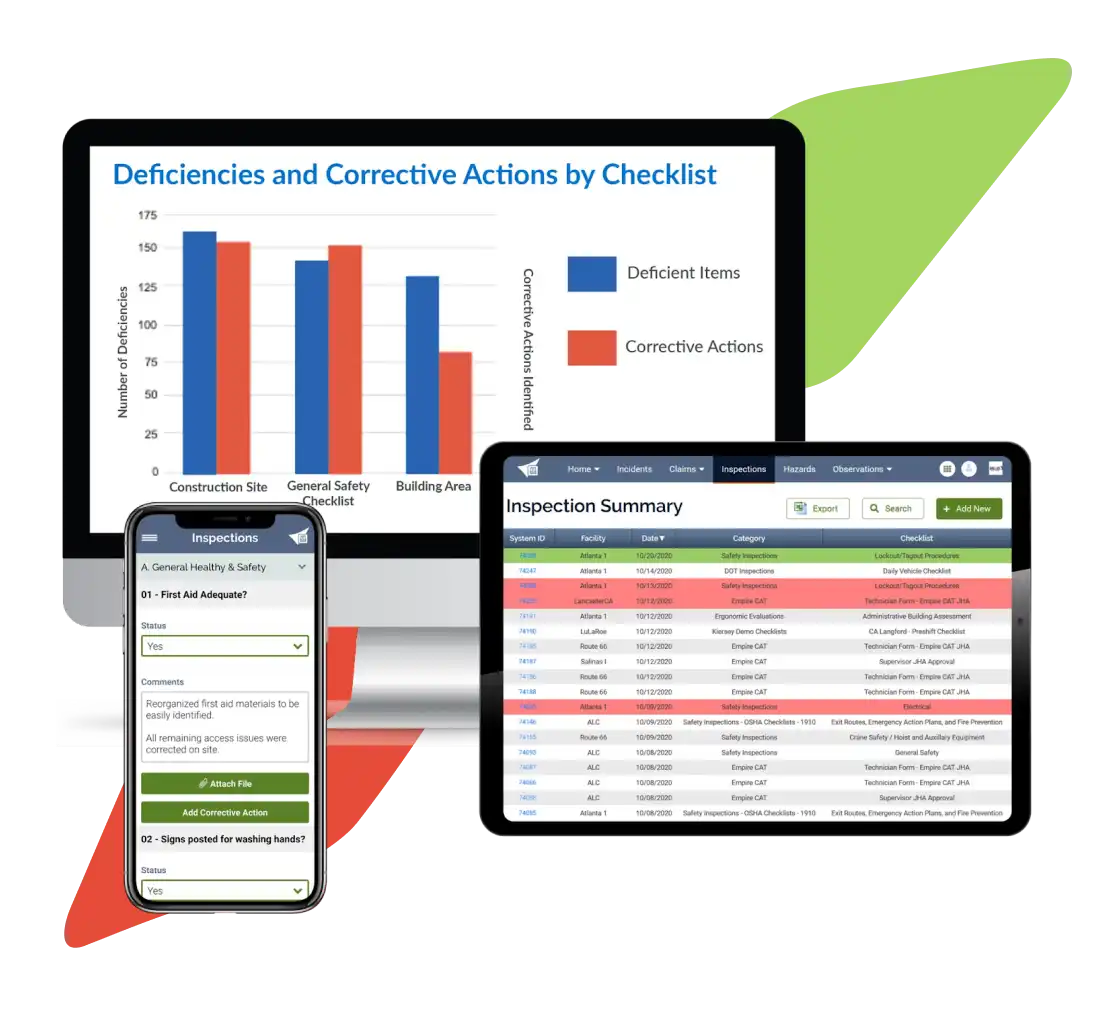
Contractor management in health and safety
In construction, utilities, manufacturing, and chemical processing, contractor management takes more than standard onboarding. OSHA 1910.119 is the Process Safety Management standard. It requires host employers to evaluate contractor safety performance before they grant site access.
That evaluation checks the contractor’s safety programs, injury records, and certifications against your site’s hazards. TRIR and DART benchmarks give you the numbers to screen against.
The stakes are measured in lives. Construction and extraction work caused 1,032 fatalities in 2024. Across all industries, falls, slips, and trips caused 844 deaths that year, according to the Bureau of Labor Statistics.
OSHA penalties hold at 2025 maximums through 2026. Willful or repeat violations carry fines up to $165,514. Serious violations carry fines up to $16,550, as confirmed by OSHA’s 2026 penalty memo. On sites with safety failures, multi-count citations can climb into six figures.
Credentialing platforms like ISNetworld and Avetta help here. They let host employers check contractor safety records against pre-set thresholds. This automates much of the Stage 1 pre-qualification work. You still need to document safety orientations and training completions. Keep them easy to find for audits.
Vector EHS Management connects contractor training records, inspection data, and compliance records in one system. Safety teams get audit-ready visibility. No more chasing paper files across sites.
The cost of getting this wrong carries real weight. The average cost per medically consulted workplace injury is $48,000. The average cost per workplace death reaches $1.54 million, according to the National Safety Council.
Put your contractor management program into action with Vector Solutions
You now have a framework for pre-qualifying contractors with verified safety records. You can onboard them with audit-ready records. You can track compliance and performance through active work. And you can close out every engagement with formal offboarding. Each stage creates the records you need before the next audit, incident, or misclassification challenge surfaces.
We help safety teams centralize contractor training records, inspection data, and compliance records across sites. You can verify every contractor is certified and audit-ready before they access a job site.
This closes the gap between what your policy requires and what your team can prove in an audit. Contracts close cleanly. Access is revoked, final payments are processed, and performance scores are documented. When that contractor bids on future work, you have real data to guide the decision.
Close the Gap Between Policy and Proof
A contractor shows up with lapsed credentials, and your audit record is already incomplete. Vector connects training completions, inspection data, and compliance records in one platform.
Request a demo today
FAQs about contractor management
What is the meaning of contractor management?
Contractor management is how companies vet, onboard, monitor, and close out independent contractors. It covers compliance, safety checks, performance tracking, and recordkeeping. This runs from pre-qualification through final payment. It also differs from managing employees, because contractors have a separate legal relationship and different tax rules.
What are the 5 steps of contractor management?
The five core steps are:
- Pre-qualification: Verify safety records, insurance, and certifications.
- Onboarding: Collect tax forms (W-9 or W-8BEN), define the SOW, and complete site-specific training.
- Monitoring: Track work quality, safety compliance, and KPI performance.
- Evaluation: Assess contractor performance against SLAs and document scores.
- Offboarding: Revoke access, process final payments, and record performance for future decisions.
Each step creates records that support compliance and rehire decisions. Offboarding is the step most programs skip. An unrevoked badge or login is a direct security gap.
How do I know if my organization is at risk for contractor misclassification?
You’re at risk if any of these factors apply:
- You control when, where, or how contractors perform work.
- You provide their tools or equipment.
- You set their hours or schedule.
- They work only for your company over a long period.
Any of these factors trigger scrutiny under the IRS common-law test or DOL economic reality test. Record gaps raise that exposure. Missing W-9s, no written SOW, and no invoices all weaken your defense. Penalties reach $2,515 per repeated FLSA violation, per employee, according to the DOL WHD Civil Money Penalty Adjustments. Back taxes and benefits liability add to that total.
What safety metrics should I review before approving a contractor?
Review TRIR (Total Recordable Incident Rate) and DART (Days Away, Restricted, or Transferred) rate. Contractors with a TRIR above the 2024 benchmark of 2.3 warrant closer review. High DART rates signal patterns of serious injuries, according to the Bureau of Labor Statistics.
Verify current insurance certificates and OSHA 300 logs where available. Check industry-specific certifications such as OSHA 10/30, confined space, and fall protection. Credentialing platforms like ISNetworld and Avetta centralize these records for pre-qualification decisions.
Do I need contractor management software, or can I track contractors in spreadsheets?
Spreadsheets can work for a small number of low-risk contractors. But they fall short once you manage contractors across multiple sites. Tracking certifications with expiration dates adds more strain. Regulated industries that require audit-ready records need more.
A contractor management system centralizes records and automates compliance tracking. It reduces the risk of missing a lapsed certification or incomplete tax form. Spreadsheets don’t send expiration alerts, sync across teams, or create audit reports on their own.
Vector EHS Management connects contractor training records, inspection data, and compliance records in one platform. It removes the manual tracking gaps that surface during audits.