November 4, 2026 4 min read

How to Reduce Repeat Incidents With Targeted Retraining
Industry:
Solution:
The investigation closed on schedule, and retraining went out to the crew. Then the same incident happened again, and now you’re back in the same meeting asking what you missed.
Most repeat incidents don’t come from a lack of effort. They come from fixes that never matched the root cause. A general refresher or a policy reminder often stands in for a change to how the work actually gets done. To reduce repeat incidents, you need to find a cause you can fix, choose a control strong enough to hold, and use targeted retraining when a real skill gap is part of the problem. Then you need to verify that the fix worked.
This guide walks through each step, from root cause analysis to the metrics that show your repeat incident rate is falling.
Main Takeaways
- Match your root cause analysis method to the incident: 5 Whys for simple chains, a fishbone diagram for multi-factor problems, and barrier analysis for failed safeguards.
- Sort closed investigations by type, location, task, shift, and equipment so patterns show up before they turn into repeat incidents.
- Rank each possible fix from elimination down to PPE. Training is an administrative control, so pair it with stronger fixes whenever you can.
- When training is the right fix, target it to the specific task, the people who do it, and the gap the investigation found. Then confirm the behavior changed.
- Give every corrective action one owner and a due date based on risk. Verify it under real working conditions, and track your repeat incident rate over time.
Find a Root Cause You Can Fix
Root cause analysis (RCA) traces an incident past its immediate trigger to the conditions that allowed it to happen. The method you choose decides whether you reach a cause you can fix or stop at a surface finding.
Capture the Right Evidence First
Every strong incident investigation starts with a complete record. Document what happened, where and when it happened, who was involved, and what the conditions were at the time. Then gather photos, equipment logs, and witness statements. This record is what your RCA team works from, so gaps here become gaps in your findings. A written incident investigation plan keeps this step consistent across sites and shifts.
Match the RCA Method to the Incident
Many teams use one familiar method for every incident, no matter how complex it is. That’s how investigations stop at a surface cause. Use the table below to pick the method most likely to reach the real root cause.
| Method | Best Used When | Example Scenario |
| 5 Whys | The cause follows one simple chain of events | A worker slips on a wet floor. Five rounds of “why” show that floor cleaning overlaps with shift change. |
| Fishbone Diagram (Ishikawa) | Several factors (people, process, equipment, environment) contributed | Repeated forklift near misses trace back to blocked sight lines, shift fatigue, and missing floor markings. |
| Barrier Analysis | A safeguard failed or was missing | A lockout/tagout bypass leads to an energy-release injury. The analysis shows which barriers were missing or defeated. |
Complex or high-severity incidents often need more than one method. For example, you might map contributing factors with a fishbone diagram, then run 5 Whys on the biggest branch. Either way, keep digging until you reach a cause you can control. “Human error” isn’t a root cause. It’s a starting point for asking why the error was possible.
Spot Repeat Patterns Early With Trend and Near-Miss Data
One investigation shows you a single event. Trend analysis connects events into patterns by type, location, task, shift, or equipment. Adding near-miss data shows those patterns earlier, often before anyone gets hurt.
Sort Your Incident Data to Find Clusters
Start by sorting closed investigations by incident type, location, task, equipment, and shift. Clusters show up quickly once the records sit side by side. One forklift near miss is an event. Three in the same dock bay over two months is a trend that needs a systemic fix.
Patterns matter because the total volume of harm is still high. U.S. private employers reported 2.5 million nonfatal workplace injuries and illnesses in 2024, according to the Bureau of Labor Statistics. That’s true even though the total recordable case rate fell to 2.3 per 100 full-time workers, the lowest in the data series. Many of those cases repeat familiar hazards, which is why pattern-level fixes matter.
Build a Near-Miss Workflow That Feeds Your Trend Data
Near-miss reports describe events that could have caused an injury but didn’t. That makes them leading indicators of where the next incident might happen. To use them well, make reporting easy with a mobile form, a kiosk, or a verbal report that a supervisor writes up. Sort each report by hazard type and location, and review reports alongside incident records every week or two.
When a near-miss pattern matches a known incident type, escalate it into your corrective action workflow. This is the step teams drop most often. Reports that sit in a spreadsheet trigger nothing.
How you respond matters too. A 2024 study in the Journal of Occupational Health surveyed workers who had reported near misses. Workers whose companies responded inadequately had 1.53 times the odds of an occupational accident, and workers who got no response had 1.75 times the odds, compared with workers whose companies investigated and made improvements. The study shows a link, not proof of cause. Still, it suggests that acting on near-miss reports is one of the most direct ways to prevent repeat incidents.
Vector EHS Management connects hazard reports, near misses, incidents, and corrective actions in one system. Real-time alerts notify the right people when a new report comes in, so escalation doesn’t depend on someone checking a spreadsheet.
Get More From Your Near-Miss Data
Near-miss reports only work as leading indicators when they feed a real workflow. Learn how mobile reporting tools help teams capture hazards on the spot and act on them faster.
Read the Mobile Safety Blog
Choose a Fix Strong Enough to Hold
Once you know the root cause, the next question is how strong your fix needs to be. The hierarchy of controls ranks fixes from elimination at the top to PPE at the bottom. Apply it after every RCA so retraining doesn’t become the default answer.
Know the Difference Between Corrective and Preventive Action
A corrective action fixes the specific cause of an incident that already happened, like replacing a broken guardrail after a fall. A preventive action fixes a weakness before it causes an incident, like adding guardrails to every similar platform after a near-miss trend. Corrective and preventive action (CAPA) programs use both. Corrective actions close today’s gap, and preventive actions close the next one.
For example, say a chemical splash gets past a worn face shield and injures a worker. The corrective action replaces the shield and adds an inspection schedule. The preventive action adds an enclosed dispensing system, which removes the splash path entirely.
Rank Your Options From Strongest to Weakest
The NIOSH hierarchy defines five levels:
- Elimination removes the hazard, such as redesigning a process so the risky task disappears.
- Substitution replaces the hazard with something safer, like a less toxic solvent.
- Engineering controls separate people from the hazard through guarding, barriers, or ventilation.
- Administrative controls change how people work through procedures, signage, job rotation, or training.
- PPE, such as gloves or respirators, protects the individual worker.
Choose the highest level that works for the root cause you found, and move down only when a stronger option truly isn’t possible. Many repeat-incident programs rely on retraining, updated SOPs, and policy reminders. Those are all administrative controls, the second-weakest level. When the root cause is a physical hazard or an energy source, training alone won’t stop a repeat.
Compare Weak and Strong Corrective Actions
The difference between a weak and a strong corrective action is usually specificity. A strong action changes the work, names who it applies to, and includes a way to check it.
| Root Cause | Weak Corrective Action | Strong Corrective Action |
| Forklifts strike pedestrians at a blind corner | Retrain all drivers on forklift safety | Install convex mirrors and a painted stop line, coach the drivers on that route on the new stop point, and observe five passes per driver |
| Lockout step skipped on one machine | Send a lockout policy reminder | Post a machine-specific lockout procedure at the panel, retrain authorized employees on that machine, and audit every lockout on it for 30 days |
| Worker falls from the wrong ladder type | Hold a toolbox talk on ladder safety | Replace step ladders with platform ladders in that area, then run hands-on retraining for the crew on ladder selection and setup |
Notice that training still shows up in the strong column. It’s just targeted, paired with a stronger control, and verified.
Use Targeted Retraining When Training Is the Right Fix
Training is the right fix when the root cause is a gap in knowledge or skill. Targeted retraining closes that specific gap for the specific people who need it, instead of sending a general refresher to everyone.
Confirm the Root Cause Is a Skill or Knowledge Gap
Before you assign corrective training after an incident, ask one question: did the worker know how to do the task safely? If they didn’t, training can help. If they did know but the job made the safe method hard, slow, or impossible, training won’t fix it. A missing tool, an unrealistic schedule, or a confusing procedure needs a different fix. Your RCA should already point you to the answer.
Target the Who, What, and When
Generic refreshers fail because they’re too broad. Targeted retraining narrows all three variables:
- Who: Assign training to the workers who perform the task involved, at that site and on that shift. If the trend data shows the same gap elsewhere, expand the list from there.
- What: Focus on the specific task step, hazard, or decision the investigation identified. For physical skills like lockout, rigging, or equipment operation, use hands-on practice or a demonstration, not just a video.
- When: Complete the training before the worker performs the task again. For high-risk jobs, set a recurrent training interval so skills don’t fade between incidents.
Prove the Training Changed the Work
Course completion shows that someone finished the training. It doesn’t show that they changed how they work. To close that gap, add a competency check after training, such as a skills demonstration, a quiz on the critical steps, or a supervisor sign-off. Then use behavior-based safety observations on that task for the next few weeks to confirm the new method holds on the job.
Vector LMS lets you assign targeted courses, track completion, and run competency assessments. Vector EHS Management records the behavior-based observations that follow. Together, they show whether retraining changed the work, not just whether a course got finished.
For teams that want to move faster, EHS Prevent adds AI Safety Training Recommendations, which suggest the right courses based on an incident’s type, root cause, and injury details. That way, retraining starts from what the investigation found, not from a guess.
Assign Ownership, Verify Results, and Track What Matters
A corrective action only prevents repeat incidents if someone completes it and someone checks that it worked. Ownership, verification, and measurement turn a written fix into a proven one.
Give Every Action One Owner and a Risk-Based Deadline
Each corrective action needs one named owner. A department or committee can’t fill that role, because when three people share a task, none of them owns the result. Give each action a due date, a required proof of completion (like a photo, inspection record, or sign-off), and an escalation path that alerts the owner’s manager when the action goes overdue.
Set due dates by risk. A critical exposure needs an interim control right away, often within the same shift, plus a short deadline for the permanent fix. Lower-risk findings can follow standard timelines, but they still need verified closure. If a permanent fix depends on parts, budget, or downtime, record the interim control and the date you’ll review it, so the risk stays visible.
Clear ownership pays off. One large transportation hub using Vector EHS Management completed 87% of its corrective action plans on schedule.
Include These Fields in Every Corrective Action Record
A complete record makes each action easy to track, verify, and defend in an audit. It also makes repeat incidents easier to spot, because every action ties back to a specific cause. Build these fields into your corrective action form:
- Source reference: The incident, near miss, inspection, or audit finding that started the action.
- Root cause statement: The confirmed cause from your RCA, written in one or two sentences.
- Action description: The specific change to the work, written so someone could observe whether it happened.
- Control level: Where the fix falls on the hierarchy of controls.
- Owner and due date: One named person and a deadline based on risk.
- Interim control: The temporary protection in place until the permanent fix is done.
- Linked training: Any targeted retraining assigned, who it’s assigned to, and the competency check that goes with it.
- Verification method: The evidence required to close the action, such as an inspection, observation, or sign-off.
- Closure approver and date: Who confirmed the fix worked, and when.
- Follow-up date: When you’ll check again, usually at 30, 60, or 90 days.
If a field is blank, the action isn’t ready to close.
Verify Fixes Under Real Working Conditions
Installing a control proves the work got done. Watching it work on shift proves it holds up. Re-inspect the site or equipment within 30 days, then again at 90 days. Observe the task under normal operating conditions with the new control in place. Record what you find with an audit checklist, an observation record, or an updated hazard assessment.
If the same hazard or incident type comes back at any point, reopen the case and choose a stronger control.
Measure Whether Repeat Incidents Are Declining
Track these metrics on a rolling basis to see whether your fixes are working:
- Repeat incident rate by type: The share of incidents in a period that match the root cause or hazard category of a past investigation. A falling rate is the clearest sign your fixes are holding.
- Corrective action closure rate: The share of actions completed by their due date. Low closure rates often come before repeat incidents.
- Time to close: The average number of days from assignment to verified completion. Shorter times shrink the window of risk.
- Retraining verification rate: The share of incident-linked training assignments that passed a competency check or follow-up observation, not just course completion.
- Near-miss reporting volume: A rising count usually signals trust in reporting. A sudden drop may point to reporting fatigue or fear of blame.
Review these metrics as part of your broader safety management system, so repeat-incident trends reach the same leadership reviews as your other safety goals. Vector EHS Management brings incidents, corrective actions, inspections, and audit results into real-time dashboards, so your team doesn’t have to pull these numbers together by hand.
Connect Corrective Actions to Verified Training
When corrective actions stall in spreadsheets, fixes never get confirmed. See how Vector links incidents, assigned actions, and training completion so you can track every fix to the finish.
Explore the Incident-to-Training Workflow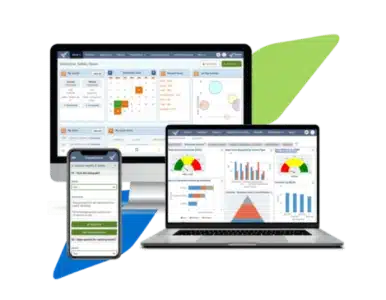
Close the Loop on Repeat Incidents
Reducing repeat incidents comes down to a few connected habits. Find a root cause you can fix. Choose the strongest control that works. Use targeted retraining when a real skill gap is part of the problem, and confirm it changed the work. Then assign clear owners, verify every fix on the job, and track whether the same incidents stop coming back.
Start by reviewing your last 10 closed corrective actions. Count how many relied on training or reminders alone, and how many were verified after closure. That review will show you where your loop is most likely to break.
Vector Solutions makes those habits easier to keep. Vector EHS Management connects incidents, corrective actions, and follow-up inspections, and Vector LMS lets you assign targeted training and check competency. You’ll see which fixes are holding and which need a stronger control.
See How Vector Helps You Stop Repeat Incidents
See how Vector EHS Management and Vector LMS connect incidents, corrective actions, and targeted training in one place. Request a demo to walk through the workflow with our team.
Request a Demo
FAQs About Reducing Repeat Incidents
How Do I Know if an Incident Is a True Repeat or Just a Similar Event?
An incident is a repeat when it shares a root cause or hazard category with a past event. Match on cause, task, and failed control, not injury type alone. Two slips can be separate problems if one came from a leaking valve and the other from a missing floor marking. Write one definition of “repeat” with a set lookback period so your rate stays consistent from quarter to quarter.
Should I Reopen the Original Investigation or Start a New One?
Reopen the original case when the same root cause comes back, because that means the corrective action failed. Start a new investigation only when the event traces to a different cause. A reopened case should look for a stronger control using the hierarchy of controls, not repeat the original fix. Record the link between both events to support trend analysis and audit review.
How Do I Decide Who Needs Retraining After an Incident?
Start with the workers who perform the task involved, at the same site and on the same shift. Then check your trend data. If the same gap shows up at other sites or on other shifts, expand the assignment to those workers too. Avoid sending a general refresher to everyone, because broad training dilutes the message and makes it harder to verify that the right people changed how they work.
What Should I Do When a Corrective Action Keeps Getting Delayed?
Treat a stalled action as an open risk. Escalate it to the owner’s manager once it’s overdue, then find out why it slipped. Separate blocked actions (waiting on budget, parts, or downtime) from neglected ones, since each needs a different response. For blocked actions, put an interim control in place and record a review date so the risk stays visible until the permanent fix is done.
What if Training or a Procedure Change Is the Only Workable Fix?
Use administrative controls as an interim step when stronger controls aren’t possible right now. Document why elimination, substitution, and engineering options were ruled out, such as cost, downtime, or technical limits. Pair the training with a competency check and an observation or audit so you can confirm behavior actually changed. Set a date to revisit stronger controls.
How Should I Read My Repeat Incident Rate if Near-Miss Reports Suddenly Go Up?
A rise in near-miss reports usually signals growing trust in reporting, not worsening conditions. Look for a flat or falling repeat incident rate alongside the increase. Check whether the new reports cluster around known hazards or reveal new ones, and compare volume against severity. Read the trend across several periods, because a single quarter can mislead.